Pallid Ghost Crab
Ocypode pallidula
Also known as: Fiddler Crab, Ghost Crab, Pie Crust Crab, Sand Crab, Shore Crab
- Fiddler Crab
- Ghost Crab
- Pie Crust Crab
- Sand Crab
- Shore Crab
Overview
Found close to their burrows on sand and gravel beaches. These crabs often use their claws to scrape flies from the underside of leaves.
They feed on algae, detritus, flies and plankton.
Depth - High tide area
Males have a single enlarged claw, while females have two small feeding claws. They feed by scraping the surface sediment up in their small claws, transferring it to the mouth where the complex mouth parts sift out the organic matter. They then spit out a small pellet of cleaned sand. These feeling pellets cover the mudflat by the end of the low tide period. Because males have only one small, feeding claw, they feed at half the rate of the females. They therefore have to spend about double the time feeding.
Males also use their large claw for fighting as well as mating by waving it around.
Like all crabs, these crabs shed their shells as they grow. If they have lost legs or claws during their present growth cycle a new one will be present when they moult. If the large fiddle claw is lost, males will develop one on the opposite side after their next moult. Newly moulted crabs are very vulnerable because of their soft shells. They are reclusive and hide until the new shell hardens.
How to identify
Habitat & where to find it
- Range · Indo-Pacific
- Country only · 3
Found close to their burrows on sand and gravel beaches.
Adult photos 3
Discussion
No comments yet. Seen one, or got a question about it? Start the discussion.
Deep dive
More in the family
Crabs (Ocypodidae)
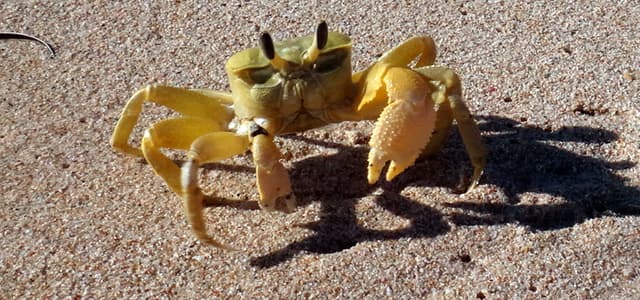
Golden Ghost Crab
Ocypode convexa
5 photos
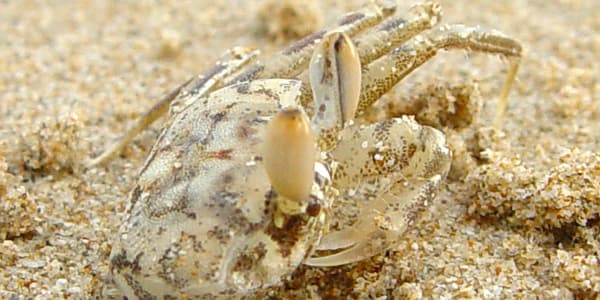
Horn-eyed Ghost Crab
Ocypode brevicornis
1 photo
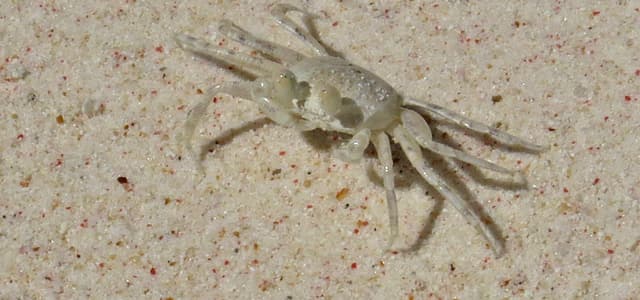
Horned Ghost Crab
Ocypode ceratophthalmus
3 photos
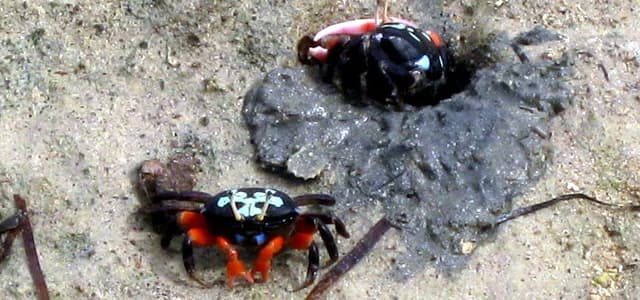
Mangrove Fiddler Crab
Paraleptuca crassipes
5 photos
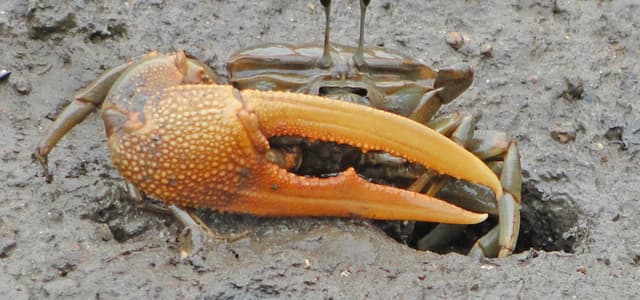
Orange Fiddler Crab
Gelasimus vocans
1 photo
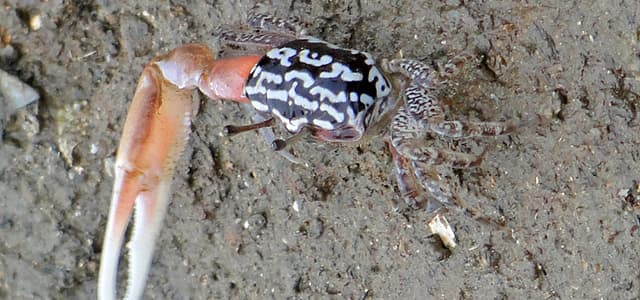
Porcelain Fiddler Crab
Austruca annulipes
5 photos
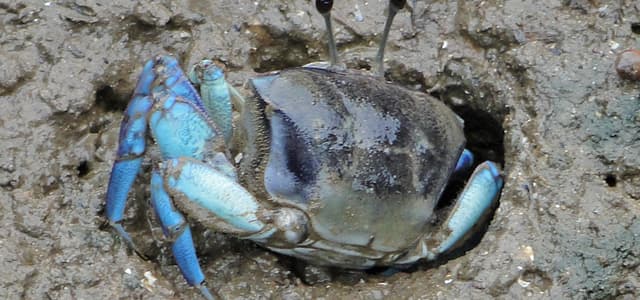
Tetragonal Fiddler Crab
Gelasimus tetrogonon
2 photos