Horned Ghost Crab
Ocypode ceratophthalmus
Also known as: Ghost Crab, Horn-eyed Ghost Crab, Horned-eyed Ghost Crab, Sand Crab, Shore Crab
- Ghost Crab
- Horn-eyed Ghost Crab
- Horned-eyed Ghost Crab
- Sand Crab
- Shore Crab
Overview
The horned ghost crab is an elusive, fast-running shore crab named for the long points that extend past its eyes, and it is usually only seen at night when it comes out to feed.
By day it hides in large burrows on boulder and stone beaches, tidal creeks, mangrove forests, mudflats and intertidal sandbars. It lives across the Indo-Pacific apart from the Red Sea, from East Africa to the Philippines and Japan to the Great Barrier Reef, and out through the Pacific Islands.
The horns give this crab its name. Each eyestalk runs on past the eye into a long point, a feature that is longest in adults and shorter, or even missing, in juveniles. The body is box-shaped, with a darker H-shaped mark towards the rear of the shell, and in larger crabs the outer edges of the eye sheaths form sharp, broad triangles that point sideways.
These crabs often use their claws to scrape flies from the undersides of leaves.
Like all crabs, it sheds its shell to grow, and a leg or claw lost along the way can be replaced at the next moult. Newly moulted crabs are soft and vulnerable, so they stay hidden until the new shell has hardened.
Notes & fun facts
- DID YOU KNOWIt can run at up to 2.1 metres per second.
- DID YOU KNOWHorned eyes are not unique to this crab, as several other ghost crabs, including Ocypode cursor and Ocypode saratan, have them too.
How to identify
- Head & Mouth
- eye stalks
Tap any trait to see other fish that share it.
Diver’s cheat sheet
- 1Look forCheck for long points on the eyestalks and a darker H-shaped mark towards the rear of the shell.
Habitat & where to find it
- Range · Indo-Pacific
- Country only · 3
Found hiding in large burrows by day on boulder and stone beaches, tidal creeks, mangrove forests, mudflats and intertidal sandbars, and usually only seen at night when it comes out to feed.
Adult photos 3
Discussion
No comments yet. Seen one, or got a question about it? Start the discussion.
Deep dive
Taxonomy
- kingdomAnimalia
- phylumArthropoda
- classMalacostraca
- orderDecapoda
- familyOcypodidae
- genusOcypode
- speciesOcypode ceratophthalmus (Pallas, 1772)
Morphology
A box-shaped crab, 6 to 8cm across the shell, with a darker H-shaped mark towards the rear. The eyestalks extend beyond the eyes into long points, which are shorter or absent in juveniles. In larger crabs the outer edges of the eye sheaths are sharp and broadly triangular, pointing sideways.
More in the family
Crabs (Ocypodidae)
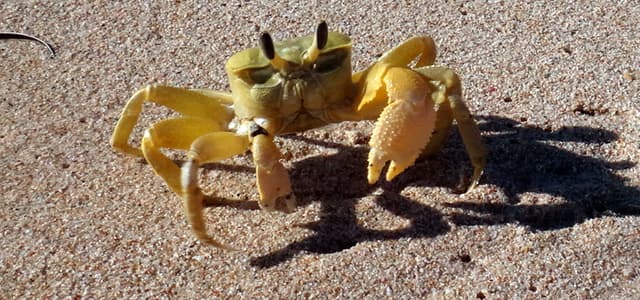
Golden Ghost Crab
Ocypode convexa
5 photos
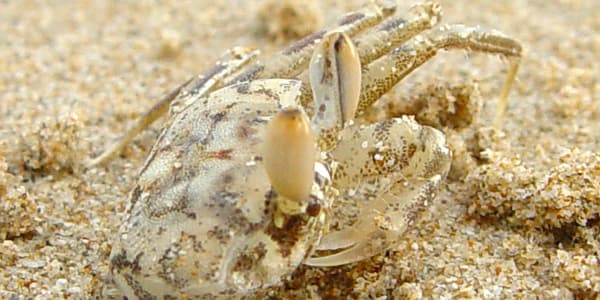
Horn-eyed Ghost Crab
Ocypode brevicornis
1 photo
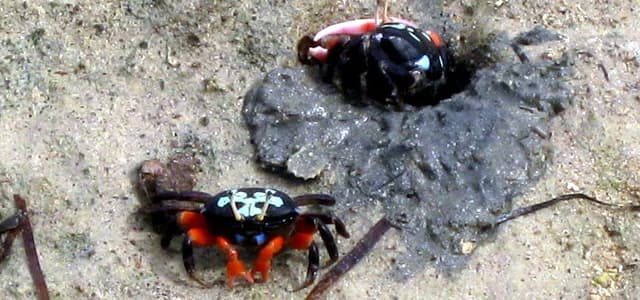
Mangrove Fiddler Crab
Paraleptuca crassipes
5 photos
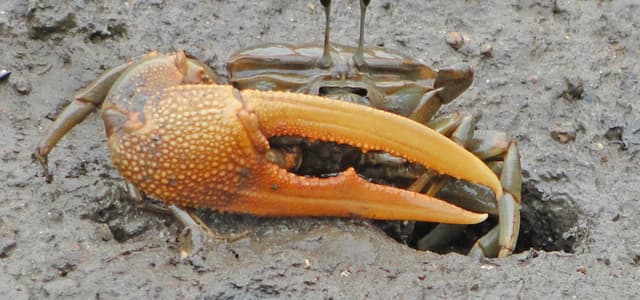
Orange Fiddler Crab
Gelasimus vocans
1 photo
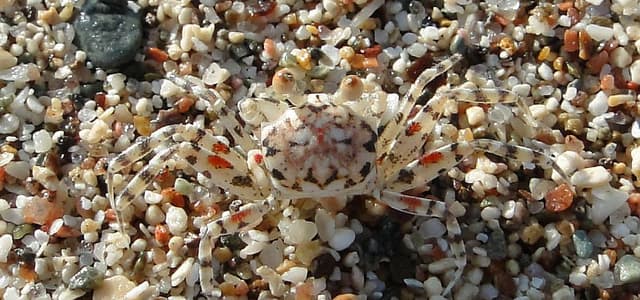
Pallid Ghost Crab
Ocypode pallidula
3 photos
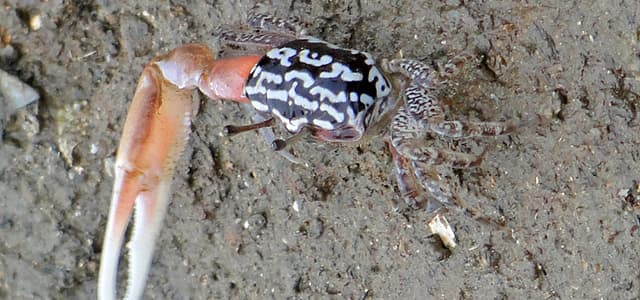
Porcelain Fiddler Crab
Austruca annulipes
5 photos
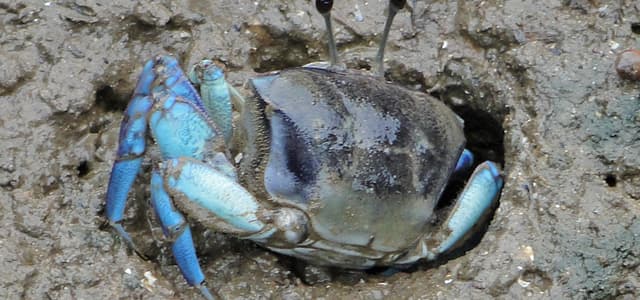
Tetragonal Fiddler Crab
Gelasimus tetrogonon
2 photos