Tomtate Grunt
Haemulon aurolineatum
Also known as: Caesar, Gold-lined Grunt, Redmouth Grunt, Sandy Goggle, Seize, Sweetlips, Toctoc, Tomtate, White Grunt, Yellow Tomtate, Yellow-lined Tomtate, Young Grunt
- Caesar
- Gold-lined Grunt
- Redmouth Grunt
- Sandy Goggle
- Seize
- Sweetlips
- Toctoc
- Tomtate
- White Grunt
- Yellow Tomtate
- Yellow-lined Tomtate
- Young Grunt
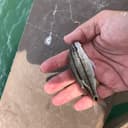
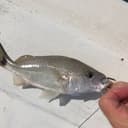
Showing details for the adult stage. Switch stages to see how it differs.
Overview
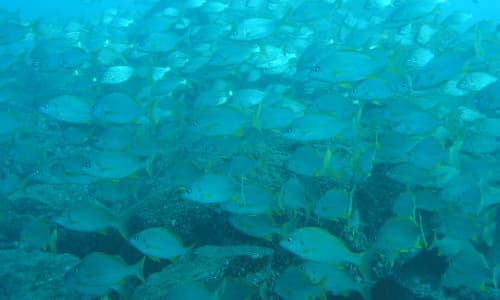
Found in schools, close to shelter during the day, foraging for food at night, over sand flats, patch reefs, and seagrass beds, of coral and rocky reefs.
In some areas of the world 'Grunts' are better known as 'Sweetlips' distinguished from other species by their very large rubbery lips.
'Grunts'because they "grunt," the grunting sound is produced by their flat teeth plates rubbing together and this is amplified by their air bladders.
Found either singly or in schools hovering or motionless over the reef during the day, becoming nocturnal predators.
How to identify
Tap any trait to see other fish that share it.
Habitat & where to find it
Where the adult stage lives, and where its photos were taken.
- Range · Western Atlantic, Caribbean
- Country only · 4
Found in schools, close to shelter during the day, foraging for food at night, over sand flats, patch reefs, and seagrass beds, of coral and rocky reefs.
Adult photos 4
Discussion
No comments yet. Seen one, or got a question about it? Start the discussion.
Deep dive
More in the family
Grunts (Haemulidae)
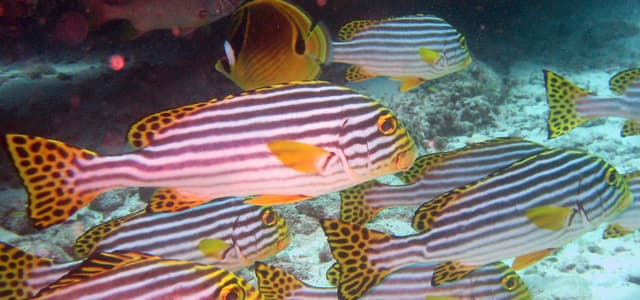
Indian Ocean Oriental Sweetlips
Plectorhinchus vittatus
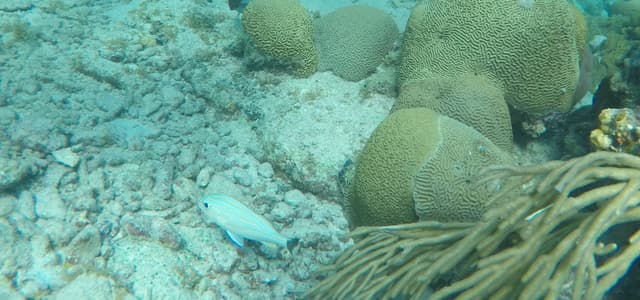
Caesar Grunt
Haemulon carbonarium
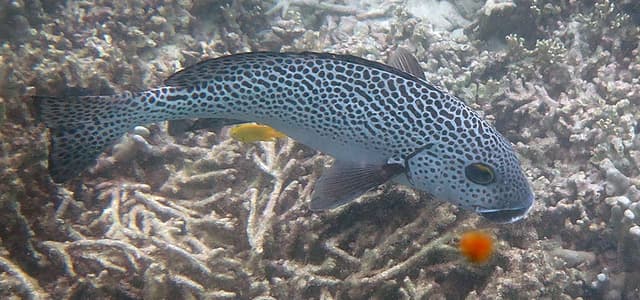
Dotted Sweetlips
Plectorhinchus pica
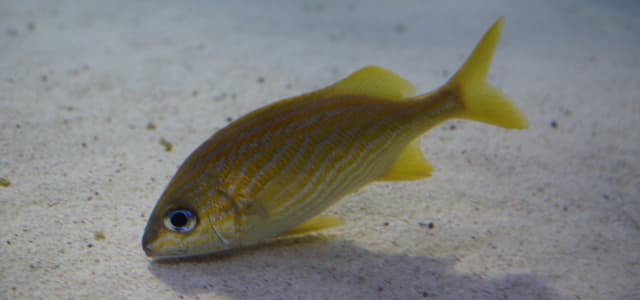
French Grunt
Haemulon flavolineatum
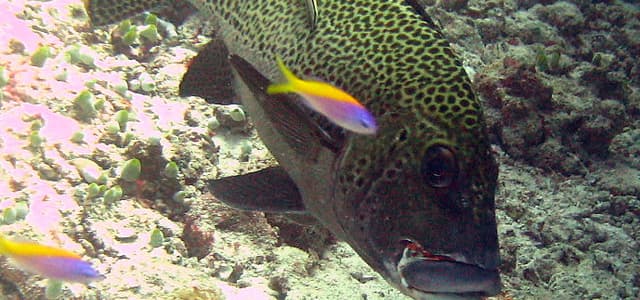
Harlequin Sweetlips
Plectorhinchus chaetodonoides
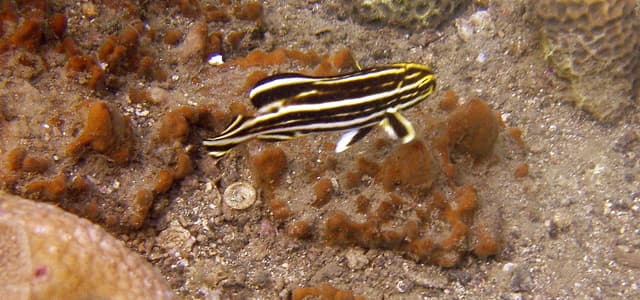
Lesson's Thicklip
Plectorhinchus lessonii
Painted Sweetlips
Diagramma pictum
Ribbon Sweetlips
Plectorhinchus polytaenia
Sailor's Grunt
Haemulon parra
White Grunt
Haemulon plumierii
Barred Grunt
Conodon nobilis
0 photos
Bastard grunt
Pomadasys incisus
1 photo