Caesar Grunt
Haemulon carbonarium
Also known as: Black Grunt, Blacktail, Blacktail Grunt, French Grunt
- Black Grunt
- Blacktail
- Blacktail Grunt
- French Grunt
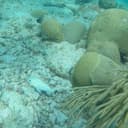
Showing details for the adult stage. Switch stages to see how it differs.
Overview
Found singly or in schools, during the day close to shelter of mangroves, coral and rocky reefs, dispersing at night foraging for food, over clear water reefs.
In some areas of the world 'Grunts' are better known as 'Sweetlips' distinguished from other species by their very large rubbery lips.
'Grunts'because they "grunt," the grunting sound is produced by their flat teeth plates rubbing together and this is amplified by their air bladders.
Found either singly or in schools hovering or motionless over the reef during the day, becoming nocturnal predators.
How to identify
- Pattern
- black stripesyellow stripe
- Fins & Tail
- black tail
Tap any trait to see other fish that share it.
Habitat & where to find it
Where the adult stage lives, and where its photos were taken.
- Range · Western Atlantic, Caribbean
Found singly or in schools, during the day close to shelter of mangroves, coral and rocky reefs, dispersing at night foraging for food, over clear water reefs.
Adult photos 0
Discussion
No comments yet. Seen one, or got a question about it? Start the discussion.
Deep dive
More in the family
Grunts (Haemulidae)
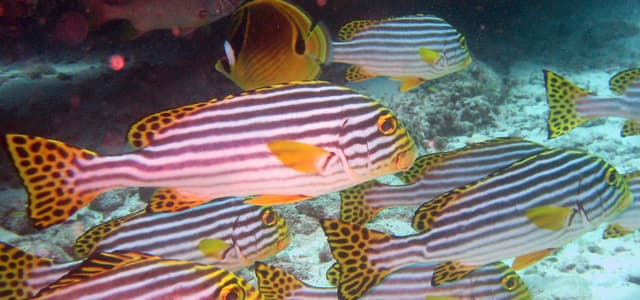
Indian Ocean Oriental Sweetlips
Plectorhinchus vittatus
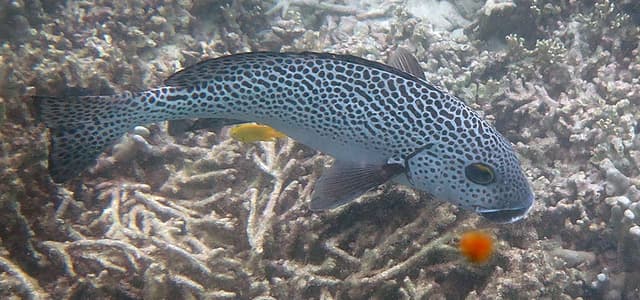
Dotted Sweetlips
Plectorhinchus pica
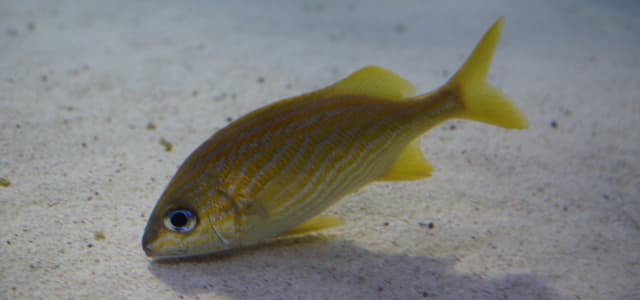
French Grunt
Haemulon flavolineatum
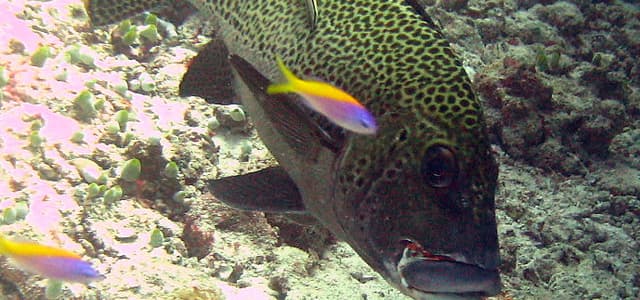
Harlequin Sweetlips
Plectorhinchus chaetodonoides
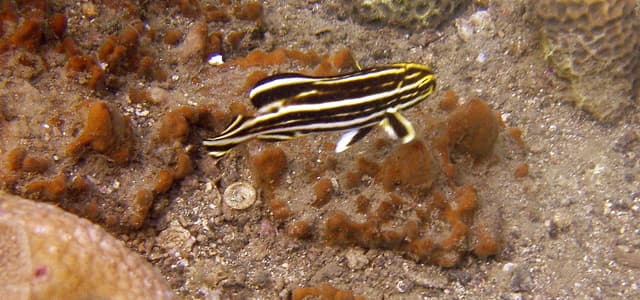
Lesson's Thicklip
Plectorhinchus lessonii
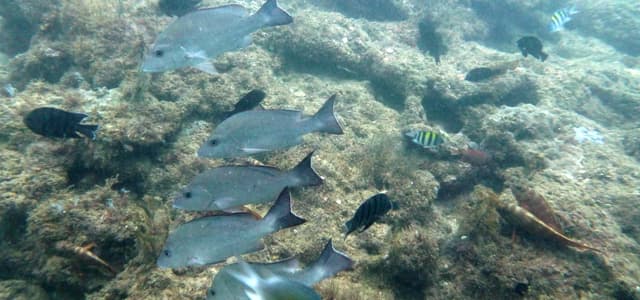
Painted Sweetlips
Diagramma pictum
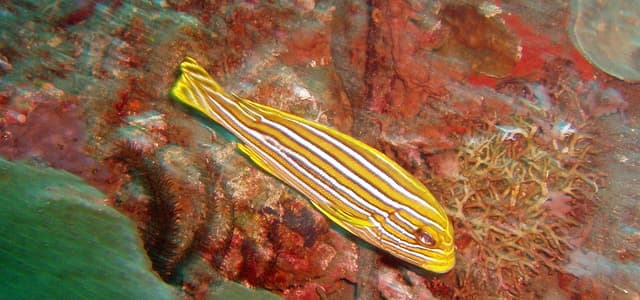
Ribbon Sweetlips
Plectorhinchus polytaenia
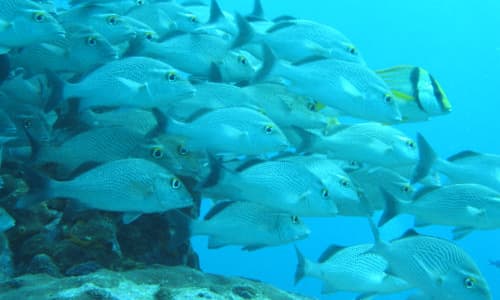
Sailor's Grunt
Haemulon parra
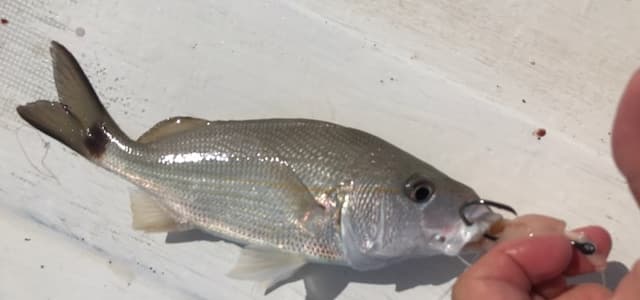
Tomtate Grunt
Haemulon aurolineatum
White Grunt
Haemulon plumierii
Barred Grunt
Conodon nobilis
0 photos
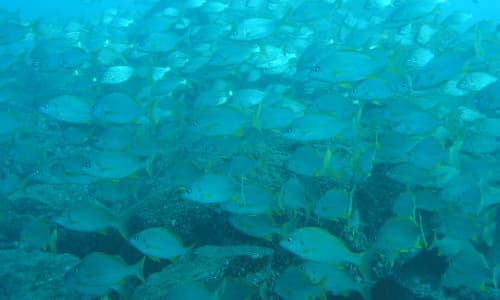
Bastard grunt
Pomadasys incisus
1 photo