Painted Frogfish
Antennarius pictus
Also known as: Black Angler, Devil Fish, Painted Angler, Painted Anglerfish, Spotted Frogfish
- Black Angler
- Devil Fish
- Painted Angler
- Painted Anglerfish
- Spotted Frogfish
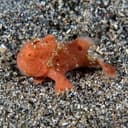
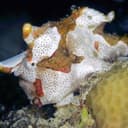
The Painted Frogfish is a squat, lumpy anglerfish that spends its life on the bottom, waiting motionless for prey to come within reach. It is best known as a master of camouflage by using its colour: individuals range from white, yellow and pink through orange, red and brown to black, usually with scattered dark spots and scab-like patches, and they slowly change colour to match the sponge or coral they sit on.
A banded rod on the snout, tipped with a tufted lure, draws in its food. It is widespread in the tropical Indo-Pacific, from the Red Sea and East Africa to Hawaii and French Polynesia, and from southern Japan south to Australia.
Showing details for the juvenile stage. Switch stages to see how it differs.
Overview
Juvenile Painted Frogfish look quite different from adults and are often found out in the open rather than hiding amongst sponges. They are particularly interesting to divers because of their unusual colour patterns and their ability to resemble other small marine animals.
Juveniles are found on open sandy areas and reef surfaces, where they can imitate small sponges or flatworms. Unlike adults, which are commonly associated with sponges, juveniles are often encountered away from them. Documented sightings include shallow reef locations in Indonesia, the Philippines and around Sydney, Australia. Two specifically documented juvenile specimens were photographed at 8m and 12m respectively.
Appearance
Juveniles are usually dark, often almost completely black, with numerous small orange or yellow spots scattered across the head, body and fins. Some individuals have blue margins along their fins, creating a particularly distinctive pattern. Other colour variations occur, including orange and lighter-coloured individuals.
Their spotted patterns can resemble the markings of flatworms, including Pseudoceros lindae and Thysanozoon nigropapillosum. This resemblance is considered a form of protective mimicry, potentially discouraging predators from attacking them. The juvenile already has the characteristic fishing rod-like first dorsal spine, or illicium, with a small fleshy lure at its tip.
Behaviour
Juveniles are commonly found exposed on sand or open reef rather than sitting amongst sponges like adults. Their unusual colour patterns and resemblance to small marine invertebrates may help protect them from predators. They can also be found resting on the substrate, using their modified pectoral and pelvic fins to move around the bottom.
Life cycle
After hatching, the larvae spend approximately one to two months drifting in the plankton before settling onto the reef. Research raising Painted Frogfish in captivity recorded settlement at around 80 days after hatching, when the fish measured approximately 6.8mm. During the transition into the juvenile stage, the fishing lure develops, the pelvic fins become adapted for walking and distinctive spots appear on the skin.
As juveniles grow, their characteristic spotted pattern becomes more developed. Research on their early development records the typical adult-style spotting becoming recognisable at around 20mm and spreading across the body by approximately 30mm.
Notes & fun facts
- DID YOU KNOWJuvenile Painted Frogfish can resemble flatworms such as Pseudoceros lindae and Thysanozoon nigropapillosum, potentially discouraging predators from eating them.
- DID YOU KNOWCaptive breeding research recorded juveniles settling onto the reef at just 6.8mm in length, approximately 80 days after hatching.
- DID YOU KNOWTheir distinctive body spots develop progressively, becoming recognisable at around 20mm and spreading across the body by approximately 30mm.
How to identify
- Body shape
- legs
Tap any trait to see other fish that share it.
Diver’s cheat sheet
- 1Look forLook for a tiny black frogfish covered in orange or yellow spots.
- 2Look forBlue margins along the fins can help distinguish juveniles.
- 3BehaviourOften sitting exposed on sand or open reef rather than amongst sponges.
Habitat & where to find it
Where the juvenile stage lives, and where its photos were taken.
- Range · Indo-Pacific
- Country only · 2
Found on open sandy areas and reef surfaces, often away from sponges, in shallow sheltered reef environments.
Juvenile photos 2
Discussion
Other stages have their own discussion: 2 comments on the adult.
No comments yet. Seen one, or got a question about it? Start the discussion.
Deep dive
Taxonomy
- kingdomAnimalia
- phylumChordata
- classTeleostei
- orderLophiiformes
- familyAntennariidae
- genusAntennarius
- speciesAntennarius pictus (Shaw, 1794)
Morphology
JuvenileSmall, compact body with a rounded head and large mouth. Usually dark, often black, with numerous small orange or yellow spots across the body and fins. Some individuals have blue margins along their fins. The first dorsal spine is modified into a fishing rod-like illicium with a small fleshy lure at its tip, while the pectoral and pelvic fins are adapted for movement along the seabed.
More in the family
Frogfishes (Antennariidae)
Commerson's Frogfish
Antennarius commerson
Warty Frogfish
Antennarius maculatus
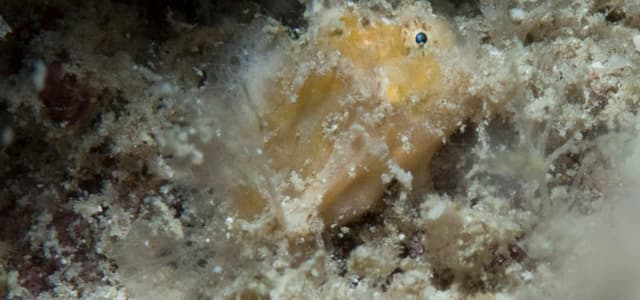
Hispid Frogfish
Antennarius hispidus
1 photo
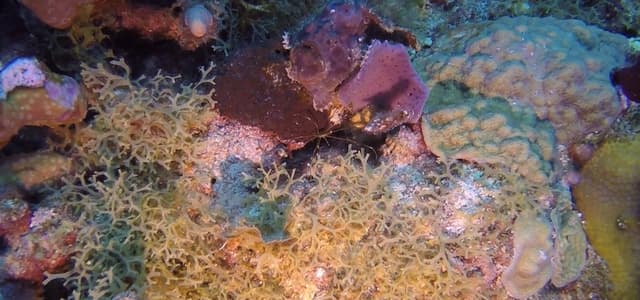
Longlure Frogfish
Antennarius multiocellatus
2 photos
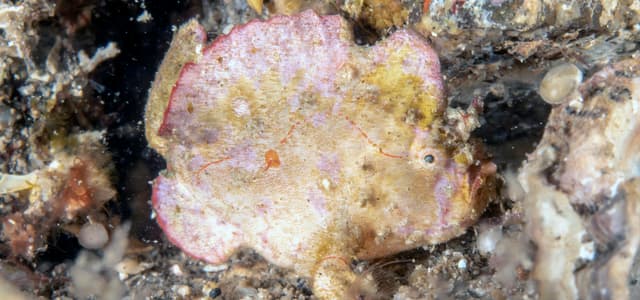
Randall's Frogfish
Antennarius randalli
2 photos
Sargassumfish
Histrio histrio
1 photo
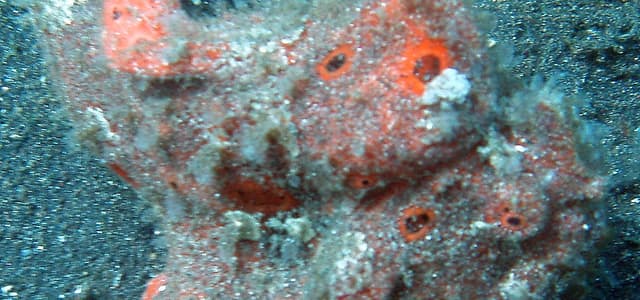
Scarlet Frogfish
Abantennarius coccineus
6 photos
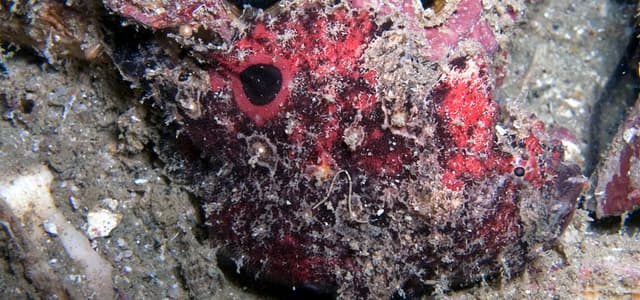
Spiny-tufted Frogfish
Abantennarius rosaceus
2 photos
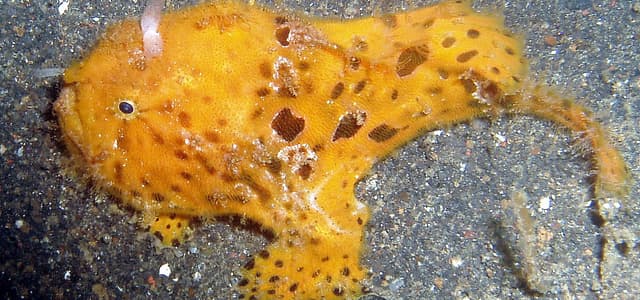
Spotfin Frogfish
Abantennarius nummifer
9 photos
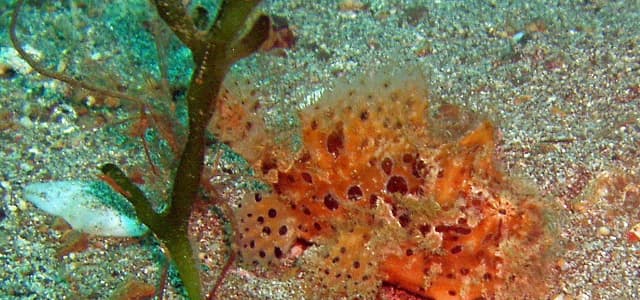
Striated Frogfish
Antennarius striatus
13 photos