Family · Invertebrates
Jellyfish
Scyphozoa & Cubozoa · 34 species on record
Drifting, pulsing, mostly water — and a few of the most dangerous animals in the ocean.
DID YOU KNOW?
They're about 95% water — and have no brain, heart or bones.
DID YOU KNOW?
One species, Turritopsis dohrnii, can revert to its juvenile form — effectively ageless.
DID YOU KNOW?
A box jelly has 24 eyes, including four that form real images.
What they are
Jellyfish aren't fish at all — they're free-swimming cnidarians, related to corals and anemones. A bell of jelly-like mesoglea pulses to move water, trailing tentacles armed with stinging cells (nematocysts) that fire on contact rather than by choice.
Where divers meet them
Most encounters happen in open water on ascent or during safety stops, and in seasonal blooms — the Red Sea in spring, northern Australia in summer. Sheltered lagoons and lakes can hold huge harmless aggregations, while wind and current push others up against reef walls.
Common jellyfish divers see
All 34 species →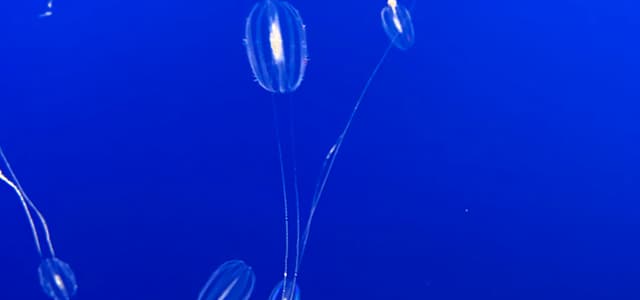
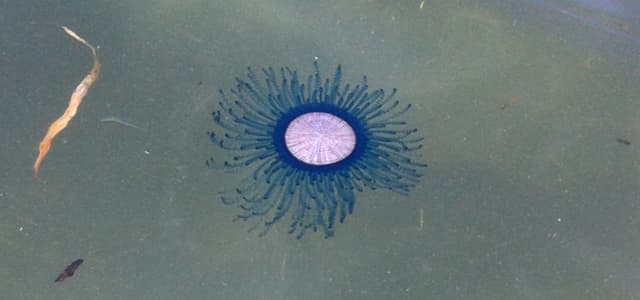
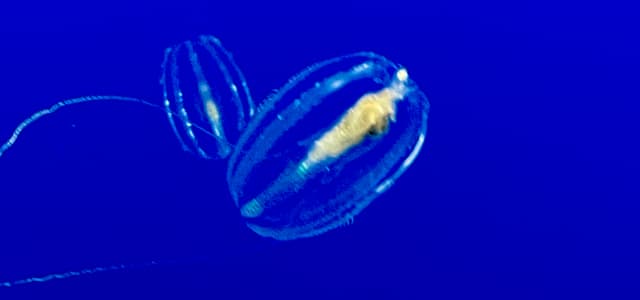
Telling them apart
- Bell shape.
- Flat saucer, deep dome or cube? A squarish bell means box jelly — treat with respect and keep your distance.
- Tentacle count & length.
- Four short bundles, dozens of fine threads, or metres of trailing lines?
- Markings on the bell.
- Four horseshoe gonads = moon jelly. Radial brown lines = compass jelly.
- Behaviour.
- Pulsing upright, drifting passively, or lying bell-down on the sand (upside-down jelly)?