Jellyfish & hydroids
Blue Button Jellyfish
Porpita porpita
Also known as: Blue Button, Blue Button Jelly, Disc Hydroid, Stinger, Stinging Bluebottle
ALSO KNOWN AS
- Blue Button
- Blue Button Jelly
- Disc Hydroid
- Stinger
- Stinging Bluebottle
01
Overview
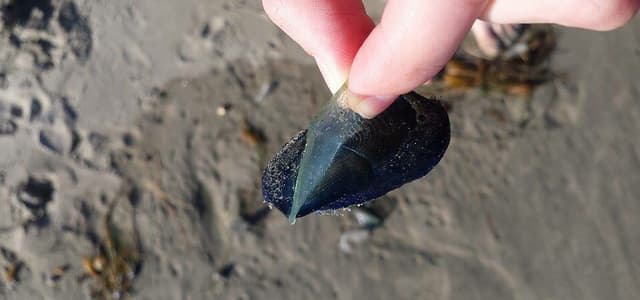
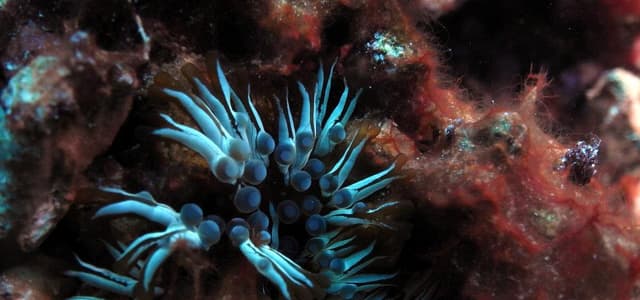
Found near the surface, drifting in bays, estuaries and lagoons also out in the oceans, moving with the currents, tides and winds. They are often blown ashore in bad weather. The round hard float is almost flat with stinging strands of hydroid surrounding it, each strand has little branchlets off, they do not give a powerful sting, more of an irritation.
Depth - surface of the water
These are not true jelly fish they are Siphonophore a colonial organism made up of zooids.
Jellyfish are 95% water.
They have no heart, brain, blood, or gills. The body of the Jellyfish is called a bell. They do have a mouth, tentacles and arms around their mouth. They use their arms around their mouth to help sense and find food that ends up inside their mouth.
02
How to identify
03
Habitat & where to find it
- Range · Worldwide
- Country only · 2
LIVES IN
Found near the surface, drifting in bays, estuaries and lagoons also out in the oceans, moving with the currents, tides and winds.
RANGE
04
Adult photos 2
05
Other species worth knowing
Partners, neighbours & enemies
The blue button is preyed upon by the Glaucus atlanticus - Atlantic Glaucus. They drift along with them feeding off their tentacles!
06
Discussion 4
4 comments
- Jules· 29 Jan 2017
Thousands or millions washed up on the beach 29/01/17 at Nambucca Heads, mid-north coast - we haven't seen them before. Many had no blue edge, simply off-white; many were small as 8mm wide. No stingers were obvious on the high tide line, all washed together. Thanks for post.
- Robyn Anderson· 5 Jan 2016
Can you tell me if these button bluebottle is in Australia as we have lived many years by the seaside and have never seen them before.


ALL STAGES
FOR THE MARINE-BIOLOGY CURIOUS
Deep dive
07
More in the family
Anthoathecata