Fire Coral
Milleporidae
Also known as: Fire Coral, Fire Hydroid, Hydrocoral, Lace Coral, Octocoral
- Fire Coral
- Fire Hydroid
- Hydrocoral
- Lace Coral
- Octocoral
Overview
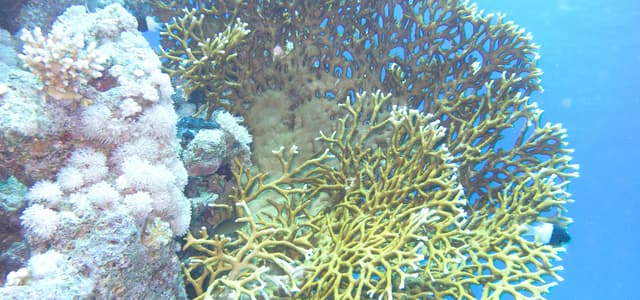
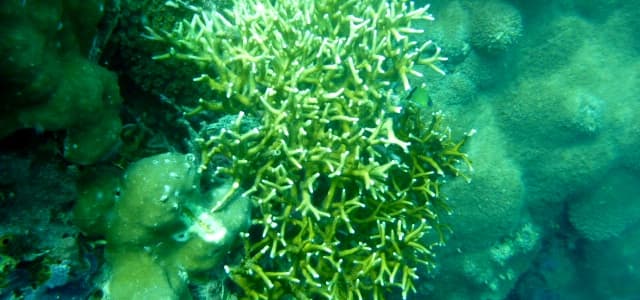
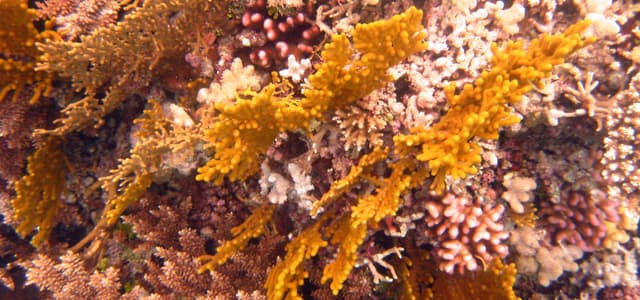
Found growing sideways like a net to ensnare passing plankton, on exposed coral and rocky reefs with strong currents .This hydroid has a powerful sting. Found in warm waters of the world.
They feed on plankton.
They can be easily destroyed by bad weather, divers and fishing ext because their skeleton is so brittle!
Hydroids look like tiny ferns or feathers, many are smaller than 5cm although some can grow to 50cm.
They are found competing for space with sponges on bare patches of dead coral and rocks.
Stinging hydroid polyps are very small and are carried on the stem and side branches of feather/fern like colonies. The specific layout of the polyps on the branches, as well as the arrangement of the branches are used to classify different species.
The class Hydrozoa encompasses the most diverse group of venomous species and includes the stinging hydroids, hydrocorals (firecorals) and the portugese man of war (siphonophore)
Some species can inflict painful stings.
How to identify
Habitat & where to find it
- Range · Circumtropical
- Country only · 1
Found growing sideways like a net to ensnare passing plankton, on exposed coral and rocky reefs with strong currents .This hydroid has a powerful sting.
Adult photos 1
Other species worth knowing
Partners, neighbours & enemies
Discussion
No comments yet. Seen one, or got a question about it? Start the discussion.
Deep dive
Taxonomy
- kingdomAnimalia
- phylumCnidaria
- classHydrozoa
- orderAnthoathecata
- familyMilleporidae
- genusMilleporidae Fleming, 1828
SourcesWoRMS
More in the family
Anthoathecata