Shortfin Mako
Isurus oxyrinchus
Also known as: Atlantic Mako, Blue Pointer, Blue Shark, Bonito Shark, Dog Shark, Isurid Shark, Mako, Mako Shark, Point-nosed Mackerel Shark, Pointed-nose Shark, Sharpnose Mackerel Shark, Sharp-nosed Shark, Shortfin Mako Shark, Shortfin Shark, Short-finned Mackerel Shark, Snapper Shark
- Atlantic Mako
- Blue Pointer
- Blue Shark
- Bonito Shark
- Dog Shark
- Isurid Shark
- Mako
- Mako Shark
- Point-nosed Mackerel Shark
- Pointed-nose Shark
- Sharpnose Mackerel Shark
- Sharp-nosed Shark
- Shortfin Mako Shark
- Shortfin Shark
- Short-finned Mackerel Shark
- Snapper Shark
Overview
The shortfin mako is the fastest shark known, a large, warm-bodied hunter of the open ocean that holds around 50km/h and can burst to 74km/h. Its speed, its gleaming blue body and its habit of striking prey from below make it one of the more recognisable sharks in the sea.
It lives in warm and temperate seas worldwide, from the surface down to about 150m, usually far from land but sometimes near islands and inlets, and it seldom enters water colder than 16°C. It is among the sharks seen most often in New Zealand waters.
Appearance
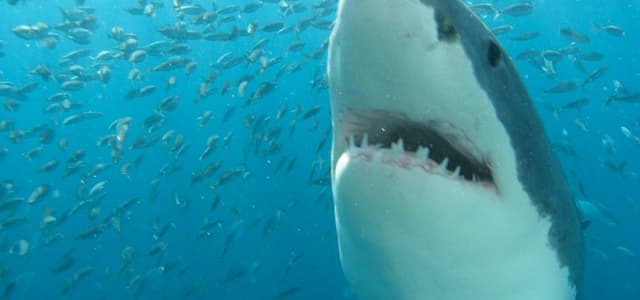
Most adults measure 2.5 to 3.2m and weigh 60 to 140kg. Females outgrow males, a few passing 3.8m, and the longest verified fish was 4.45m. The streamlined body has a pointed snout, with shining metallic blue upperparts, a white belly and a sharp boundary between the two colours. The closest lookalike is the longfin mako, which has far longer pectoral fins and larger eyes.
Behaviour
This is one of the very few warm-bodied sharks. A heat-exchanging circulation keeps it 4 to 5.5°C warmer than the surrounding sea, which supports constant high activity, helps to explain its speed and gives it an edge over cold-blooded prey.
It is also a long-distance traveller. One covered 2,128km in 37 days, about 58km a day.
Few sharks have a larger brain for their body size. In tests makos learned quickly and worked out whether researchers posed a threat. They rely on sight above all, along with smell and hearing, and unlike the great white they do not use electrical senses to hunt.
Feeding
Squid, other cephalopods and bony fish such as mackerel, herring, tuna, bonito and billfish make up most of the diet. It will also take other sharks, dolphins, porpoises, sea turtles, seabirds and crustaceans, and it scavenges fish from longlines and nets.
It stalks from below, keeping its target in view overhead, then drives upwards and shears pieces from the flanks and fins. A mako eats about 3% of its weight each day and digests a typical meal in under two days.
Diet shifts with size. Once a mako passes about 3m its inner teeth become much wider and flatter, which suits big prey: dolphins, billfish and other sharks.
Life cycle
Females give birth to live young after a pregnancy of 15 to 18 months, with the embryos feeding on unfertilised eggs in the womb, though they are not known to eat each other. Between four and 18 pups are born in late winter and early spring, each about 70cm long, and a single litter can have several fathers. A mother may then rest for 18 months, so on average she bears young only every three years.
Growing up takes a long time. Males mature at around 8 years and females at around 18, and the oldest fish aged in one major study were a male of 29 and a female of 32.
Dangers
Attacks are uncommon. Between 1980 and 2024 there were 10 recorded attacks on people, three of them fatal, and 20 on boats. Many were put down to harassment or to a shark being caught on a line. Divers report that before attacking it swims in a figure of eight and comes in with its mouth open.
Threats
The IUCN lists it as Endangered. Sport and commercial fisheries both target it, and many are also taken by accident in driftnets set for other species.
Relationship with people
The name comes from Māori, where mako means shark or shark tooth, and an 1848 account of New Zealand describes its tooth as highly prized by Māori.
Anglers love it for its fast runs, flips and high leaps when hooked, and some have even jumped into the boat. Fly fishing for it has grown popular off San Diego, home to one of only three known mako rookeries, where charter boats run catch-and-release trips.
It has never lasted in captivity, and the record is just five days. In fiction it bites the marlin in Hemingway's The Old Man and the Sea, and photographs of a mounted museum specimen were the model for the shark on the Jaws film poster.
Notes & fun facts
- DID YOU KNOWThe strongest bite measured for any shark came from a mako at Mayor Island, New Zealand, in 2020, at roughly 13,000 newtons.
- DID YOU KNOWHooked makos can leap high out of the water, and a few have ended up inside the boat.
- DID YOU KNOWMakos off Sicily have been found with broken swordfish bills lodged in their heads and gills, so swordfish sometimes fight back.
- DID YOU KNOWUnborn pups feed on unfertilised eggs in the womb during a pregnancy lasting 15 to 18 months.
- DID YOU KNOWMako is a Māori word that can mean either a shark or a shark's tooth.
How to identify
- Behaviour
- leaps from wateropen water
Tap any trait to see other fish that share it.
Habitat & where to find it
- Range · Circumtropical
- Country only · 1
Found in the open ocean from the surface downwards, usually far from land but sometimes near islands and inlets, in warm and temperate seas worldwide.
Adult photos 1
Discussion
No comments yet. Seen one, or got a question about it? Start the discussion.
Deep dive
Taxonomy
- kingdomAnimalia
- phylumChordata
- classElasmobranchii
- orderLamniformes
- familyLamnidae
- genusIsurus
- speciesIsurus oxyrinchus Rafinesque, 1810
Morphology
Spindle-shaped, with blunt triangular dorsal and pectoral fins and a tall tail whose two lobes are close to equal. A single strong keel runs along each side of the tail base, and the teeth have no side cusps. Those two features separate it from porbeagles. The longfin mako has much larger pectoral fins, larger eyes and a darker mouth area. Large fish can be darker where smaller ones are white, and juveniles carry a blackish smudge on the snout tip.
More in the family
Lamniformes