John Reeves· 2 Nov 2017
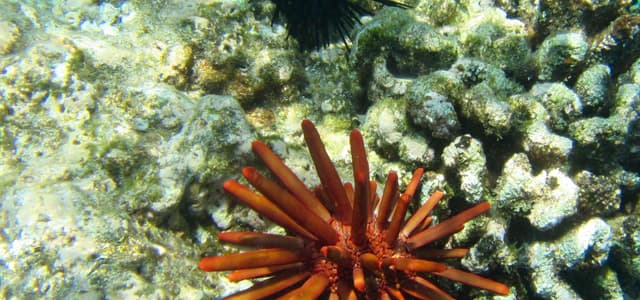
Several colonies of these found on the north side of Ono Island, Kadavu, in Fiji in October 2017. Photographs available if required.
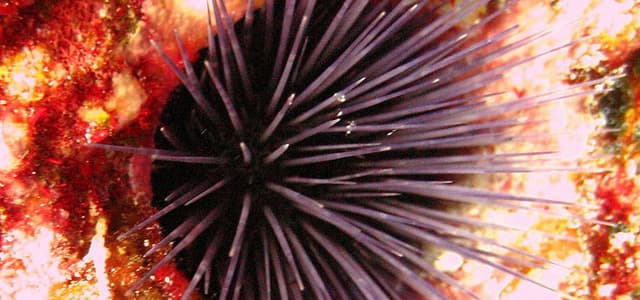
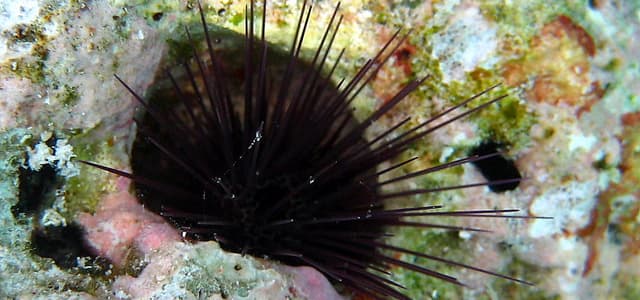
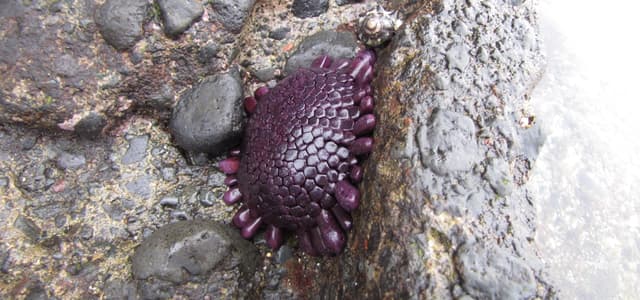
Echinometra mathaei
Also known as: Burrowing Sea Urchin, Burrowing Urchin, Hedgehog Sea Urchin, Mathaei Sea Urchin, Matha's Sea Urchin, Pale Rock-boring Urchin, Reef Boring Sea Hedgehog, Sea Hedgehog, Tropical Sea Urchin
Found in crevices and holes of hard substrates, over shallow fore reefs, of coral and rocky reefs.
The spines on the side of these sea urchins are worn down by continual abrasion trying to stay in the hole while the longer dorsal spines act as a defence against predators.
Sea Urchins use tubed feet to get around, often in large impenetrable masses for protection.
Sometimes they hitch a lift on the back of crabs.
They have well developed jaws for grinding their prey.
Their anus is on top in most sea urchins, except the heart urchins where it is at the rear.
Predators of sea urchins are triggerfish and large wrasses, who nibble away at their spines before turning them over to eat the fleshy undersides.
Sea Urchins are highly venomous and can piece through a wet-suit.
Some are sensitive to light and have the ability to shoot venom loaded spines at a short distance.
To be avoided.
Found in crevices and holes of hard substrates, over shallow fore reefs, of coral and rocky reefs.
1 comment
Several colonies of these found on the north side of Ono Island, Kadavu, in Fiji in October 2017. Photographs available if required.
Sea Urchins (Echinometridae)