Redspot Sponge Crab
Lewindromia unidentata
Also known as: Redspot Crab, Sponge Crab, True Crab
- Redspot Crab
- Sponge Crab
- True Crab
Overview
The redspot sponge crab is a tiny, primitive reef crab that wears a living sponge, sea squirt or piece of soft coral on its back like a hat, a disguise that also makes it a nasty mouthful for predators.
It hides by day among coral rubble, algae and reef crevices, or shelters in the tops of sea anemones, sponges and tunicates, on shallow tropical Indo-Pacific reefs from the intertidal zone down to about 30m. Some larger members of the sponge crab family live as deep as 100 to 500m, but this one keeps to the warmer upper reef.
Appearance
The body and legs are covered in fine hair or fuzz. The shell is only 1 to 1.5cm across, but the crab can look several times bigger than that, because its overall size depends on how large its hat has become.
The last two pairs of legs are short and bend upwards over the back, where they grip the cover in place.
Behaviour
The crab is nocturnal and keeps out of sight during the day. Its hat does more than hide it. The cover stays alive and keeps growing, and among sponge crabs generally a sponge will in time mould itself to the shape of the shell. It often gives off unpleasant or toxic chemicals, and these put off predators such as fish and octopuses.
Feeding
It feeds on dead animals and plants.
Notes & fun facts
- DID YOU KNOWSponge crabs work like tailors, snipping a piece of sponge with their front pincers and hollowing out the underside to fit the curve of the shell.
- DID YOU KNOWResearch suggests sponge crabs have a keen sense of their own size, trying on a new cap and adjusting it again and again until it fits.
- DID YOU KNOWA sponge crab that loses its cap will search for it, attack a thief and even shift heavy rocks to get it back.
- DID YOU KNOWThe sponge crab family is among the most primitive of the true crabs, and its members still carry traces of a tail fan like that of lobsters and shrimps.
- DID YOU KNOWSome sponge crab species skip the drifting larval stage and hatch as tiny crabs that shelter under their mother's abdomen.
How to identify
- Pattern
- red spots
- Behaviour
- camouflagedhidesnocturnal
Tap any trait to see other fish that share it.
Diver’s cheat sheet
- 1Where to lookSearch coral rubble, algae and crevices, where it hides by day before coming out at night.
Habitat & where to find it
- Range · Indo-Pacific
- Country only · 1
Found hiding by day among coral rubble, algae and reef crevices, or sheltering in the tops of sea anemones, sponges and tunicates, on shallow tropical reefs down to about 30m.
Adult photos 1
Discussion
No comments yet. Seen one, or got a question about it? Start the discussion.
Deep dive
Taxonomy
- kingdomAnimalia
- phylumArthropoda
- classMalacostraca
- orderDecapoda
- familyDromiidae
- genusLewindromia
- speciesLewindromia unidentata (Rüppell, 1830)
SourcesWoRMS
Morphology
A very small crab with a carapace 1 to 1.5cm wide and a fine coat of hair or fuzz on the body and legs. The last two pairs of legs are shortened and bend up over the back, where they grip the piece of sponge, sea squirt or soft coral it carries.
More in the family
Decapoda
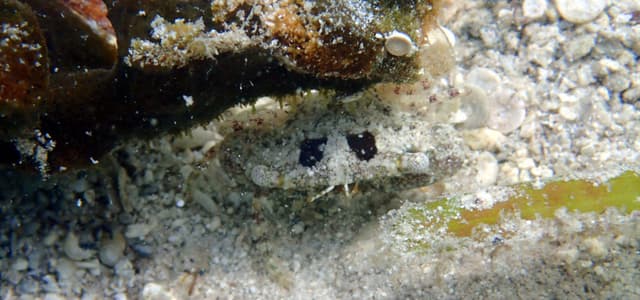
Admete Crab
Thalamita admete
1 photo
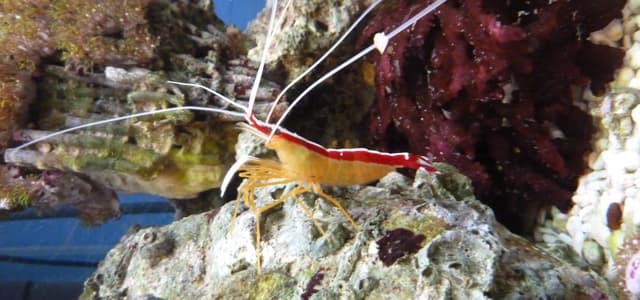
Ambon Cleaner Shrimp
Lysmata amboinensis
12 photos
Ambon Criniod Shrimp
Laomenes amboinensis
1 photo
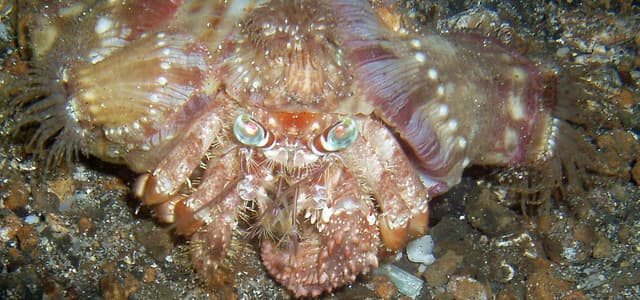
Anemone Hermit Crab
Dardanus pedunculatus
18 photos
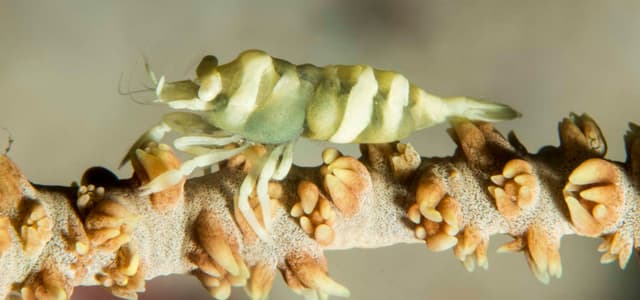
Anker's Whip Coral Shrimp
Pontonides ankeri
2 photos
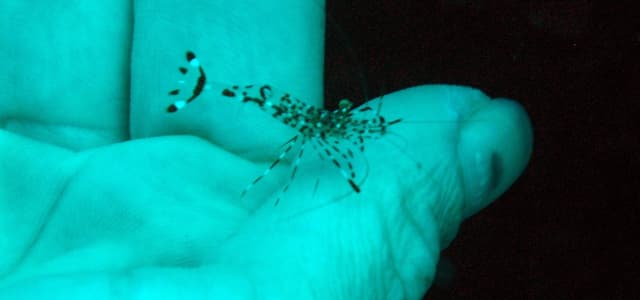
Anton Bruuni Cleaner Shrimp
Urocaridella antonbruunii
8 photos
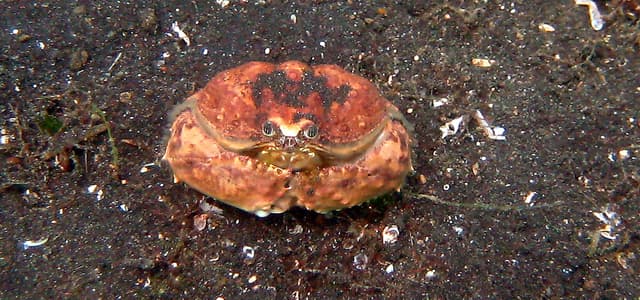
Arched Box Crab
Calappa convexa
1 photo
Asian Paddle Crab
Charybdis (Charybdis) japonica
2 photos
Australian Land Hermit Crab
Coenobita variabilis
2 photos
Banded Boxer Shrimp
Stenopus hispidus
25 photos
Banded Porcelain Crab
Petrolisthes galathinus
1 photo
Banded Tozeuma Shrimp
Tozeuma armatum
1 photo