Portuguese Man O' War
Physalia utriculus
Also known as: Bluebottle, Bluebottle Jellyfish, Fullsail Jellyfish, Indo-Pacific Portuguese Man-of-War, Man-of War, Pacific Man-O-War, Sailing Jellyfish, Stinging Bluebottle, Stinger
- Bluebottle
- Bluebottle Jellyfish
- Fullsail Jellyfish
- Indo-Pacific Portuguese Man-of-War
- Man-of War
- Pacific Man-O-War
- Sailing Jellyfish
- Stinging Bluebottle
- Stinger
Overview
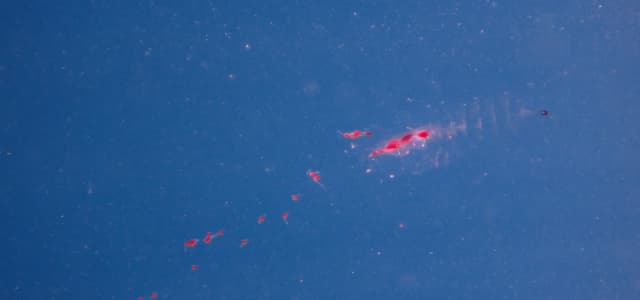
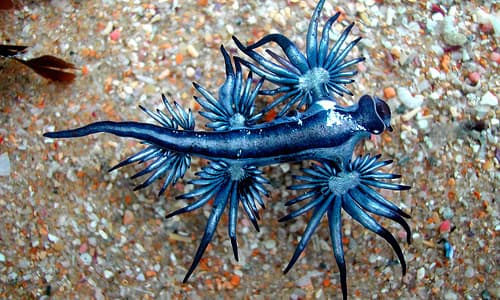
Found sometimes in huge numbers, near the surface, drifting in bays, estuaries, lagoons and out in the oceans, moving with the currents, winds and tides, where they are often blown ashore in bad weather. They have long tentacles hanging down in the water, it is these tentacles that carry the venom and can deliver powerful stings. A few of it's predators are The Blue Sea Slug - Glaucus Atlanticus, Blanket Octopus, Ocean Sunfish and Loggerhead Sea Turtles.
Widespread Indo Pacific
Portuguese Man O' War are often found with the fish Nomeus gronovii - Man-of-war fish and the sea slug Glaucus atlanticus - Atlantic Glaucus
They drift along with them feeding off their tentacles!
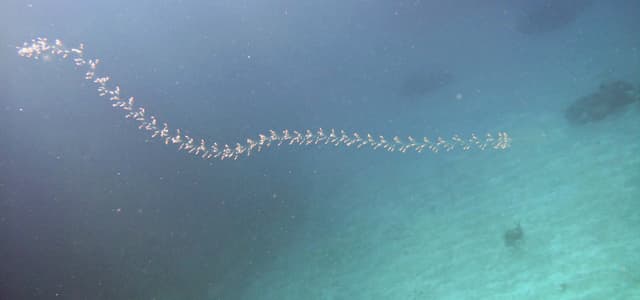
These are not true jelly fish they are Siphonophore a colonial organism made up of zooids.
Jellyfish are 95% water.
They have no heart, brain, blood, or gills. The body of the Jellyfish is called a bell. They do have a mouth, tentacles and arms around their mouth. They use their arms around their mouth to help sense and find food that ends up inside their mouth.
How to identify
Habitat & where to find it
- Range · Indo-Pacific
- Country only · 9
Found sometimes in huge numbers, near the surface, drifting in bays, estuaries, lagoons and out in the oceans, moving with the currents, winds and tides, where they are often blown ashore in bad weather.
Adult photos 9
Other species worth knowing
Partners, neighbours & enemies
Discussion
No comments yet. Seen one, or got a question about it? Start the discussion.
Deep dive
More in the family
Siphonophorae