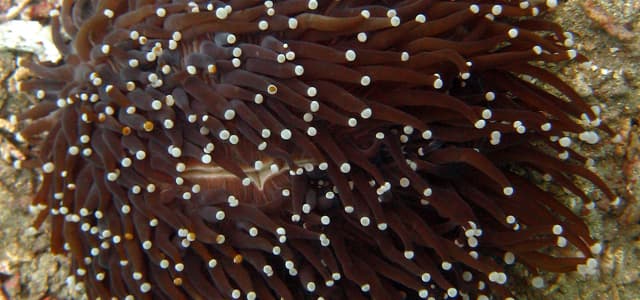
Mole Coral
Polyphyllia talpina
Also known as: Creeping Stone Slug, Feather Coral, Fungiid Coral, Joker's Boomerang Coral, Mole Mushroom Coral, Mushroom Coral, Oker's Boomerang Coral, Plate Coral, Slipper Coral, Slipper Mushroom Coral, Striate Boomerang Coral, Talpina Slug Coral, Tongue Coral
- Creeping Stone Slug
- Feather Coral
- Fungiid Coral
- Joker's Boomerang Coral
- Mole Mushroom Coral
- Mushroom Coral
- Oker's Boomerang Coral
- Plate Coral
- Slipper Coral
- Slipper Mushroom Coral
- Striate Boomerang Coral
- Talpina Slug Coral
- Tongue Coral
Overview
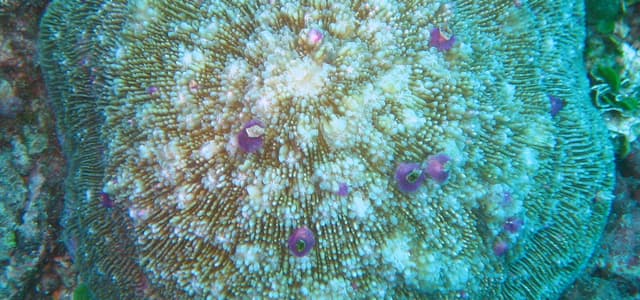
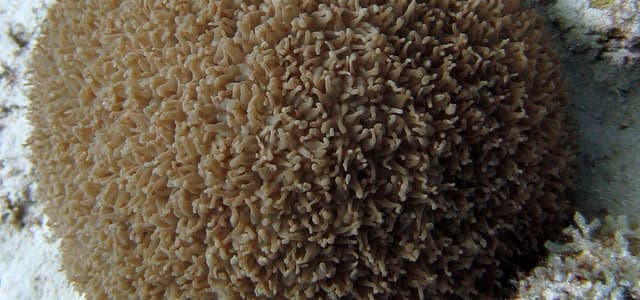
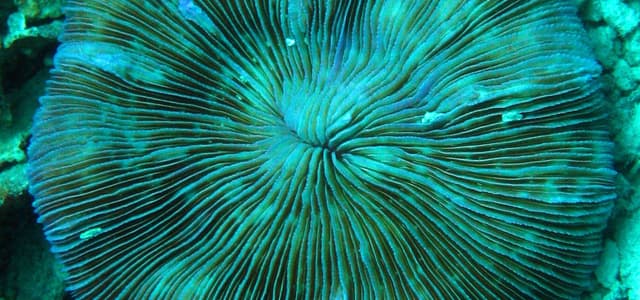
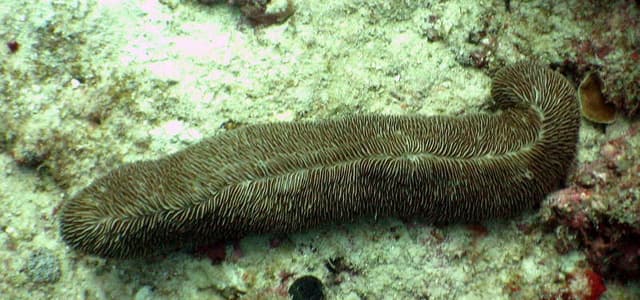
Found singly and free living, over rubble and sandy areas, on reef flats and slopes of lagoons, coral and rocky reefs. Sometimes in a T, X or Y shape. Colour varies from brown, cream, green, or grey.
Stony corals have hard stony skeletons, their polyps have six tentacles or are made up of multiples of six. These are usually nocturnal, however if the sky's are overcast, then many will feed during the day.
Generally the more robust corals life on exposed areas, while the smaller corals live in sheltered lagoons or deeper waters.
Stony corals are reef building corals and embedded in their flesh are thousands of minute single-celled marine plants called zooxanthellae which accounts for their colour.
These corals support a huge diversity of life, their main predator being the crown-of-thorns sea star.
How to identify
Habitat & where to find it
- Range · Indo-Pacific
- Country only · 2
Found singly and free living, over rubble and sandy areas, on reef flats and slopes of lagoons, coral and rocky reefs.
Adult photos 2
Discussion
No comments yet. Seen one, or got a question about it? Start the discussion.
Deep dive
Taxonomy
- kingdomAnimalia
- phylumCnidaria
- classHexacorallia
- orderScleractinia
- familyFungiidae
- genusPolyphyllia
- speciesPolyphyllia talpina (Lamarck, 1801)
SourcesWoRMSCorals of the World
More in the family
Stony Corals (Fungiidae)