Lobed Comb Jelly
Bolinopsis infundibulum
Also known as: Arctic Ctenophore, Common Northern Comb Jelly, Deep Sea Comb Jelly, Lobed Sea Gooseberry, Lobate Ctenophore, Northern Comb Jelly, Oblong Comb Jelly, Sea Gooseberry
- Arctic Ctenophore
- Common Northern Comb Jelly
- Deep Sea Comb Jelly
- Lobed Sea Gooseberry
- Lobate Ctenophore
- Northern Comb Jelly
- Oblong Comb Jelly
- Sea Gooseberry
Overview
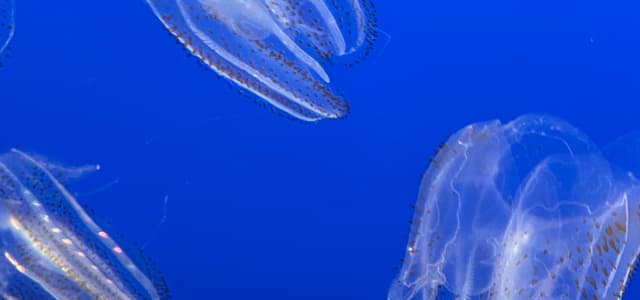
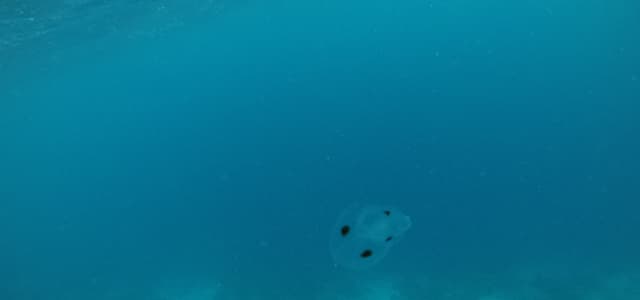
The lobed comb jelly is a see-through, oblong drifter of northern seas that looks like a jellyfish but has no stinging cells, and it shimmers as rows of beating cilia carry it along.
It occurs singly or in swarms, swimming vertically and cruising up and down the water column to feed, both in shallow water and at great depth. It lives across the northern Atlantic, from the Arctic to the Mediterranean and the Gulf of Maine, and in the North Pacific from the Bering Sea to California. It occurs down to about 1000m, and the biggest individuals live deepest.
Appearance
Comb jellies are not jellyfish, though the two are easily confused. This one grows to about 15cm, with a thin gelatinous wall that is see-through or sometimes milky white. One end is bluntly pointed and the other holds the mouth, flanked by two big lobes that help steer food in. Two short tentacles with fringed edges complete the outline.
Behaviour
Four long and four short rows of cilia, set on small plates, beat together to move the animal along, and this is what gives it an iridescent look. Off Norway it builds up in large numbers from April to August, and off Scotland from April to June, making it an important part of the food chain there.
Feeding
Where a jellyfish would use stinging cells, this animal catches food with colloblasts. It also creates a current to bring food within reach: four gelatinous projections fringed with cilia, called auricles, sit between the lobes and pull water towards the mouth, where a ring of little tentacles traps weak swimmers. Prey includes fish eggs and fry, copepod larvae, snail larvae, rotifers and other tiny zooplankton. Later in the year, larger individuals in deeper water have been reported eating copepods.
Threats
Numbers can fall away quickly after their peak in spring, and another comb jelly, Beroe cucumis, is thought to be responsible.
Notes & fun facts
- DID YOU KNOWAs many as 250 have been counted in a single square metre in mid-May, shortly before the numbers crash.
- DID YOU KNOWThat sudden crash is thought to be the work of another comb jelly, Beroe cucumis, which preys on it.
- DID YOU KNOWThe plates that carry its cilia are bioluminescent.
- DID YOU KNOWIt gathers in huge numbers off Norway from April to August and off Scotland from April to June.
How to identify
Habitat & where to find it
- Range · Northeast Pacific, Northwest Atlantic, Northeast Atlantic, Mediterranean
- Exact location · 2
Found singly, or in swarms, swimming vertically, cruising up and down the water column feeding, both in shallow waters, and at great depths.
Adult photos 2
Discussion
No comments yet. Seen one, or got a question about it? Start the discussion.
Deep dive
Taxonomy
- kingdomAnimalia
- phylumCtenophora
- classTentaculata
- orderLobata
- familyBolinopsidae
- genusBolinopsis
- speciesBolinopsis infundibulum (O.F. Müller, 1776)
Morphology
An oblong, transparent or milky comb jelly with a bluntly pointed end and two large lobes beside the mouth. It has two short tentacles with fringed edges, four auricles between the lobes, and eight rows of cilia, four long and four short.
More in the family
Lobata