Japanese Giant Spider Crab
Macrocheira kaempferi
Also known as: Crabzilla, Giant Crab, Giant Spider Crab, Japanese Giant Crab, Japanese Spider Crab, Spider Crab, Tall-footed Crab, Tall-legged Crab
- Crabzilla
- Giant Crab
- Giant Spider Crab
- Japanese Giant Crab
- Japanese Spider Crab
- Spider Crab
- Tall-footed Crab
- Tall-legged Crab
Overview
The Japanese giant spider crab (Macrocheira kaempferi) has the widest leg span of any arthropod, about 3.7m from claw to claw, on a body only around 40cm across. For all its alarming looks, this deep-water giant is reported to be gentle.
It lives on rocky and sandy sea floors around Japan, mostly off the southern coasts of Honshu between Tokyo Bay and Kagoshima Prefecture, with outlying populations off Iwate Prefecture and Taiwan. Adults stay deep, between about 50 and 600m, favouring vents and holes, and are regular at 300m in Suruga Bay, where the water sits at about 10°C.
Appearance
Long, spindly legs and a small bumpy shell give it an unmistakable outline. It is orange, and the legs are dotted with white. The sexes differ in the claw arms: long in males, while in females they fall short of the next pair of legs.
Behaviour
Its armoured shell guards against octopuses and other bigger predators, but disguise matters too. The bumpy shell blends with a rocky bottom, and the crab dresses itself to complete the effect. Using its slender claws it twists and tears sponges, worm tubes and similar living material from the sea floor, passes each piece to its mouthparts to be turned and shaped, and fixes it to its shell. Held there by grip and secretions, the pieces carry on growing.
Some crabs pick materials to match their background. This one does not bother, and covers itself in whatever will break up its outline. Since it is active at night, the likely aim is to stay hidden from predators in the dark, not to stalk prey unseen.
Feeding
An omnivore and part-time scavenger, it eats both plants and animals. Some crabs scrape algae such as kelp and other plants from the sea floor, others prise open molluscs and small invertebrates, and dead or decaying fish are also taken.
Life cycle
Females carry their fertilised eggs on their abdominal appendages until they hatch, on average after about 10 days, in a season running from January to March. The young pass through four stages before adulthood. The first, the prezoea, is a small see-through form that lasts only minutes, most moulting within a quarter of an hour. Two zoeal stages follow, lasting 7 to 18 days, and then a megalopa stage of 25 to 45 days, all running longer in colder water.
Unlike the adults, the larvae drift near the surface on the currents, and they need water of about 11 to 20°C to survive. Survival is reported at about 70% through the first zoeal stage in the best conditions, falling to about 30% through the later stages.
Threats
Crab fisheries seek it out and it is prized as a delicacy in Japan, so conservation measures are in place to protect it from overfishing.
Relationship with people
In Japan it is called taka-ashi-gani, which means tall-legged crab.
Public aquariums keep it too. At home it has been shown at Osaka Aquarium Kaiyukan and Sunpiazza Aquarium in Sapporo, and much further afield at Monterey Bay Aquarium and Shedd Aquarium in the United States and Manila Ocean Park in the Philippines.
Notes & fun facts
- DID YOU KNOWWeighing up to 19kg, it is the second heaviest living arthropod, behind only the American lobster.
- DID YOU KNOWIts Japanese name, taka-ashi-gani, means tall-legged crab.
- DID YOU KNOWA moult takes about 100 minutes, and the crab cannot move while it works from the rear of its carapace through to its walking legs.
- DID YOU KNOWA female can lay up to 1.5 million eggs in a season, carrying them on her abdominal appendages until they hatch about 10 days later.
- DID YOU KNOWIts larvae drift near the surface in water of 12 to 15°C, far above the colder depths where the adults live.
How to identify
Habitat & where to find it
- Range · Northwest Pacific
- Country only · 4
Found on rocky and sandy sea floors around Japan, mostly off southern Honshu, where adults live deep and favour vents and holes.
Adult photos 4
Discussion
No comments yet. Seen one, or got a question about it? Start the discussion.
Deep dive
Taxonomy
- kingdomAnimalia
- phylumArthropoda
- classMalacostraca
- orderDecapoda
- familyMacrocheiridae
- genusMacrocheira
- speciesMacrocheira kaempferi (Temminck, 1836)
Morphology
A very long-legged crab with a bumpy carapace up to about 40cm wide and slender claw arms, longer in males. The first pleopods of males are unusually twisted. It looks similar to the much smaller European spider crab (Maja squinado), which belongs to a different family.
More in the family
Decapoda
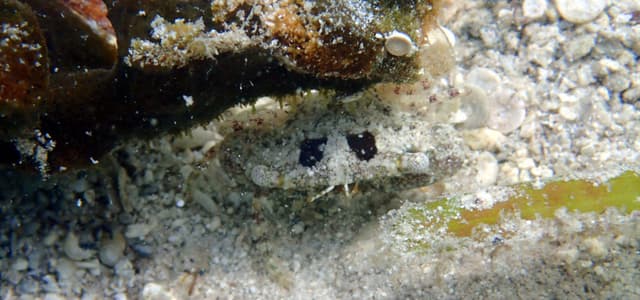
Admete Crab
Thalamita admete
1 photo
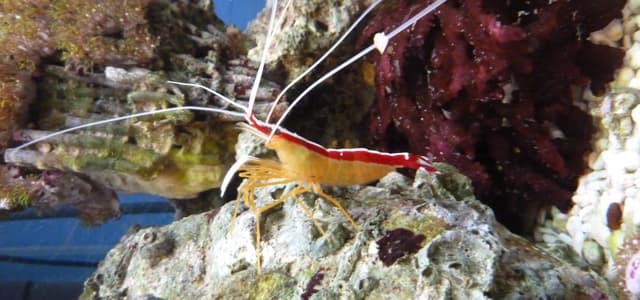
Ambon Cleaner Shrimp
Lysmata amboinensis
12 photos
Ambon Criniod Shrimp
Laomenes amboinensis
1 photo
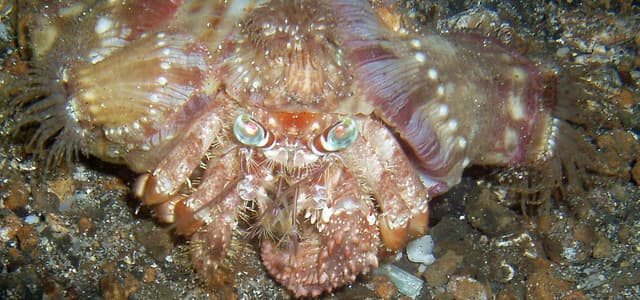
Anemone Hermit Crab
Dardanus pedunculatus
18 photos
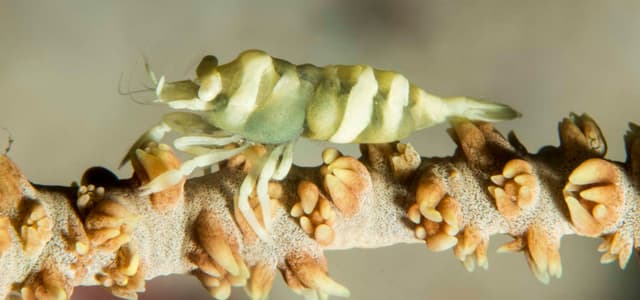
Anker's Whip Coral Shrimp
Pontonides ankeri
2 photos
Anton Bruuni Cleaner Shrimp
Urocaridella antonbruunii
8 photos
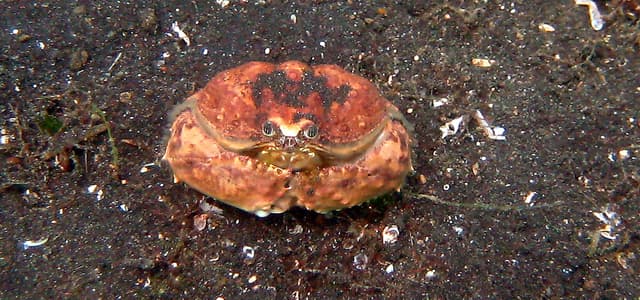
Arched Box Crab
Calappa convexa
1 photo
Asian Paddle Crab
Charybdis (Charybdis) japonica
2 photos
Australian Land Hermit Crab
Coenobita variabilis
2 photos
Banded Boxer Shrimp
Stenopus hispidus
25 photos
Banded Porcelain Crab
Petrolisthes galathinus
1 photo
Banded Tozeuma Shrimp
Tozeuma armatum
1 photo