Greater Argonaut
Argonauta argo
Also known as: Common Paper Nautilus, Little Skipper, Mediterranean Argonaut, Paper Nautilus, White Seahorses Nest
- Common Paper Nautilus
- Little Skipper
- Mediterranean Argonaut
- Paper Nautilus
- White Seahorses Nest
Overview
The greater argonaut is the largest of the argonauts, an open-water octopus whose female makes a paper-thin eggcase that coils around her body like a shell, which is why it is also called the paper nautilus.
It lives in open tropical and subtropical seas worldwide, keeping to deeper water by day and rising towards the surface at night to feed. Despite the name it is not a nautilus at all, and the delicate case is not a true shell but something the female makes herself to hold her eggs.
Appearance
Live animals show a blue sheen around the eyes and on the first pair of arms. The sexes differ enormously, with females reaching about 10cm in mantle length and males no more than 2cm. The eggcase is the largest in the genus, and can be told by the two rows of small sharp bumps along its narrow keel and the horn-like point on each side of the opening. A dwarf form lives in the Mediterranean Sea.
Behaviour
Females ride on jellyfish in the open ocean, gripping the upper surface with their side and lower arms. People had noticed this for a long time before anyone understood it. One female examined in detail was holding on to a jellyfish whose upper surface had been about half eaten away, with two apparent bite holes leading into its gut, so the host may serve as both meal and cover.
Mass strandings happen now and then, notably on South African and southern Australian coasts. They are seasonal, usually falling between April and August as spawning comes to an end.
Feeding
Open-water molluscs are thought to be the main food. Argonauts do not seem to chase prey. Captive females have been seen spreading the webs of their upper arms, then shooting out an arm to grab anything that touched them, which suggests they catch whatever bumps into them at sea. A female on a jellyfish can apparently also suck food particles out of its gut through the channels she has bitten.
Life cycle
Males mature when their mantle is just 8mm long. Females mature at about twice the size seen in Argonauta bottgeri and Argonauta hians, and usually start laying at 14 to 15mm, although this varies across the range. Even a small female can hold tens of thousands of embryos in her case.
Threats
Many predators eat it, and Alepisaurus ferox caught in the south-western Pacific have had it in their stomachs.
Relationship with people
In parts of Guangdong, China, it has a local name that translates as white sea-horse's nest. The sea horse here has nothing to do with the fish of that name: in the regional speech the word means a sand crab, such as a ghost crab.
In Taizhou, older people use a related pair of names, calling the shell a sea-horse shell and the soft animal an octopus.
Notes & fun facts
- DID YOU KNOWThe biggest eggcase on record measured 30cm.
- DID YOU KNOWOne small female in an eggcase 88mm long was estimated to be carrying 48,800 embryos.
- DID YOU KNOWFemales start making their eggcase when their mantle is only about 7mm long.
- DID YOU KNOWA local name in parts of Guangdong translates as white sea-horse's nest, although sea-horse there means a sand crab.
How to identify
- Body shape
- frilly
- Behaviour
- nocturnalopen water
Tap any trait to see other fish that share it.
Habitat & where to find it
- Range · Worldwide
- Exact location · 1
Found in open tropical and subtropical seas worldwide, keeping to deeper water by day and rising towards the surface at night to feed.
Adult photos 1
Discussion
No comments yet. Seen one, or got a question about it? Start the discussion.
Deep dive
Taxonomy
- kingdomAnimalia
- phylumMollusca
- classCephalopoda
- orderOctopoda
- familyArgonautidae
- genusArgonauta
- speciesArgonauta argo Linnaeus, 1758
Morphology
An octopus, not a shelled mollusc: only the female's eggcase looks like a shell. The case has two rows of small sharp bumps along a narrow keel, smooth ribs across its walls, and a thickened opening that forms a horn-like point on each side. The eggcase of this species is the largest in the genus.
More in the family
Octopoda
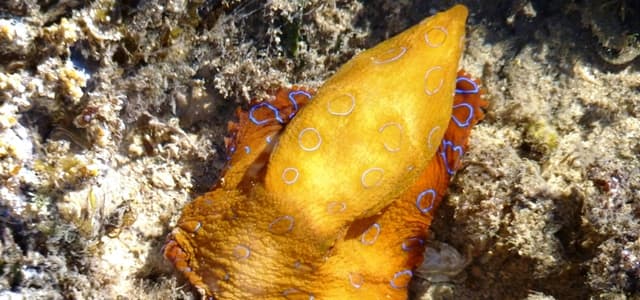
Blue-ringed Octopus
Hapalochlaena lunulata
1 photo
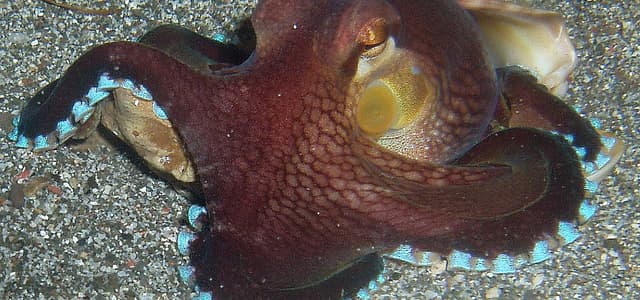
Coconut Octopus
Amphioctopus marginatus
37 photos
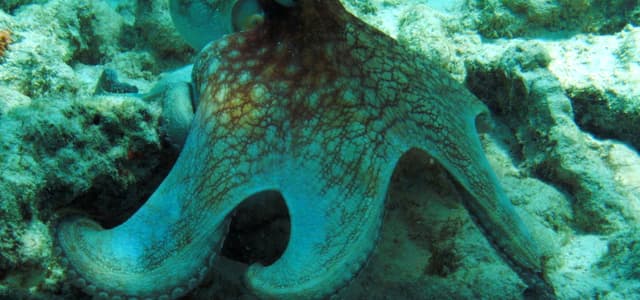
Common Octopus
Octopus vulgaris
21 photos
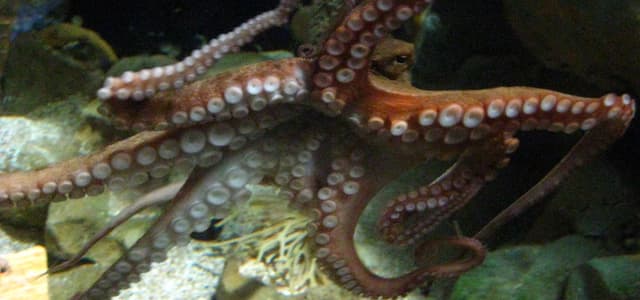
Common Sydney Octopus
Octopus tetricus
2 photos
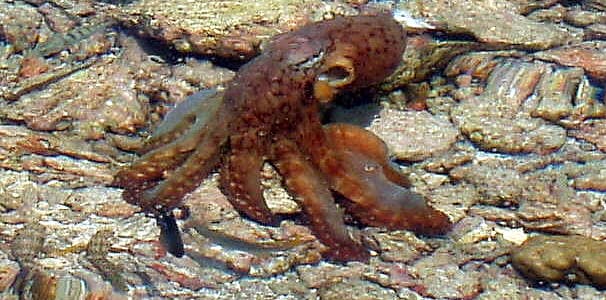
Day Octopus
Octopus cyanea
119 photos
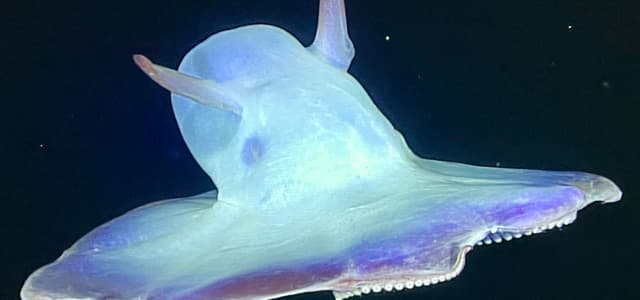
Dumbo Octopus
Grimpoteuthis umbellata
1 photo
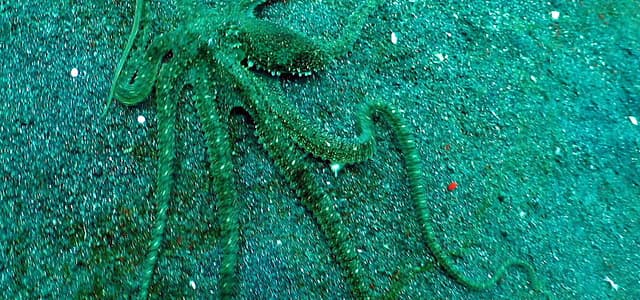
Lilliput Longarm Octopus
Macrotritopus defilippi
8 photos
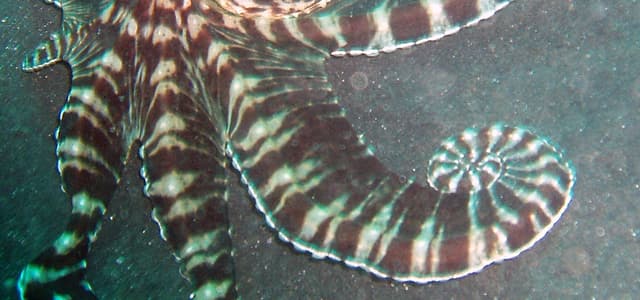
Mimic Octopus
Thaumoctopus mimicus
5 photos
Poison Ocellate Octopus
Amphioctopus siamensis
2 photos
Starry Night Octopus
Pinnoctopus luteus
1 photo
Wonderpus Octopus
Wunderpus photogenicus
6 photos