Blue-ringed Octopus
Hapalochlaena lunulata
Also known as: Blue Ring Octopus, Greater Blue-ringed Octopus
- Blue Ring Octopus
- Greater Blue-ringed Octopus
Overview
Found singly, in their burrows or foraging for food, over mixed sand and rubble areas of bays, lagoons and rock-pools. Depth of colour varies to blend in with surroundings, their blue rings also vary, when alarmed they will show more and brighter rings to warn it's predators.
They feed on bivalves, crustaceans and small fish.
The Blue-ringed Octopus are highly venomous not only to their prey but also to humans. They inject their prey by biting with a powerful neurotoxin to paralyze, which then allows the octopus to devour its prey.
For humans this causes respiratory arrest!
Octopus make their homes in holes in the reef or bury in the sand.
They can often be found by the tell tail debris outside the holes.
Octopus feed by grabbing their prey with their tentacles or by spreading their skirt (the webbing between their tentacles) over the reef and hoovering up underneath.
They have a beak for biting their prey, the bite quickly paralyses their prey.
Some of the smaller Octopus are venomous to humans.
How to identify
Tap any trait to see other fish that share it.
Habitat & where to find it
- Range · Indo-West Pacific
- Country only · 1
Found singly, in their burrows or foraging for food, over mixed sand and rubble areas of bays, lagoons and rock-pools.
Adult photos 1
Discussion
No comments yet. Seen one, or got a question about it? Start the discussion.
Deep dive
More in the family
Octopuses (Octopodidae)
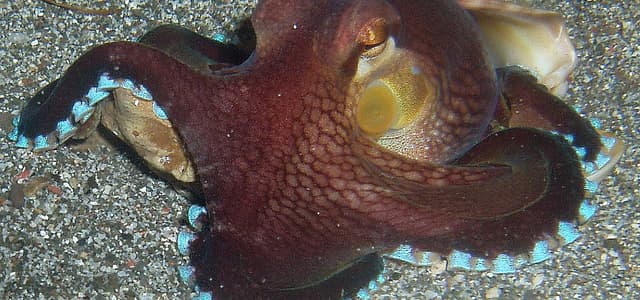
Coconut Octopus
Amphioctopus marginatus
37 photos
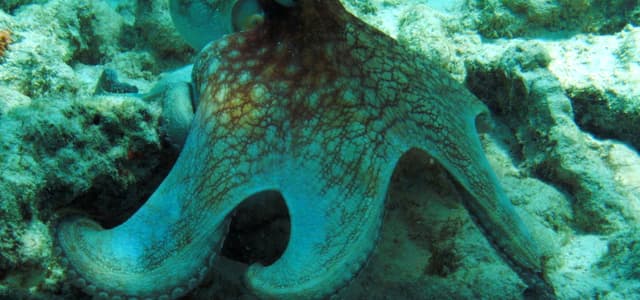
Common Octopus
Octopus vulgaris
21 photos
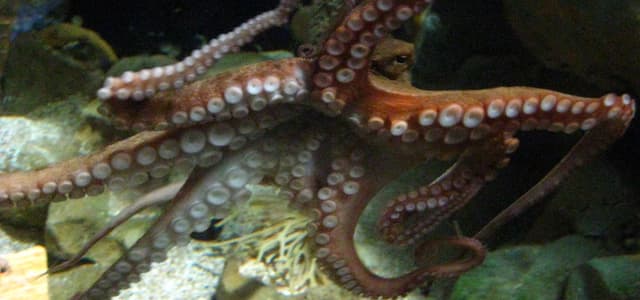
Common Sydney Octopus
Octopus tetricus
2 photos
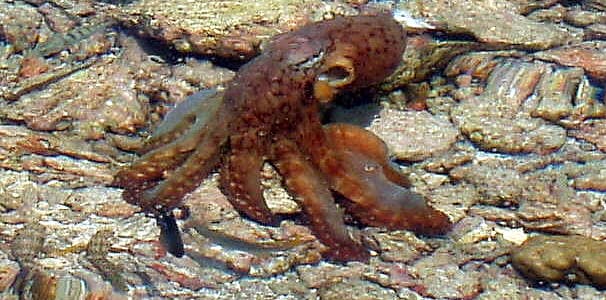
Day Octopus
Octopus cyanea
119 photos
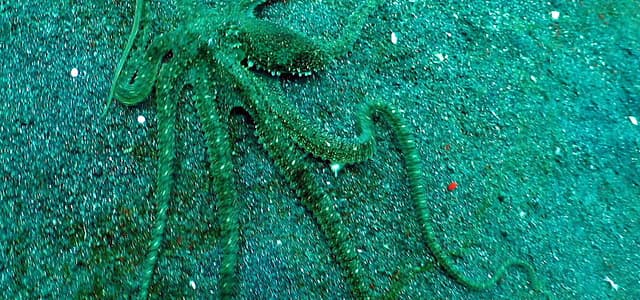
Lilliput Longarm Octopus
Macrotritopus defilippi
8 photos
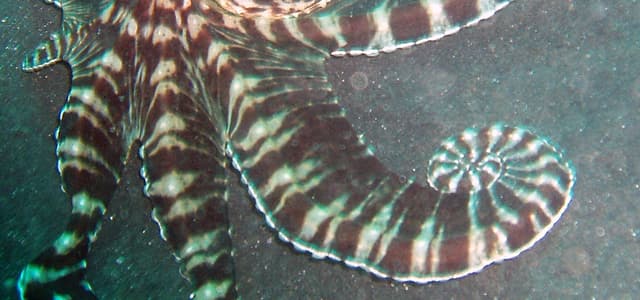
Mimic Octopus
Thaumoctopus mimicus
5 photos
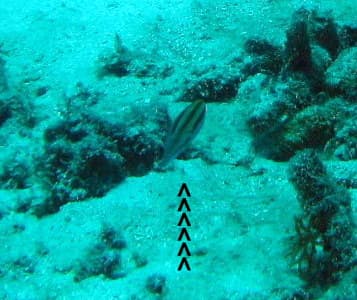
Poison Ocellate Octopus
Amphioctopus siamensis
2 photos
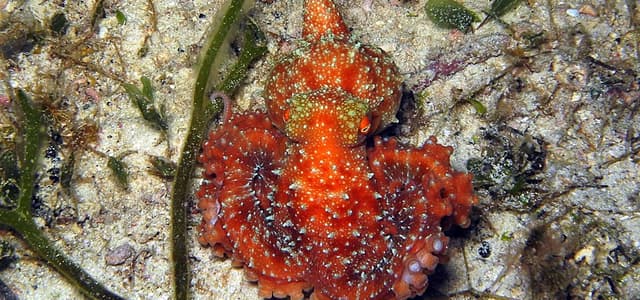
Starry Night Octopus
Pinnoctopus luteus
1 photo
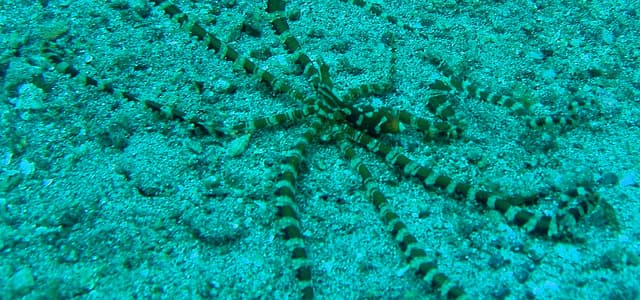
Wonderpus Octopus
Wunderpus photogenicus
6 photos