Giant Grouper
Epinephelus lanceolatus
Also known as: Banded Rockcod, Bridlebass, Brindle Bass, Brindle Grouper, Bumblebee Grouper, Cod, Coral Cod, Dragon Grouper, Hind, Mottled-brown Sea Bass, Queensland Grouper, Reef Cod, Rockcod, Trout
- Banded Rockcod
- Bridlebass
- Brindle Bass
- Brindle Grouper
- Bumblebee Grouper
- Cod
- Coral Cod
- Dragon Grouper
- Hind
- Mottled-brown Sea Bass
- Queensland Grouper
- Reef Cod
- Rockcod
- Trout
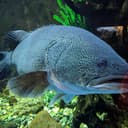
Showing details for the adult stage. Switch stages to see how it differs.
Overview
The giant grouper is the largest bony fish known from reefs, a long-lived, solitary ambush predator that reaches 270cm and 400kg and swallows even small sharks and young sea turtles whole. Despite its size it is curious and often comes close to divers.
It lives singly in shallow water around caves, wrecks and coral reefs, in estuaries and harbours, and over silt or mud in turbid water. Adults keep territories in lagoons and along the outer reef, and big fish have even been caught from the shore.
Appearance
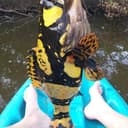
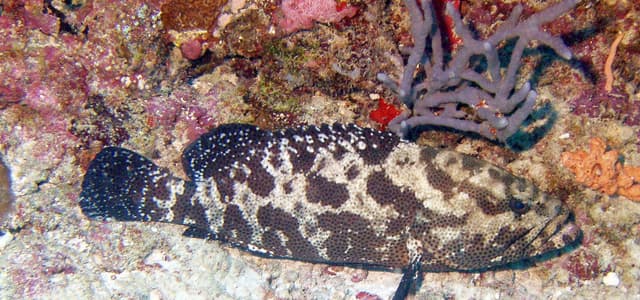
A robust, heavy-bodied fish, usually about 180cm long, with a convex head profile, a large mouth and a slightly rounded tail. Adults are grey-brown with a mottled pattern and darker fins. Small juveniles look quite different, yellow with wide, irregular dark bars.
Behaviour
It normally keeps to itself and holds its patch of reef, yet shows real interest in people in the water. Most of its hunting is done near the bottom, usually at dusk.
Feeding
It is an opportunistic hunter that waits in ambush. Fish, small sharks and rays, young sea turtles, crustaceans and molluscs are all on the menu, and food is drawn in by powerful suction as the large mouth opens, then swallowed whole. What it eats depends on where it lives: fish around reefs and rocks favour spiny lobsters, while those in estuaries lean heavily on crabs.
Life cycle
Like most groupers it can change sex, with males developing either from functioning females or directly, without ever breeding as a female. Spawning is seasonal and follows the moon, with fish gathering, usually several females to each male, and releasing eggs and sperm into the water over about seven days. Studies of captive groups suggest the dominant male and female do nearly all the spawning for the first day or two. Others then fertilise more of the eggs as the event goes on, and even newly changed males father young. Juveniles are secretive and rarely seen on reefs until they start changing into adults.
Dangers
It is not generally seen as dangerous to people, but large fish have been reported attacking humans. Divers are advised to treat big ones with caution and never to hand-feed them.
Threats
Giant groupers are protected from all fishing in Queensland, and any caught by accident should be carefully returned to the water.
Relationship with people
Prawn fishermen have caught it in murky water over silt and mud, and one fish of 177cm was taken off Maui in Hawaii.
Away from the sea, it can be seen on show at the Georgia Aquarium, while the American Museum of Natural History holds a skeleton.
Notes & fun facts
- DID YOU KNOWA 177cm fish taken off Maui had two spiny lobsters and a number of crabs in its stomach.
- DID YOU KNOWIn South African estuaries, these groupers were found eating almost nothing but the crab Scylla serrata.
- DID YOU KNOWSome males develop from functioning females, while others produce sperm without ever having been a reproductive female.
- DID YOU KNOWSpawning runs for about seven days on a lunar cycle, usually with several females to each male.
How to identify
- Pattern
- white spots
- Fins & Tail
- black fin spotsyellow fins
Tap any trait to see other fish that share it.
Diver’s cheat sheet
- 1BehaviourCurious and may approach closely. Treat large fish with caution and do not hand feed them.
Habitat & where to find it
Where the adult stage lives, and where its photos were taken.
- Range · Indo-Pacific
- Exact location · 18
- Country only · 9
Found singly in shallow water around caves, wrecks and coral reefs, in estuaries and harbours, and over silt or mud in turbid water.
Adult photos 27
Discussion
No comments yet. Seen one, or got a question about it? Start the discussion.
Deep dive
Taxonomy
- kingdomAnimalia
- phylumChordata
- classTeleostei
- orderPerciformes
- familyEpinephelidae
- genusEpinephelus
- speciesEpinephelus lanceolatus (Bloch, 1790)
Morphology
AdultA robust grouper whose standard length is 2.4 to 3.4 times its depth, with a convex head profile and a rounded, finely serrated preopercle. The dorsal fin has 11 spines and 14 to 16 soft rays, the anal fin 3 spines and 8 soft rays, and the tail is slightly rounded. The lateral line holds 54 to 62 scales.
More in the family
Groupers (Epinephelidae)
Areolate Grouper
Epinephelus areolatus
5 photos
Atlantic Goliath Grouper
Epinephelus itajara
6 photos
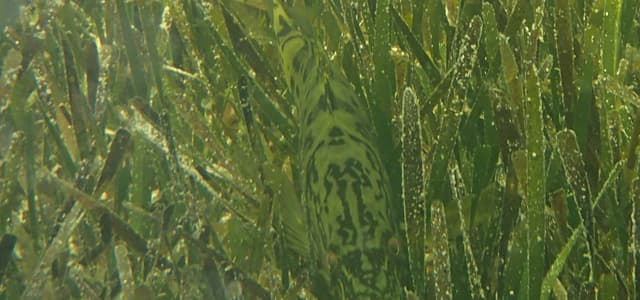
Black Grouper
Mycteroperca bonaci
5 photos
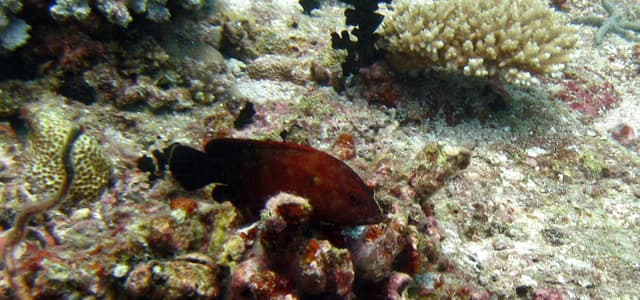
Blackfin Grouper
Cephalopholis nigripinnis
11 photos
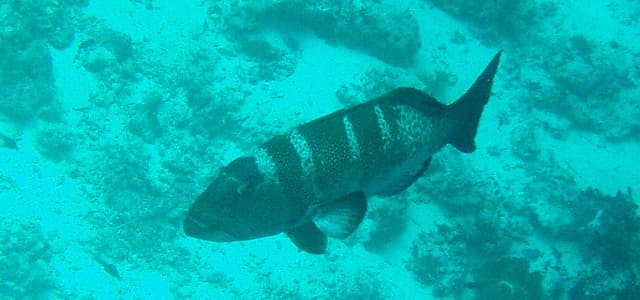
Blacksaddled Coral Grouper
Plectropomus laevis
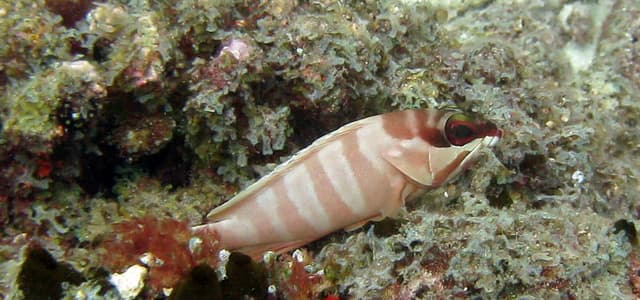
Blacktip Grouper
Epinephelus fasciatus
55 photos
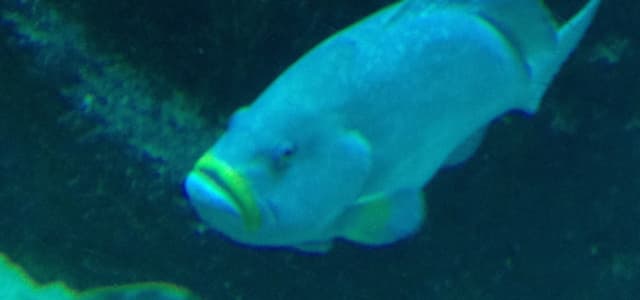
Blue-and-yellow Grouper
Epinephelus flavocaeruleus
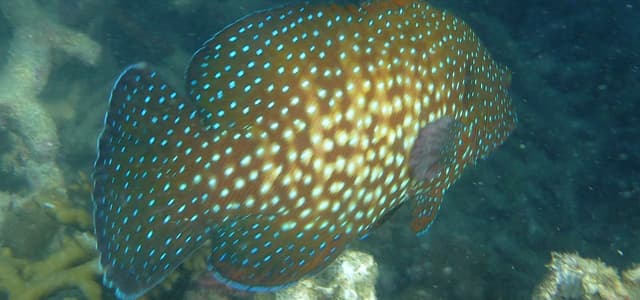
Blue-spotted Grouper
Cephalopholis cyanostigma
14 photos
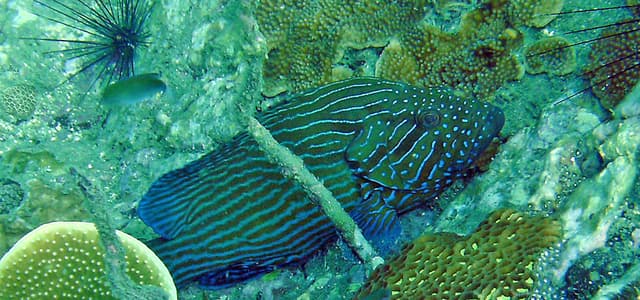
Bluelined Grouper
Cephalopholis formosa
8 photos
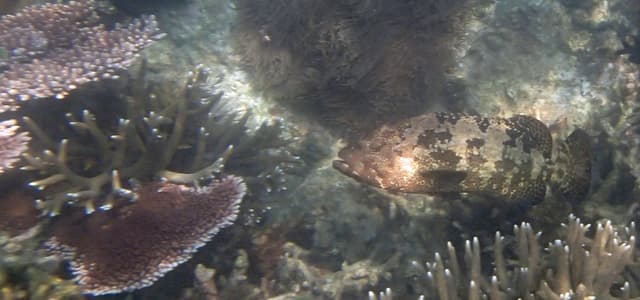
Brown-marbled Grouper
Epinephelus fuscoguttatus
20 photos
Brown-spotted Grouper
Epinephelus chlorostigma
0 photos
Camouflage Grouper
Epinephelus polyphekadion
25 photos