Flatback Turtle
Natator depressus
Also known as: Flatback Sea Turtle
- Flatback Sea Turtle
Overview
The flatback turtle (Natator depressus) is the Australian sea turtle named for its unusually low, flat shell. No other sea turtle has so small a range, and it nests nowhere but Australia.
It lives in shallow tropical and subtropical waters with soft sea beds, over the continental shelf of northern Australia and along the coasts of Papua New Guinea and Indonesia. Bays, lagoons, estuaries and grassy areas all suit it, typically no deeper than 60m, and it skips the long open-ocean migrations other sea turtles make.
Appearance
The shell is the giveaway: smooth, low and flat-domed, with side edges that curl upwards and scutes that meet edge to edge instead of overlapping. Shell and head share the same olive green or grey-green, while the underside is a much paler yellow. Adults usually measure 76 to 96cm along the shell and weigh 70 to 90kg. Females end up bigger than males, and males have the longer tails. Hatchlings differ, with grey backs, dark outlines to the scutes, white bellies and blue eyes.
Feeding
Omnivorous on paper, the flatback is mostly a meat eater, taking what it finds in the shallows: soft corals, sea cucumbers, shrimps, jellyfish, molluscs and other invertebrates. Seagrass is only an occasional extra. Diet changes with age. A new hatchling lives for a few days on the yolk sac it took in while in the nest, then starts picking macroplankton from the upper water. Once large enough it moves down to soft-bottomed habitat and turns to soft-bodied prey such as soft corals and jellyfish.
Life cycle
Reported ages at maturity run anywhere from 7 to 50 years. Mating takes place at sea, so a male never comes back to land after leaving the beach as a hatchling. Females nest every two to three years on soft sandy beaches, avoiding any fronted by intertidal coral reef, with sites in Western Australia, the Northern Territory and above all Queensland. The season runs October to January in southern Queensland but all year in the north and northwest.
A female usually lays about three clutches in a season, some 15 days apart, and is loyal to her beach both within a season and across later ones. She clears the dry top sand with her front flippers, shapes an egg chamber with the back pair, then buries the eggs using both. In eastern Queensland hatching peaks in February. Hatchlings are big for sea turtles, which helps them avoid predators and swim strongly, and they keep close to the coast.
Threats
On land it faces dingoes, feral dogs and pigs, and invasive red foxes. Sharks and saltwater crocodiles take adults, while crabs, sea birds and young crocodiles pick off hatchlings on the way down the beach, and big fish and sharks wait in the water.
The IUCN lists it as data deficient and Australia as vulnerable. It is considered the least endangered sea turtle, as its meat is in little demand and staying near shore keeps it out of many nets. Even so, Indigenous people may harvest eggs and meat for non-commercial use, and trawls, gillnets, ghost nets and crab pots all catch it. Coastal development damages nesting beaches and feeding grounds, camping compacts the sand, and vehicle ruts can trap hatchlings. Pollution can also disturb nesting. In a lab study of one Carpentarian population, warmer nests sped up embryo development without harming hatchlings, so the greater climate risk may be stronger storms and rising seas washing out nests. A long life and strong ties to particular beaches leave it slow to adapt.
Relationship with people
Hunting the flatback is a traditional practice for Indigenous Australians, and a national recovery plan set up in 2003 aims to keep that harvest sustainable.
Scientists are the other people it meets most. Kakadu National Park runs a monitoring programme for it, and Avoid Island in Queensland, a nature refuge that has belonged to the Queensland Trust for Nature since 2006, holds an important rookery that has been watched since 2013, with researchers using the island's facilities for a range of projects.
Notes & fun facts
- DID YOU KNOWThe carapace is much thinner than on other sea turtles, and it can crack under small pressures.
- DID YOU KNOWHatchlings average about 6cm across the shell, bigger than any other sea turtle's, which helps them escape predators and swim strongly.
- DID YOU KNOWHatchlings stay close to shore and miss out the open-ocean stage that other sea turtles go through.
- DID YOU KNOWA clutch averages about 50 eggs, far fewer than the 100 to 150 of other sea turtles, but each egg is large at about 5.5cm.
- DID YOU KNOWSand temperature sets the sex of a hatchling: below 29°C it will be male, above that female.
How to identify
Habitat & where to find it
- Range · Indo-West Pacific
- Country only · 12
Found in shallow tropical and subtropical waters with soft sea beds over the continental shelf, including bays, lagoons, estuaries and grassy areas.
Adult photos 12
Discussion
No comments yet. Seen one, or got a question about it? Start the discussion.
Deep dive
Taxonomy
- kingdomAnimalia
- phylumChordata
- orderTestudines
- familyCheloniidae
- genusNatator
- speciesNatator depressus (Garman, 1880)
SourcesWoRMSSeaLifeBase
Morphology
A sea turtle with a smooth, low, flat-domed carapace, upturned side edges and non-overlapping scutes. Olive green or grey-green above with a pale yellow plastron. The head has a single pair of prefrontal scales and the carapace has four pairs of costal scutes. The skull looks superficially like an olive ridley's.
More in the family
Testudines
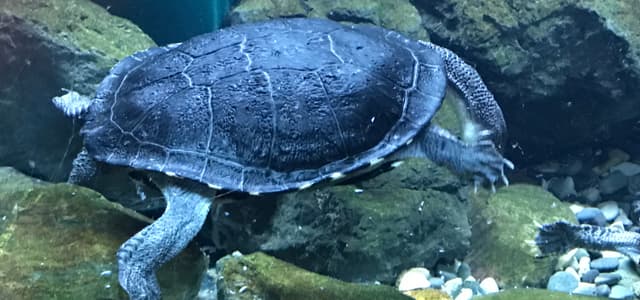
Eastern Long-Necked Turtle
Chelodina longicollis
4 photos
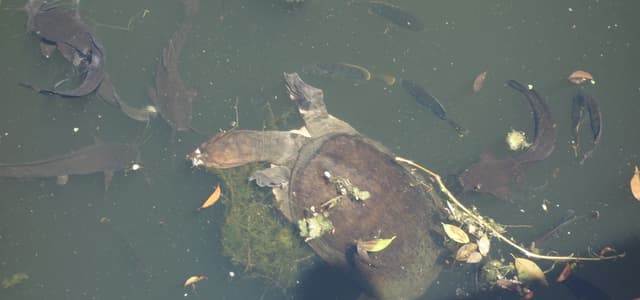
Florida Softshell Turtle
Apalone ferox
2 photos
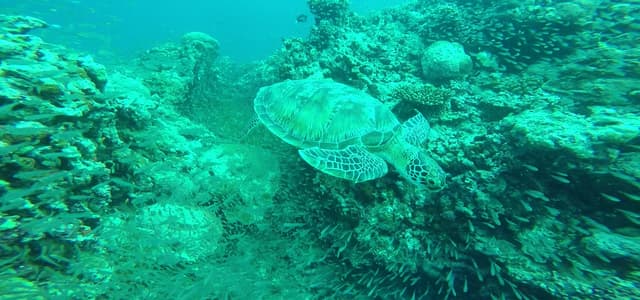
Green Turtle
Chelonia mydas
56 photos
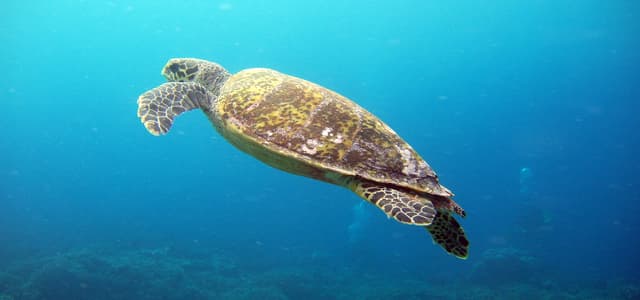
Hawksbill Turtle
Eretmochelys imbricata
74 photos
Loggerhead Turtle
Caretta caretta
Pond Slider
Trachemys scripta scripta
0 photos
Red-eared Slider
Trachemys scripta elegans
6 photos
Snaked-neck Turtle
Chelodina oblonga
2 photos