Crown-of-Thorns Sea Star
Acanthaster planci
Also known as: Asteroids, Coral-eating Starfish, Coral-feeding Starfish, Crown-of-Thorns, Crown-of-Thorns Star, Crown-of-Thorns Starfish, Starfish, Stars-of-Doom
- Asteroids
- Coral-eating Starfish
- Coral-feeding Starfish
- Crown-of-Thorns
- Crown-of-Thorns Star
- Crown-of-Thorns Starfish
- Starfish
- Stars-of-Doom
Overview
Found singly or in constellations, amongst sand and rubble areas, over coral and rocky reefs. Colour varies.
The Crown-of-Thorns is beautiful to look at but fairly deadly for anything else and should be avoided at all costs because they can cause severe injury.
Crown-of-Thorns has up to 21 arms and walks on the open bottom between reefs searching for live corals to eat. They climb onto the corals extrude their stomach over them, releasing digestive enzymes to break down the coral and then absorb the liquefied tissue. Feeding alone at night, maintaining a constant distance between themselves and other crown-of-thorns sea stars.
During times of food shortage, these creatures can live on their energy reserves for over six months.
This species is at least partly responsible for much loss of coral reefs. They are voracious predators that can wipe out large areas of coral, each Crown of Thorns can consume up to six square meters of living reef per year.
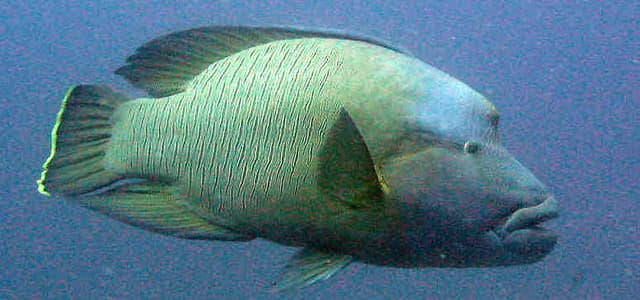
Although very few predators, they include the Giant Triton (Charonia tritonis), Humphead Wrasse and Pufferfish (Arthron Hystrix)
Sea Stars have remarkable regenerative powers, when attacked and damaged by predators they are able to grow new arms. They usually have five arms but have been found with 4 or 6 arms, this may be because more than one arm has been damaged at one time!
Sometimes small parasitic limpets can be found on the underside of arms which can deform the arms.
They possess a cleverly evolved arsenal of hydraulic tube feet connected to an elaborate water-vascular system that encircles the animal's mouth and extends via five radial canals down the centre of each arm.
Their mouth is underneath, but their prey is absorbed outside their mouths by forcing out their digestive organs from their stomach.
Sea Stars are carnivores and feed on almost any food including molluscs, worms, detritus and each other!
Some sea stars like the crown of thorns can be venomous.
How to identify
Habitat & where to find it
- Range · Indo-Pacific
- Exact location · 5
- Country only · 18
Found singly or in constellations, amongst sand and rubble areas, over coral and rocky reefs.
Adult photos 23
Other species worth knowing
Partners, neighbours & enemies
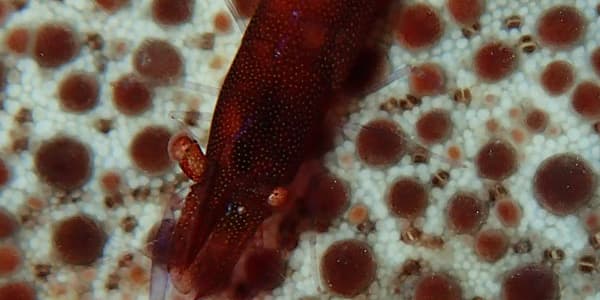
Host to the Sea Star Shrimp - Periclimenes soror.
Discussion
No comments yet. Seen one, or got a question about it? Start the discussion.
Deep dive
More in the family
Valvatida
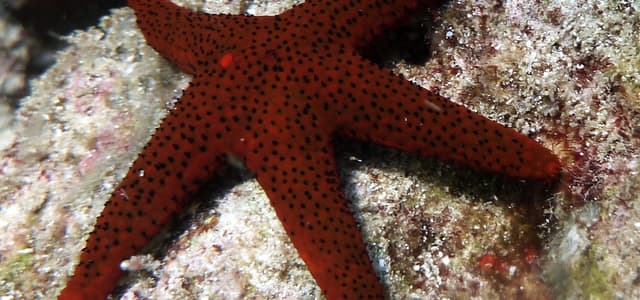
Black-spotted Sea Star
Fromia milleporella
2 photos
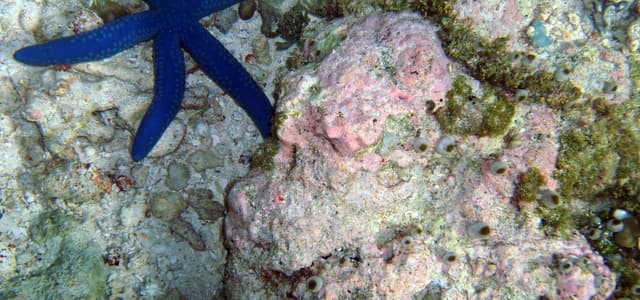
Blue Sea Star
Linckia laevigata
28 photos
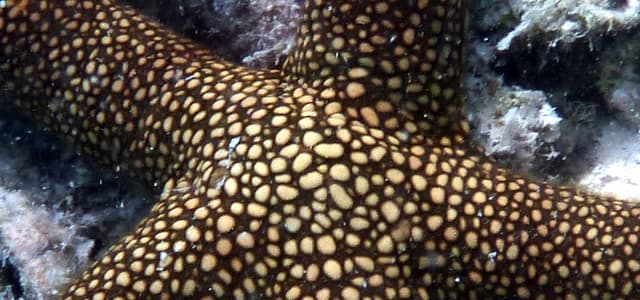
Brown Mesh Sea Star
Nardoa galatheae
13 photos
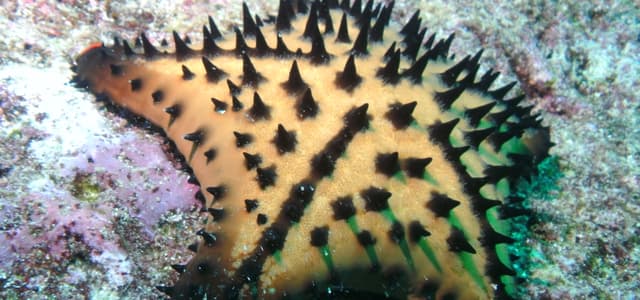
Chocolate Chip Star
Nidorellia armata
1 photo
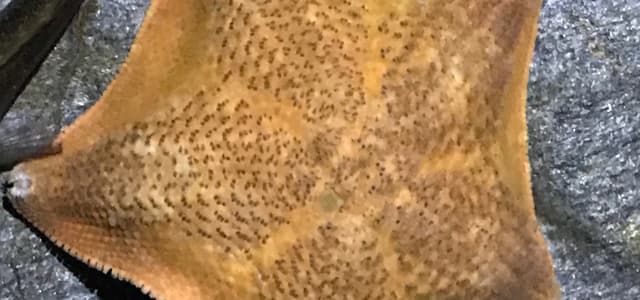
Common Cushion Sea Star
Patiriella regularis
2 photos
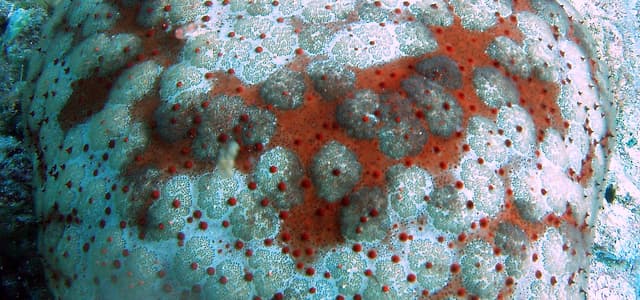
Cushion Sea Star
Culcita novaeguineae
33 photos
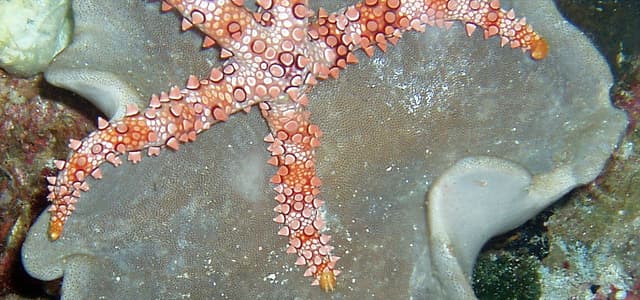
Egyptian Sea Star
Gomophia egyptiaca
2 photos
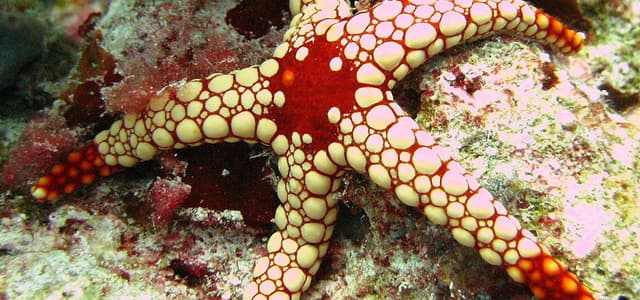
Elegant Sea Star
Fromia nodosa
4 photos
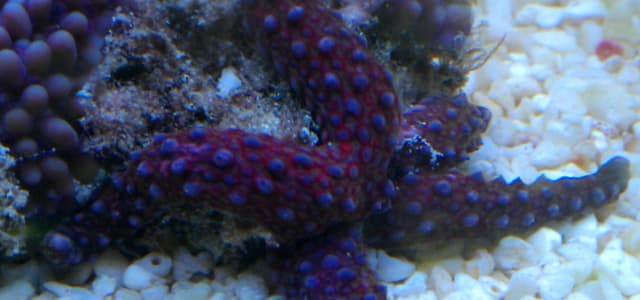
Friant's Sea Star
Nardoa frianti
2 photos
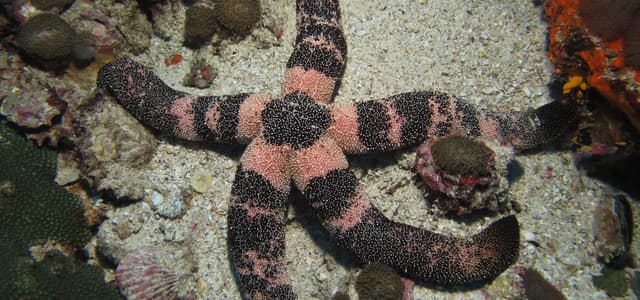
Grainy Sea Star
Ophidiaster granifer
1 photo
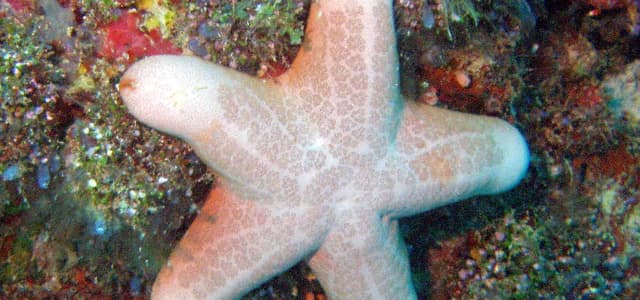
Granulated Sea Star
Choriaster granulatus
15 photos
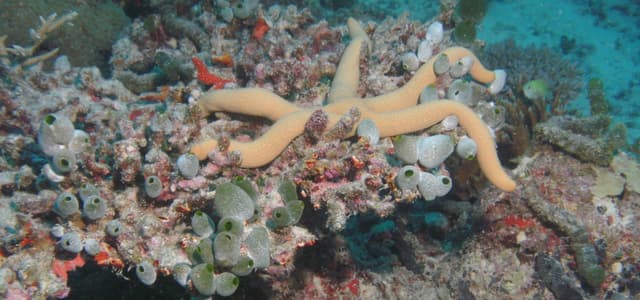
Guilding's Sea Star
Linckia guildingi
9 photos