Sea stars & urchins
Cake Urchin
Tripneustes gratilla
Also known as: Cake Sea Urchin, Collector Urchin, Gracious Sea Urchin, Gracious Urchin, Hairy Sea Urchin, Jewelcase Sea Urchin, Parson's Hat Sea Urchin, Pincushion Hairy Urchin, Pincushion Tuxedo Urchin, Pincushion Urchin, Priest-hat Urchin, Sea Egg, Sector Sea Urchin, Sea Hedgehog, Short Spine Sea Urchin, Striped Sea Urchin, Tuxedo Urchin
ALSO KNOWN AS
- Cake Sea Urchin
- Collector Urchin
- Gracious Sea Urchin
- Gracious Urchin
- Hairy Sea Urchin
- Jewelcase Sea Urchin
- Parson's Hat Sea Urchin
- Pincushion Hairy Urchin
- Pincushion Tuxedo Urchin
- Pincushion Urchin
- Priest-hat Urchin
- Sea Egg
- Sector Sea Urchin
- Sea Hedgehog
- Short Spine Sea Urchin
- Striped Sea Urchin
- Tuxedo Urchin
01
Overview
Found singly or in large groups, moving across rubble, sand, shingle, and seagrass beds, over intertidal and sub-tidal areas of bays and lagoons.
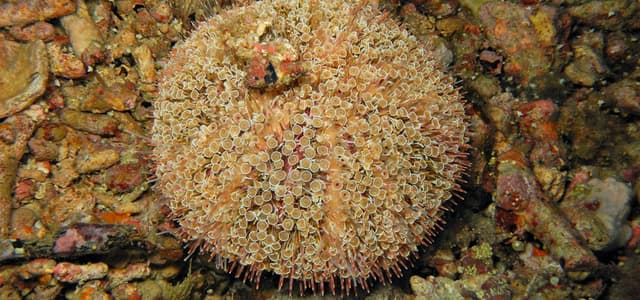
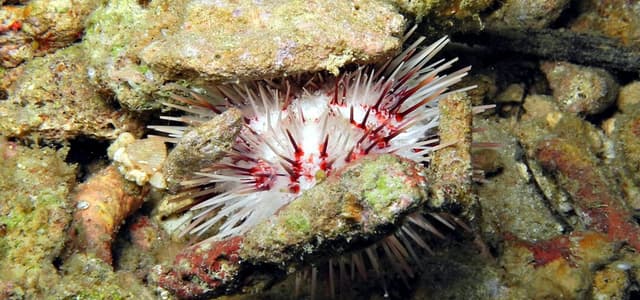
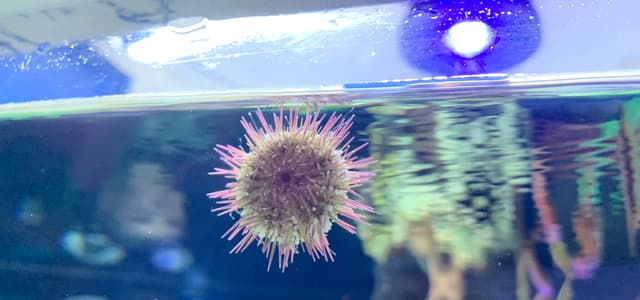
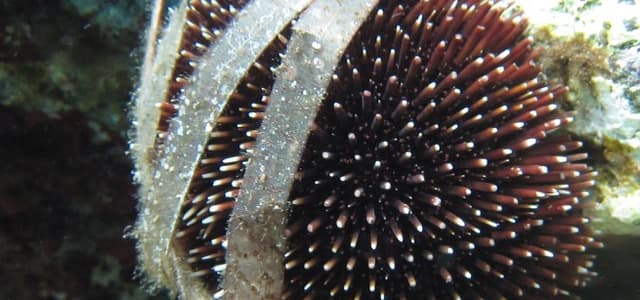
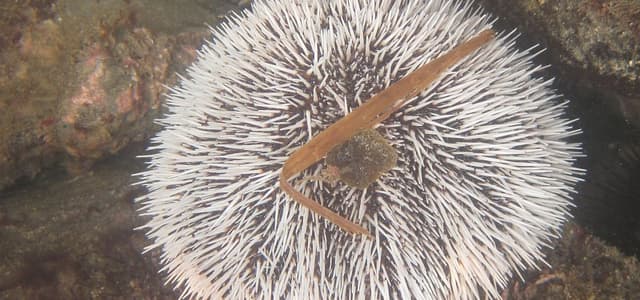
Cake urchins have a blue, purple to brown body, short white spines sometimes tipped with orange, and brownish-red tube feet. In some years it can be abundant while in other years quite rare.
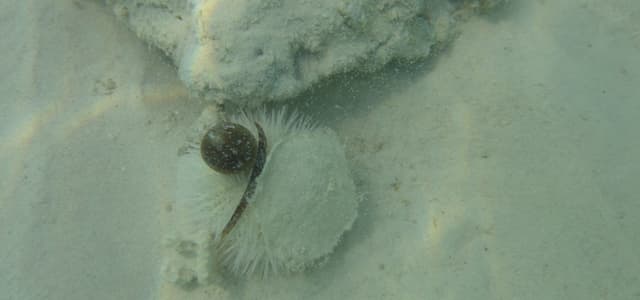
This urchin has a habit of grabbing pieces of seaweed, shell or pebbles with its tube feet and covering itself. This may act as camouflage and protect it from predators and the sun.
Sea Urchins use tubed feet to get around, often in large impenetrable masses for protection.
Sometimes they hitch a lift on the back of crabs.
They have well developed jaws for grinding their prey.
Their anus is on top in most sea urchins, except the heart urchins where it is at the rear.
Predators of sea urchins are triggerfish and large wrasses, who nibble away at their spines before turning them over to eat the fleshy undersides.
Sea Urchins are highly venomous and can piece through a wet-suit.
Some are sensitive to light and have the ability to shoot venom loaded spines at a short distance.
To be avoided.
02
How to identify
03
Habitat & where to find it
- Range · Indo-Pacific
- Dive site · 1
- Country only · 9
LIVES IN
Found singly or in large groups, moving across rubble, sand, shingle, and seagrass beds, over intertidal and sub-tidal areas of bays and lagoons.
RANGE
04
Adult photos 10
05
Discussion 1
1 comment

ALL STAGES
FOR THE MARINE-BIOLOGY CURIOUS
Deep dive
06
More in the family
Sea Urchins (Toxopneustidae)