Wrestling Halfbeak
Dermogenys pusilla
Also known as: Albino Halfbeak, Freshwater Halfbeak, Gold Wrestling Halfbeak, Halfbeak, Halfbeak Fish, Malayan Halfbeak, Needle Gar, Platinum Halfbeak, Red Halfbeak, Silver Wrestling Halfbeak
- Albino Halfbeak
- Freshwater Halfbeak
- Gold Wrestling Halfbeak
- Halfbeak
- Halfbeak Fish
- Malayan Halfbeak
- Needle Gar
- Platinum Halfbeak
- Red Halfbeak
- Silver Wrestling Halfbeak
Overview
The wrestling halfbeak is a small South-East Asian fish that gives birth to live young, and takes its name from the way males fight by locking jaws and wrestling for up to thirty minutes.
It lives in schools at the surface of sluggish and still fresh or brackish water, in canals, drains, estuaries, flooded fields, lakes, ponds and rivers, and only rarely in the sea. Its range takes in Singapore, Indonesia, Thailand, Malaysia, Borneo and Sumatra.
Appearance
This slender fish has the long lower jaw typical of halfbeaks, and its colour depends on where it comes from. Females are the bigger sex at up to 7cm, while males reach about 5.5cm and usually show patches of red or yellow on the dorsal fin and beak.
Behaviour
Jaw-locking contests are settled quickly in the wild, as the weaker fish soon breaks away and swims off, so serious injury is rare. Even so, people in parts of its native range stage these contests and bet on the winner, much as others do with fighting cocks.
Feeding
Staying near the top of the water, it feeds on small invertebrates such as crustaceans and insect larvae, with a particular liking for mosquito larvae and flying insects that land on the surface.
Life cycle
This is a livebearing fish. Females carry their young for about a month and then produce around twenty offspring.
Relationship with people
It is quite widely traded as an aquarium fish, sometimes sold as the silver or golden halfbeak depending on its colour. New arrivals are timid and can panic and crash into the walls of the tank, but once settled they turn into lively fish.
Notes & fun facts
- DID YOU KNOWThis fish gives birth to live young, with females producing around twenty offspring after about a month.
- DID YOU KNOWAs in all halfbeaks, it is the upper jaw that lifts when the mouth opens.
How to identify
Diver’s cheat sheet
- 1Look forLook for red or yellow patches on the dorsal fin and beak to pick out a male.
Habitat & where to find it
- Country only · 2
Found in schools, on the surface of sluggish flowing and stagnant waters with floating plants, in canals, drains, estuaries, flooded fields, lakes, ponds, rivers but rarely in the sea.
Adult photos 2
Discussion
No comments yet. Seen one, or got a question about it? Start the discussion.
Deep dive
Taxonomy
- kingdomAnimalia
- phylumChordata
- classTeleostei
- orderBeloniformes
- familyZenarchopteridae
- genusDermogenys
- speciesDermogenys pusilla Kuhl & van Hasselt, 1823
Morphology
Small and slender, with a long lower jaw. Females reach about 7cm and males about 5.5cm. Males usually have red or yellow patches on the dorsal fin and the beak. Colour varies from place to place.
More in the family
Beloniformes
African Halfbeak
Hyporhamphus picarti
1 photo
Atlantic Flyingfish
Cheilopogon melanurus
1 photo
Atlantic Saury
Scomberesox saurus
1 photo
Balao
Hemiramphus balao
2 photos
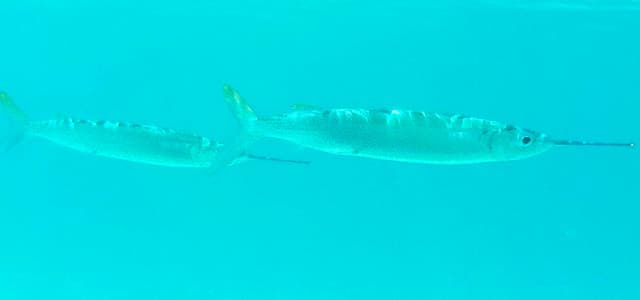
Ballyhoo Halfbeak
Hemiramphus brasiliensis
1 photo
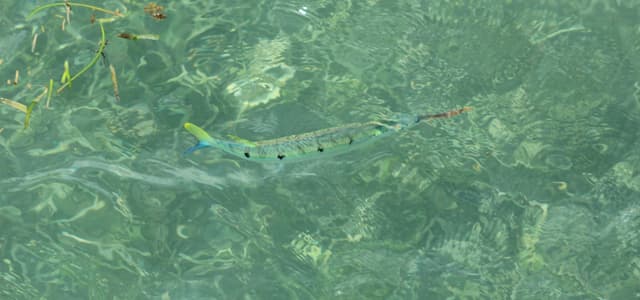
Black-barred Halfbeak
Hemiramphus far
4 photos
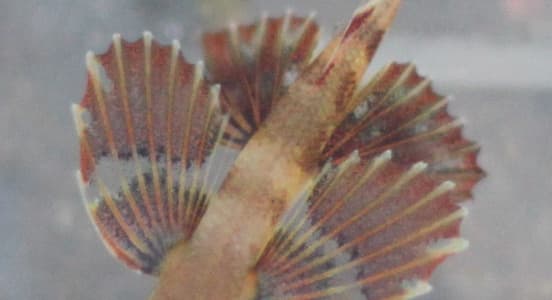
Blotchwing Flyingfish
Cheilopogon heterurus
1 photo
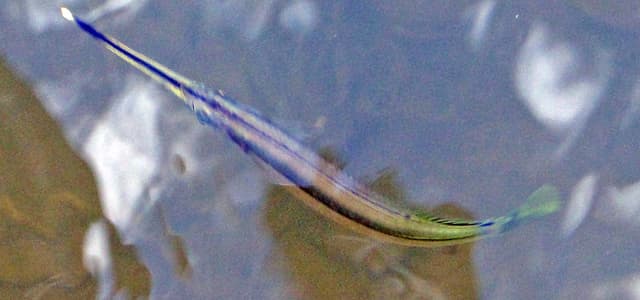
Buffon's River-garfish
Zenarchopterus buffonis
2 photos
Dussumier's Halfbeak
Hyporhamphus dussumieri
13 photos
Flat Needlefish
Ablennes hians
6 photos
Freshwater Garfish
Xenentodon cancila
1 photo
Garfish
Belone belone
3 photos