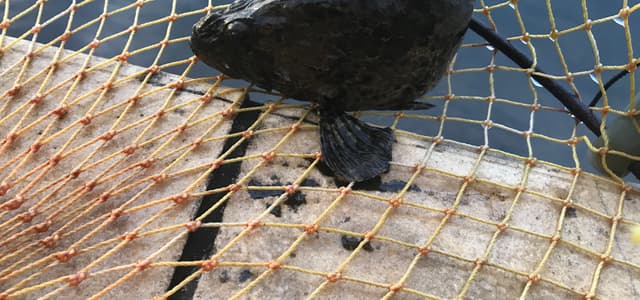
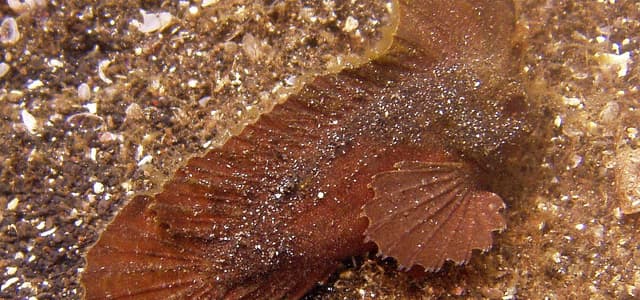
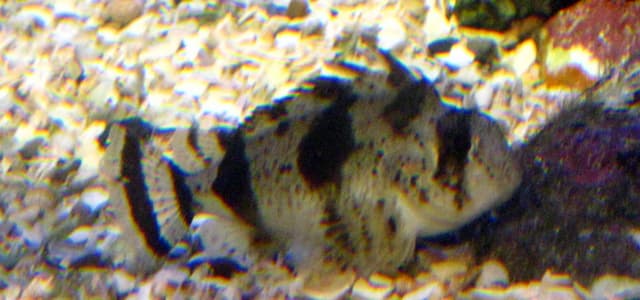
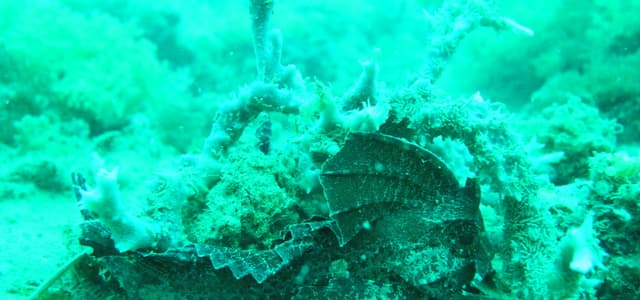
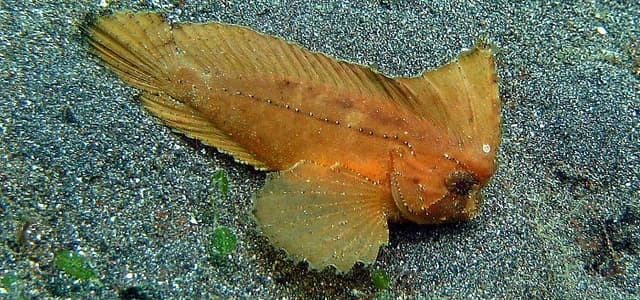
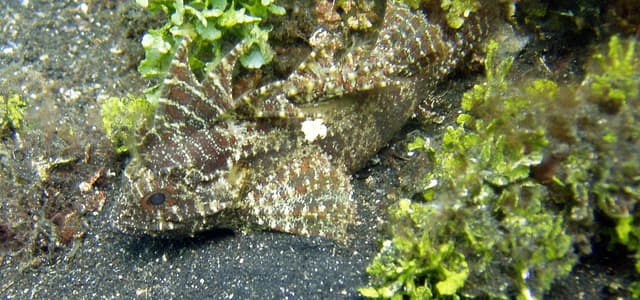
The picture in the photograph is not Vespicula trachinoides. Rather it is a species of Scorpaenodes Bleeker. In species of Vespicula the dorsal fin is much further forward and the first three dorsal-fin spines form a distinct, separated finlet. They also have much smaller, more deeply embedded scales. This species is found primarily in muddy, brackish estuarine waters where rivers flow over low, nearly flat topography and into the sea. They are not found much more than a few kilometers inland.
Bony fish
Vespicula Waspfish
Vespicula trachinoides
Also known as: Goblinfish, Mangrove Waspfish, Rockfish, Stingfish
ALSO KNOWN AS
- Goblinfish
- Mangrove Waspfish
- Rockfish
- Stingfish
01
Overview
Found singly, over soft open sand and broken shell bottoms, of lagoons, mangroves and seaward reefs.
Scorpionfish are masters of camouflage, enabling them to lie in wait for their victims to come close, before lunging forward and inhaling their prey with their large mouths.
When disturbed they raise the spines along their backs and will usually move off out of harms way, however, if cornered they are able to charge at considerable speed.
Highly dangerous and poisonous with venomous spines along its back if trodden on etc.
02
How to identify
03
Habitat & where to find it
- Range · Indo-West Pacific
- Country only · 1
LIVES IN
Found singly, over soft open sand and broken shell bottoms, of lagoons, mangroves and seaward reefs.
RANGE
04
Adult photos 1
05
Discussion 2
ALL STAGES
FOR THE MARINE-BIOLOGY CURIOUS
Deep dive
06
More in the family
Waspfishes (Tetrarogidae)