Strawberry Anemone
Actinia fragacea
Also known as: Beadlet Anemone, Hexacoral, Strawberry Beadlet Anemone
- Beadlet Anemone
- Hexacoral
- Strawberry Beadlet Anemone
Overview
Found singly, or in colonies, attached to boulders and rocks, sometimes partially covered in gravel, or half buried in the sand, over shallow, shady, coastal shorelines. In the winter these anemones migrate off-shore to prevent freezing.
Widespread North Atlantic, Mediterranean
Sea Anemones are large solitary polyps which have no skeleton. They have a basal or pedal disc which helps them crawl and dig into place, for some, once in place it is virtually impossible to move. Other smaller anemones move around the reef to feed at night.
Most eat plankton, but they are capable of eating anything caught in their stinging tentacles including quite big fish.
The fringing tentacles are configured in six or multiples of six.
Some sea anemones have a symbiotic relationship with sea anemones and some live commensally with various crabs, shrimp and brittle stars.
How to identify
- Pattern
- green spotsspotsyellow spots
- Body shape
- warts
- Behaviour
- solitary
Tap any trait to see other fish that share it.
Habitat & where to find it
- Range · Northwest Atlantic, Northeast Atlantic, Mediterranean
- Exact location · 4
Found singly, or in colonies, attached to boulders and rocks, sometimes partially covered in gravel, or half buried in the sand, over shallow, shady, coastal shorelines.
Adult photos 4
Discussion
No comments yet. Seen one, or got a question about it? Start the discussion.
Deep dive
More in the family
Sea Anemones (Actiniidae)
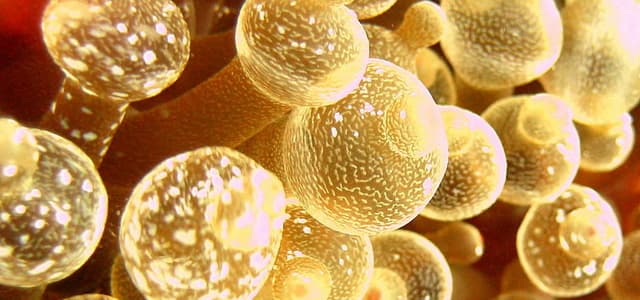
Bulb-tentacle Sea Anemone
Entacmaea quadricolor
19 photos
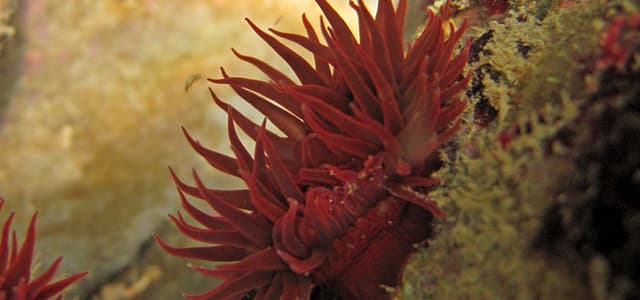
Burgundy Anemone
Bunodosoma goanense
1 photo
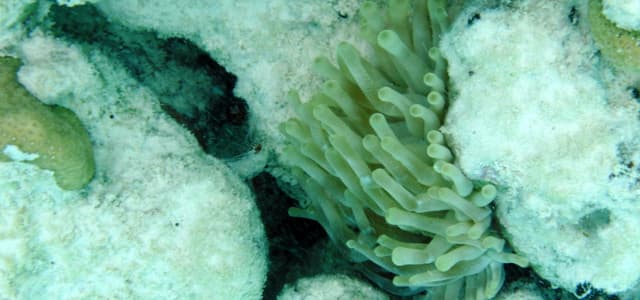
Giant Anemone
Condylactis gigantea
9 photos
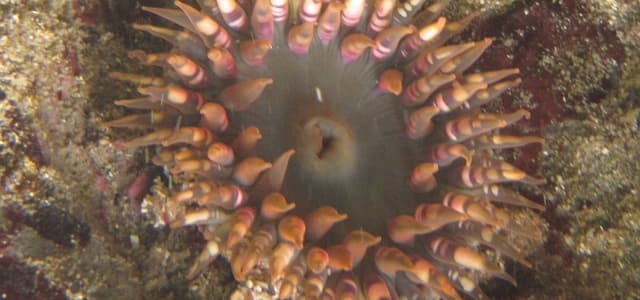
Red Warty Anemone
Bunodosoma granuliferum
1 photo
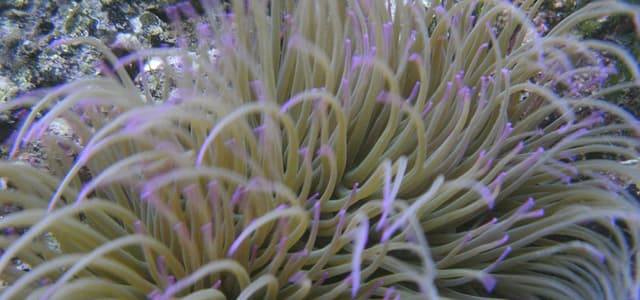
Snakelocks Anemone
Anemonia viridis
2 photos
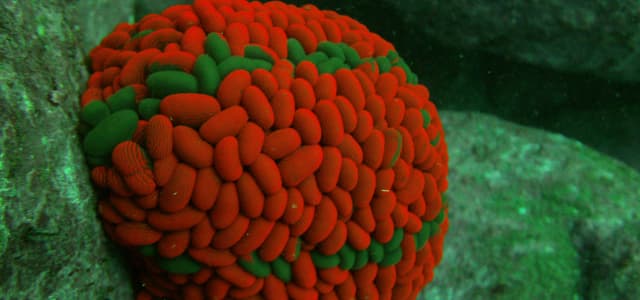
Wandering Sea Anemone
Phlyctenactis tuberculosa
2 photos
Waratah Anemone
Actinia tenebrosa
1 photo