Jellyfish & hydroids
Stinging Hydroid
Pachyrhynchia cuppressina
Also known as: Common Sea Fern, Cypress Hydroid, Feather Hydroid, Fire Hydroid, Fireweed, Sea Fern, Stinging Hydrozoan, Stinging Sea Fern, Stinging Seaweed, Aglaophenia cupressina
ALSO KNOWN AS
- Common Sea Fern
- Cypress Hydroid
- Feather Hydroid
- Fire Hydroid
- Fireweed
- Sea Fern
- Stinging Hydrozoan
- Stinging Sea Fern
- Stinging Seaweed
- Aglaophenia cupressina
01
Overview
Found in colonies, over shallow reefs, with moderate current.
This common and very distinctive hydroid has a powerful sting and should be avoided. It is preyed upon by the nudibranch Doto ussi.
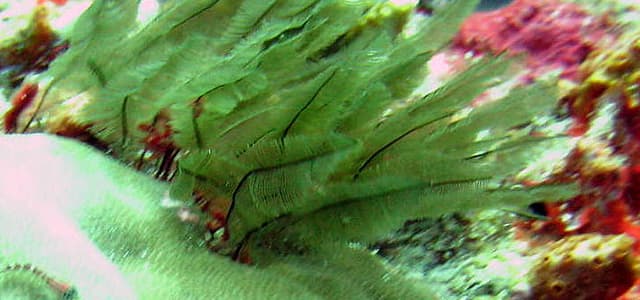
Hydroids look like tiny ferns or feathers, many are smaller than 5cm although some can grow to 50cm.
They are found competing for space with sponges on bare patches of dead coral and rocks.
Stinging hydroid polyps are very small and are carried on the stem and side branches of feather/fern like colonies. The specific layout of the polyps on the branches, as well as the arrangement of the branches are used to classify different species.
The class Hydrozoa encompasses the most diverse group of venomous species and includes the stinging hydroids, hydrocorals (firecorals) and the portugese man of war (siphonophore)
Some species can inflict painful stings.
02
How to identify
03
Habitat & where to find it
- Range · Indo-West Pacific
- Country only · 5
LIVES IN
Found in colonies, over shallow reefs, with moderate current.
RANGE
04
Adult photos 5
05
Discussion 1
1 comment

ALL STAGES
FOR THE MARINE-BIOLOGY CURIOUS
Deep dive
Taxonomy
- kingdomAnimalia
- phylumCnidaria
- classHydrozoa
- orderLeptothecata
- familyAglaopheniidae
- genusPachyrhynchia
- speciesPachyrhynchia cuppressina (Lamouroux, 1816)
SourcesWoRMSSeaLifeBase
06
More in the family
Leptothecata