Smalltooth Sawfish
Pristis pectinata
Also known as: Atlantic Prickly Skate, Carpenter Shark, Comb Shark, Common Sawfish, Dwarf Sawfish, Largetooth Sawfish, Longcomb Sawfish, Smalltooth Common Sawfish, Smoothtooth Sawfish, Wide Sawfish
- Atlantic Prickly Skate
- Carpenter Shark
- Comb Shark
- Common Sawfish
- Dwarf Sawfish
- Largetooth Sawfish
- Longcomb Sawfish
- Smalltooth Common Sawfish
- Smoothtooth Sawfish
- Wide Sawfish
Overview
The smalltooth sawfish is a huge, critically endangered ray of the warm Atlantic, whose long toothed saw both senses hidden animals and slashes through shoals of fish.
It lives singly or in small groups over mud and sand in coastal seas and estuaries of the tropical and subtropical Atlantic, often near mangroves or seagrass and sometimes over rock or coral. Juveniles stay in the shallows down to about 8m, where most of these sawfish live, while adults occasionally head offshore to 122m. Young fish have also been seen far up rivers at times of raised salinity.
Appearance
The largest confirmed fish measured about 5.5m, and weights reach about 350kg. The back is brownish grey, grey, bluish grey or blackish and the underside whitish. The relatively narrow saw carries 20 to 32 teeth down each side, and males tend to have more than females. The only other sawfish in the Atlantic is the Largetooth Sawfish. To separate them, check the first dorsal fin: here its front edge sits about level with the front of the pelvic fins. This species also has shorter pectoral fins and little or no lower lobe on the tail.
Behaviour
Sawfish spend much of their time low over the seabed, and from there the saw works as a long sensor. It is covered in thousands of tiny organs that pick up the faint electrical fields of other animals, which lets the fish track movement around it even when the water is murky. They are now regarded as the only jawed fish that uses its snout both to find prey and to handle it.
Feeding
For years sawfish were assumed to dig crabs, shrimps and molluscs out of the sand. DNA recovered from the droppings of Florida fish tells a different story: fish made up about 71 percent of the animal DNA found, and one follow-up study of just 15 samples identified 24 fish species. Molluscs and crustaceans formed only a small share, and some of that may simply have come from the stomachs of the prey.
Hunting takes several forms. A sawfish may swim up to a dense shoal and whip the saw rapidly from side to side, hitting, stunning or spearing several fish in a single pass. A meal lying on the bottom gets pinned down by the saw as the fish swims over it, and food falling through the water is struck from the side and impaled.
Life cycle
Breeding has been little studied. Courtship in captivity involves biting at the pectoral fins, and the saw's sensors are thought to help males and females find each other. The eggs hatch inside the mother and the young live on yolk until birth, with no placenta to feed them. Litters of up to 20 pups have been reported, probably every second year.
Dangers
Sawfish are timid and are no threat to people unless threatened themselves. One that is caught or cornered is another matter, because it can thrash the saw sideways with great force and cause serious injury.
Threats
This species has vanished from much of its former range, as its habit of tangling in nets, its limited habitat and its slow breeding leave it badly exposed to fishing. Demand from the shark fin trade adds to the pressure. It was once recorded in 47 countries, and one estimate says it certainly survives in only five. In the United States it once reached from Texas to New York but is now essentially confined to Florida, at less than 5 percent of its historical numbers, although the Everglades population appears stable. In early 2024 an unexplained die-off in Florida left affected fish spinning and whirling.
Relationship with people
Small numbers live in public aquariums in North America and at one in Colombia. It is the only sawfish ever bred in captivity, and Atlantis Paradise Island became the first aquarium to manage it when four pups were born in 2012.
The United States has listed it as endangered since 2003, signs in Florida mark its protection, and conservation projects briefly catch some fish for tagging before letting them go.
Notes & fun facts
- DID YOU KNOWThe teeth on the saw are not true teeth at all, but specialised scales called dermal denticles.
- DID YOU KNOWThousands of sensory organs are packed into the saw, most densely on its upper side, giving the fish a picture of the water above it.
- DID YOU KNOWAbout 3 percent of the sawfish studied in one Florida estuary were born without a father, possibly because females there struggle to find mates.
- DID YOU KNOWSawfish kept in captivity have been seen answering a threat from a shark with three quick blows of the saw to its back.
- DID YOU KNOWEggs hatch inside the mother and the pups grow on their yolk sacs before birth, with litters of up to 20 reported.
How to identify
Tap any trait to see other fish that share it.
Diver’s cheat sheet
- 1Look forCheck the fins: the dorsal fin starts about level with the pelvic fins, and the lower lobe of the tail is tiny or missing, unlike the Largetooth Sawfish.
Habitat & where to find it
- Range · Western Atlantic, Caribbean, Eastern Atlantic
- Exact location · 3
- Country only · 3
Found singly or in small groups over mud and sand in coastal seas and estuaries of the tropical and subtropical Atlantic, with juveniles staying in the shallows down to about 8m and adults occasionally offshore to 122m.
Adult photos 6
Discussion
No comments yet. Seen one, or got a question about it? Start the discussion.
Deep dive
Taxonomy
- kingdomAnimalia
- phylumChordata
- classElasmobranchii
- orderRhinopristiformes
- familyPristidae
- genusPristis
- speciesPristis pectinata Latham, 1794
Morphology
The snout is drawn out into a relatively narrow saw bearing 20 to 32 teeth on each side. Brownish grey, grey, bluish grey or blackish above and whitish below. The Largetooth Sawfish, the only other Atlantic sawfish, has its dorsal fin further forward, longer pectoral fins and a distinct lower tail lobe; in this species the dorsal fin starts about level with the pelvic fins and the lower tail lobe is tiny or missing.
More in the family
Rhinopristiformes
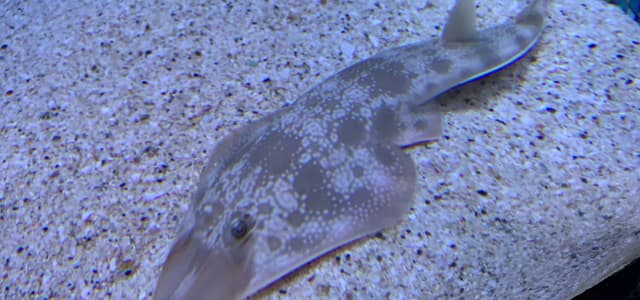
Atlantic Guitarfish
Pseudobatos lentiginosus
1 photo
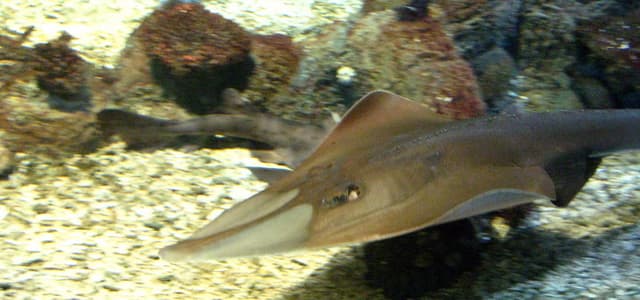
Blackchin Guitarfish
Glaucostegus cemiculus
3 photos
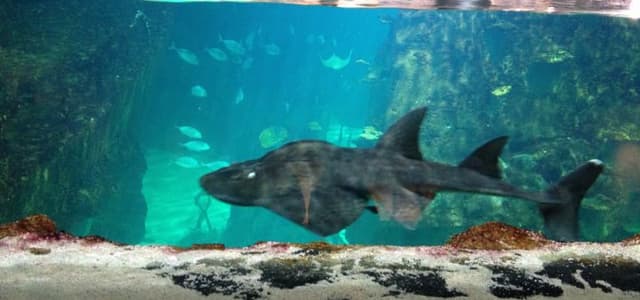
Bowmouth Guitarfish
Rhina ancylostomus
1 photo
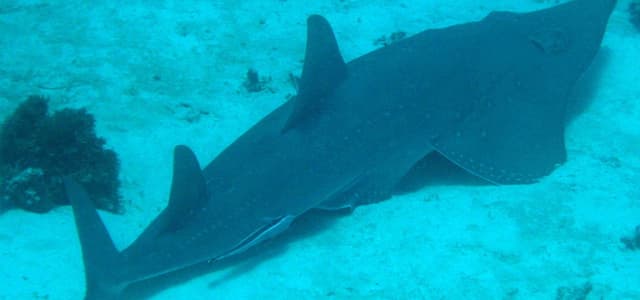
Giant Guitarfish
Rhynchobatus djiddensis
6 photos
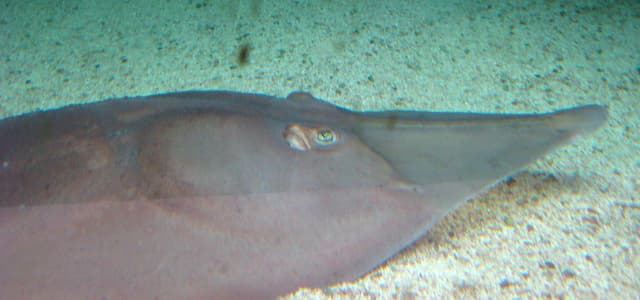
Giant Shovelnose Ray
Glaucostegus typus
4 photos
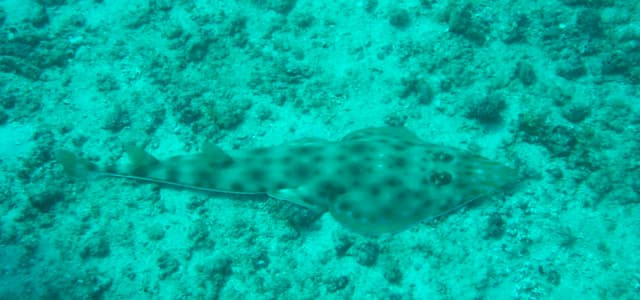
Grey-spotted Guitarfish
Acroteriobatus leucospilus
2 photos
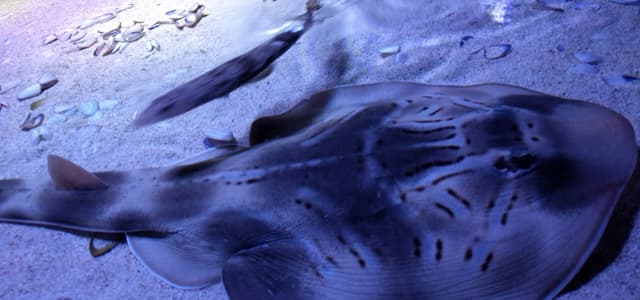
Southern Fiddler Ray
Trygonorrhina dumerilii
1 photo