Sandager's Wrasse
Coris sandeyeri
Also known as: Eastern King Wrasse, King Coris, King Wrasse, Rainbow Wrasse, Sand Wrasse, Sandager Wrasse
- Eastern King Wrasse
- King Coris
- King Wrasse
- Rainbow Wrasse
- Sand Wrasse
- Sandager Wrasse
Overview
Found in harems, around sand patches of coral and rocky reefs.
Juveniles found singly or in schools, in weedy areas of reefs, acting as cleanerfish.
Widespread South West Pacific
Most reef fish seen by divers during the day, are grazers, they cruise around, just above the surface of the coral, or snoop into crevices, foraging for food.
Wrasses have small protruding teeth, which they use to graze the bottom, taking in a variety of algae, crustaceans, such as crabs, eggs, shrimps, snails and worms. Any hard coats or thick shells, are then ground down by their pharyngeal jaws, and the delicacies inside digested.
From juvenile to adult, wrasses dramatically alter their colour and body shapes.
Wrasses are always on the go during the day, but are the first to go to bed and the last to rise.
Small wrasses dive below the sand to sleep, and larger wrasses wedge themselves in crevices.
How to identify
Habitat & where to find it
- Range · Southwest Pacific
- Country only · 1
Found in harems, around sand patches of coral and rocky reefs.
Adult photos 1
Discussion
No comments yet. Seen one, or got a question about it? Start the discussion.
Deep dive
More in the family
Wrasses (Labridae)
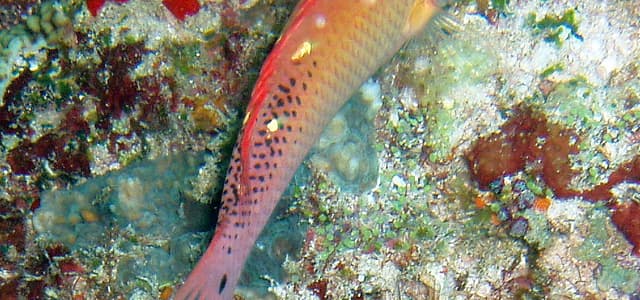
Diana's Hogfish
Bodianus diana
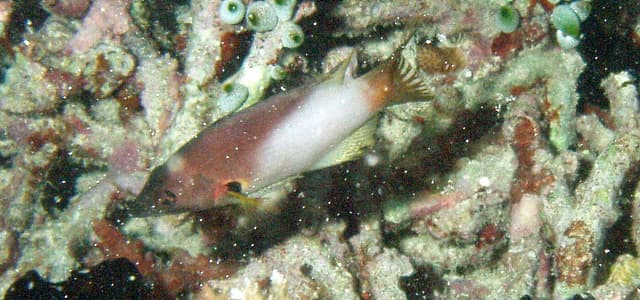
Axilspot Hogfish
Bodianus axillaris
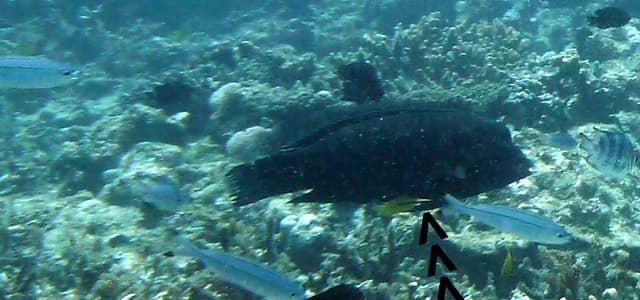
Doubleheader
Coris bulbifrons
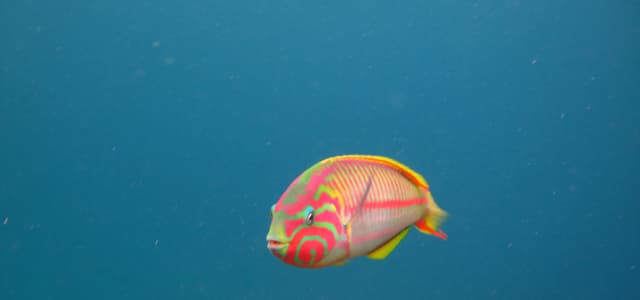
Klunzinger's Wrasse
Thalassoma rueppellii
Knife Razorfish
Cymolutes praetextatus
Peacock Wrasse
Iniistius pavo
Rockmover Wrasse
Novaculichthys taeniourus
Abudjube Wrasse
Cheilinus abudjubbe
2 photos
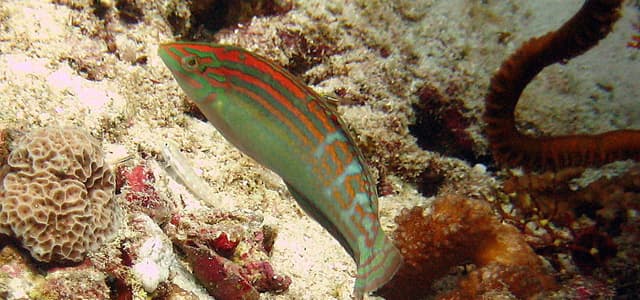
Adorned Wrasse
Halichoeres cosmetus
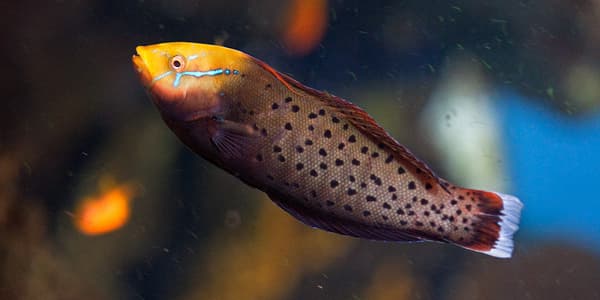
African Clown Coris
Allocoris cuvieri
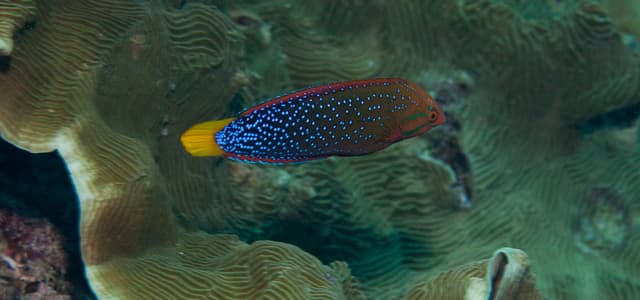
African Coris
Coris gaimard
Anchor Tuskfish
Choerodon anchorago
6 photos