Rusty Jobfish
Aphareus rutilans
Also known as: Fork-tailed Snapper, Ironjaw Snapper, Iron-jawed Snapper, Jobfish, Red Smalltooth Job, Reddish Snapperfish, Rust Snapper, Rusty Smalltooth Jobfish, Rusty Small-toothed Jobfish, Silvermouth, Smalltooth Jobfish, Small-toothed Jobfish, Silverfish
- Fork-tailed Snapper
- Ironjaw Snapper
- Iron-jawed Snapper
- Jobfish
- Red Smalltooth Job
- Reddish Snapperfish
- Rust Snapper
- Rusty Smalltooth Jobfish
- Rusty Small-toothed Jobfish
- Silvermouth
- Smalltooth Jobfish
- Small-toothed Jobfish
- Silverfish
Overview
The rusty jobfish (Aphareus rutilans) is a slim, fork-tailed snapper that lives far deeper than most of its family and hunts at night. Most snappers keep to moderate depths, while this one is commonest between 100 and 250m.
It lives over rocky bottoms and on deep coral and rocky reefs, from 10m down to about 330m, with juveniles on inshore reefs. It ranges widely across the Indo-Pacific, from the Gulf of Aqaba, the Red Sea and East Africa to Hawaii, southern Japan and Australia.
Appearance
The body is long, flattened from the sides and tapered at both ends, and the lower jaw juts past the upper. The mouth reaches back to below the middle of the eye, and there is a flat area between the eyes. The tail is deeply forked to almost crescent-shaped. Colour runs from bluish grey through mauve to reddish, with yellowish to reddish dorsal, pectoral and tail fins and a dark upper lip. Most fish seen are nearer 79cm than the full 110cm, and the heaviest weigh about 11kg.
Feeding
A nocturnal predator, it hunts mainly fish and also takes squid and other cephalopods, crustaceans and gastropods. Its jaws carry thin bands of small teeth.
Life cycle
Spawning has been recorded in spring and summer in Vanuatu, peaking in November and December.
Threats
It is locally common through much of its range and turns up often in fish markets. In Hawaii it is taken only as bycatch, yet the stock there is thought to be depleted and catch limits apply.
Relationship with people
Most are caught on handlines and vertical long lines, and spearfishers take it too. Being locally common across so much of its range, it matters to many deep-water fisheries, where it makes up a sizeable part of what is landed.
Notes & fun facts
- DID YOU KNOWThe species name rutilans means rusty, after the reddish back and fins.
- DID YOU KNOWLarvae have turned up as far south as Crowdy Head in New South Wales.
How to identify
Habitat & where to find it
- Range · Indo-Pacific, Southeast Atlantic
Found over rocky bottoms and on deep coral and rocky reefs, most commonly between 100 and 250m, with juveniles on inshore reefs.
Adult photos 0
Discussion
No comments yet. Seen one, or got a question about it? Start the discussion.
Deep dive
Taxonomy
- kingdomAnimalia
- phylumChordata
- classTeleostei
- orderEupercaria incertae sedis
- familyLutjanidae
- genusAphareus
- speciesAphareus rutilans Cuvier, 1830
Morphology
An elongated, compressed, spindle-shaped snapper with a projecting lower jaw. The dorsal fin has 10 spines and 10 or 11 soft rays, the anal fin 3 spines and 8 soft rays, and the last ray of each is drawn out. Neither fin has scales. The tail is deeply forked to crescent-shaped. There are no teeth on the roof of the mouth.
More in the family
Snappers (Lutjanidae)
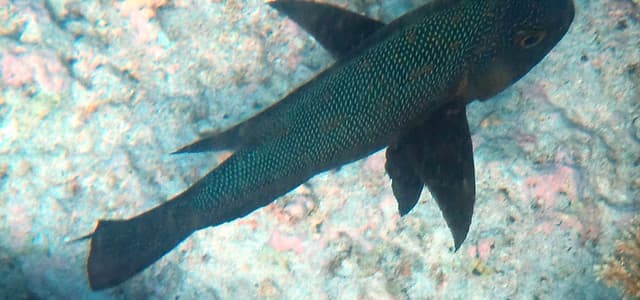
Midnight Snapper
Macolor macularis
Bengal Snapper
Lutjanus bengalensis
0 photos
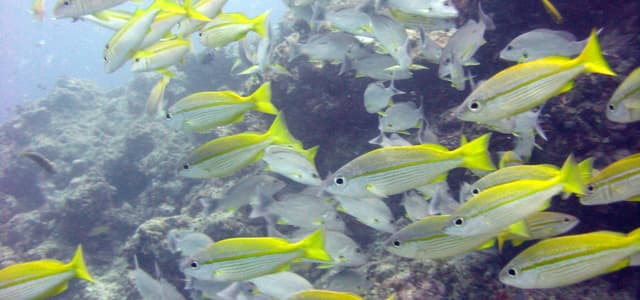
Bigeye Snapper
Lutjanus lutjanus
18 photos
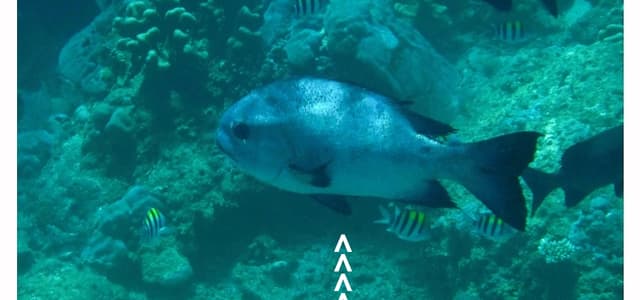
Black-and-White Snapper
Macolor niger
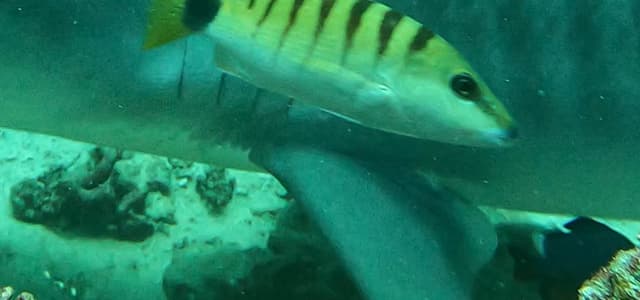
Black-banded Snapper
Lutjanus semicinctus
1 photo
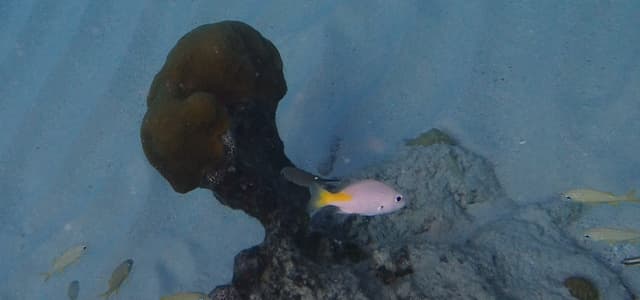
Blackfin snapper
Lutjanus buccanella
3 photos
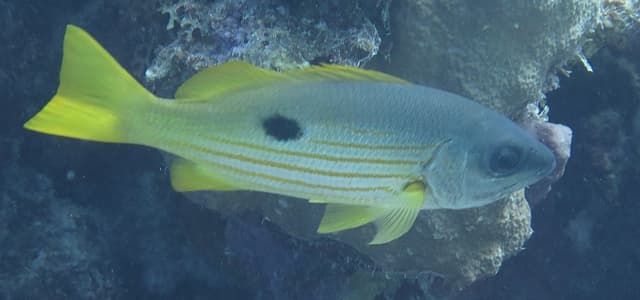
Blackspot Snapper
Lutjanus ehrenbergii
6 photos
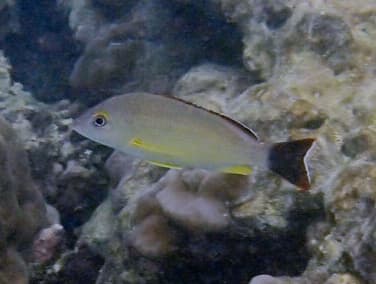
Blacktail Snapper
Lutjanus fulvus
19 photos
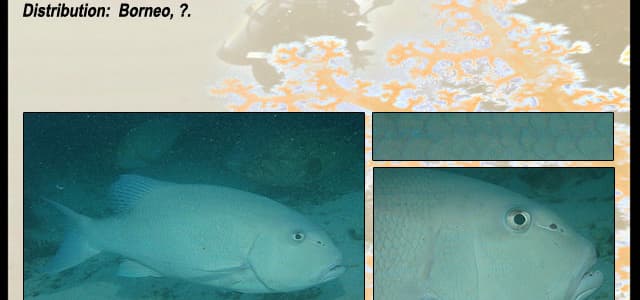
Blubberlip Snapper
Lutjanus rivulatus
5 photos
Blue-and-Gold Snapper
Lutjanus viridis
1 photo
Brownstripe Snapper
Lutjanus vitta
9 photos
Checkered Snapper
Lutjanus decussatus
15 photos