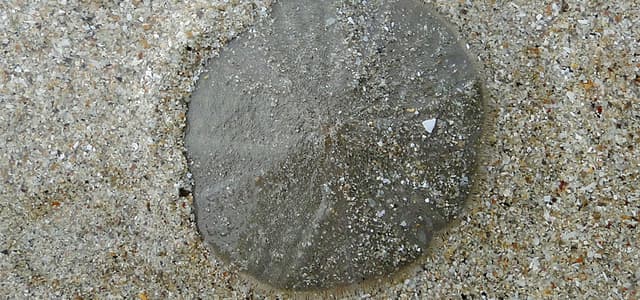
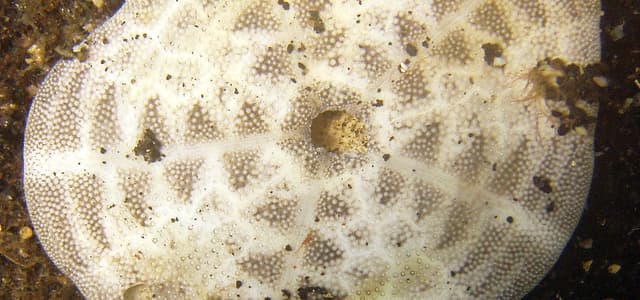
Reticulated Sea Biscuit
Clypeaster reticulatus
Also known as: Biscuit Urchin, Cake Urchin, Cushion Sea Star, Heart Urchin, Irregular Urchin, Sand Dollar, Sea Biscuit, Sea Hedgehog
- Biscuit Urchin
- Cake Urchin
- Cushion Sea Star
- Heart Urchin
- Irregular Urchin
- Sand Dollar
- Sea Biscuit
- Sea Hedgehog
Overview
Found singly, or in vast numbers, partially buried, over sandy areas and occasionally on rocky reefs.
Sea Urchins use tubed feet to get around, often in large impenetrable masses for protection.
Sometimes they hitch a lift on the back of crabs.
They have well developed jaws for grinding their prey.
Their anus is on top in most sea urchins, except the heart urchins where it is at the rear.
Predators of sea urchins are triggerfish and large wrasses, who nibble away at their spines before turning them over to eat the fleshy undersides.
Sea Urchins are highly venomous and can piece through a wet-suit.
Some are sensitive to light and have the ability to shoot venom loaded spines at a short distance.
To be avoided.
How to identify
- Pattern
- flower pattern
- Behaviour
- buries in sandloose groupssolitary
Tap any trait to see other fish that share it.
Habitat & where to find it
- Range · Indo-West Pacific
- Country only · 1
Found singly, or in vast numbers, partially buried, over sandy areas and occasionally on rocky reefs.
Adult photos 1
Discussion
No comments yet. Seen one, or got a question about it? Start the discussion.
Deep dive
More in the family
Clypeasteroida