Red Anemonefish
Amphiprion rubrocinctus
Also known as: Anemonefish, Australian Anemonefish, Australian Clownfish, Clown Anemonefish, Clownfish, Northwest Anemonefish, Northwest Australian Anemonefish, Northwest Australian Clownfish, Red-girdled Anemonefish, Ruby Clownfish, Tomato Anemonefish, Tomato Rubrocinctus
- Anemonefish
- Australian Anemonefish
- Australian Clownfish
- Clown Anemonefish
- Clownfish
- Northwest Anemonefish
- Northwest Australian Anemonefish
- Northwest Australian Clownfish
- Red-girdled Anemonefish
- Ruby Clownfish
- Tomato Anemonefish
- Tomato Rubrocinctus
Overview
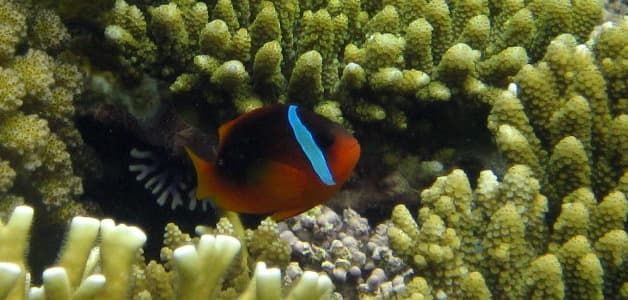
The red anemonefish is a dark-sided clownfish with a red snout and fins, found only in north-west Australia, where a breeding male can turn into a female when the ruling female dies.
It lives in pairs and family groups with its host anemone, in shallow lagoons and on coastal reefs at about 1 to 8m, from Ningaloo Reef in Western Australia to Groote Eylandt in the Gulf of Carpentaria, Northern Territory. It rarely strays far from the anemone, so that is the place to look for it.
Appearance
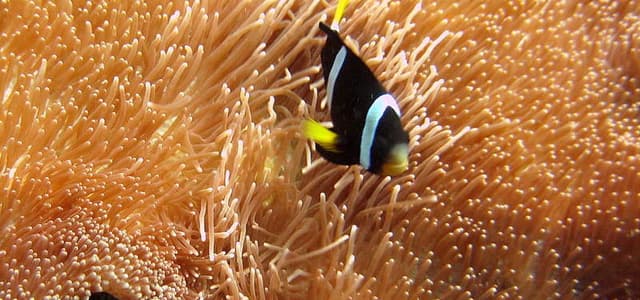
The sides are blackish or deep brown, with red on the snout, chest, belly and fins. One white bar crosses the head, though it is often faint and has little or no black edge. That single weak bar sets it apart from the four other anemonefish commonly seen in its range. Amphiprion perideraion and Amphiprion sandaracinos have a white stripe along the back, while Amphiprion clarkii and Amphiprion ocellaris have three white bars.
Two close relatives look more alike. Tomato anemonefish males are entirely bright red and the females have a stronger bar, while Barber's anemonefish has no dark sides and lives elsewhere.
Behaviour
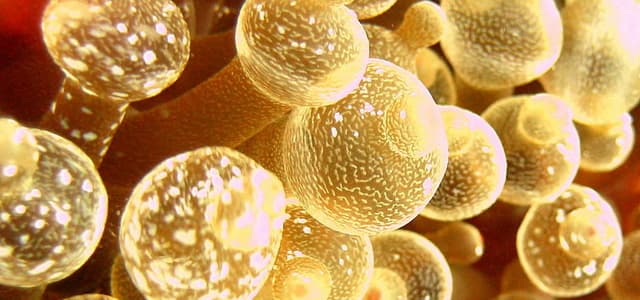
It is choosy about its home, using only two of the nine host anemones within its range: usually the bubble-tip anemone, otherwise the giant carpet anemone. As with all anemonefish, the partnership benefits both sides and the stinging tentacles do it no harm. Its natural diet includes zooplankton.
Life cycle
Life in the anemone follows a strict order of size. The biggest fish is the female, next comes the breeding male, and non-breeding males rank below him, each smaller than the last. When the female dies, the breeding male turns into a female and the largest non-breeder moves up to take his place.
Threats
Anemones suffer the same troubles as corals, and can bleach when the water warms or turns more acidic, which puts the fish that depend on them at risk too. The small range of this species is a concern, though being able to use two kinds of host may lower the risk compared with a true specialist. It is listed as of least concern in the Northern Territory.
Notes & fun facts
- DID YOU KNOWAnemonefish are specialised damselfish.
- DID YOU KNOWSome anemonefish change colour with location, sex or host anemone, but this species shows none of those variations.
How to identify
- Pattern
- blotchwhite stripes
- Behaviour
- pairs
Tap any trait to see other fish that share it.
Diver’s cheat sheet
- 1Where to lookCheck bubble-tip anemones first, as they are its usual host, then giant carpet anemones.
Habitat & where to find it
- Range · Eastern Indian Ocean
- Exact location · 3
- Country only · 3
Found in pairs and family groups with their host anemone, in shallow lagoons and coastal reefs of north-west Australia, from Ningaloo Reef in Western Australia to Groote Eylandt in the Northern Territory.
Adult photos 6
Other species worth knowing
Partners, neighbours & enemies
Discussion
No comments yet. Seen one, or got a question about it? Start the discussion.
Deep dive
Taxonomy
- kingdomAnimalia
- phylumChordata
- classTeleostei
- orderOvalentaria incertae sedis
- familyPomacentridae
- genusAmphiprion
- speciesAmphiprion rubrocinctus Richardson, 1842
Morphology
Dark brown to blackish sides contrast with a red snout, breast, belly and fins, and a lone white head bar is often poorly marked. Tomato anemonefish males are entirely bright red and the females have a more vivid bar. Barber's anemonefish lacks the dark sides and lives elsewhere. In its range, A. perideraion and A. sandaracinos have a white stripe along the back, while A. clarkii and A. ocellaris have three white bars.
More in the family
Damselfishes (Pomacentridae)
Acapulco Major
Stegastes acapulcoensis
2 photos
Alexander's Damsel
Pomacentrus alexanderae
1 photo
Ambon Chromis
Pycnochromis amboinensis
4 photos
Ambon Damsel
Pomacentrus amboinensis
14 photos
Arabian Chromis
Chromis flavaxilla
4 photos
Australian Gregory
Plectroglyphidodon apicalis
4 photos
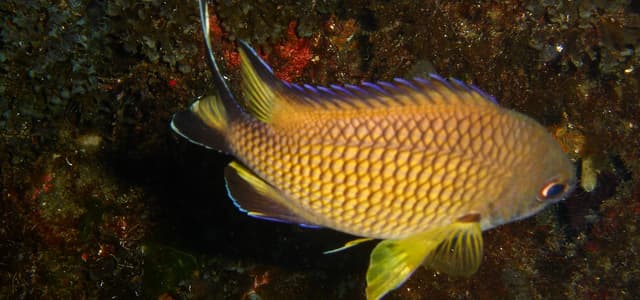
Azores Chromis
Chromis limbata
2 photos
Azure Demoiselle
Chrysiptera hemicyanea
0 photos
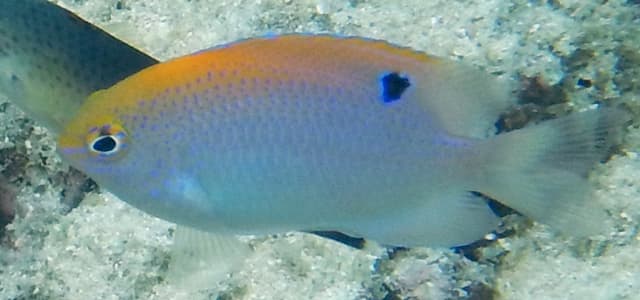
Baensch's Damsel
Pomacentrus baenschi
1 photo
Banded Damsel
Dischistodus fasciatus
2 photos
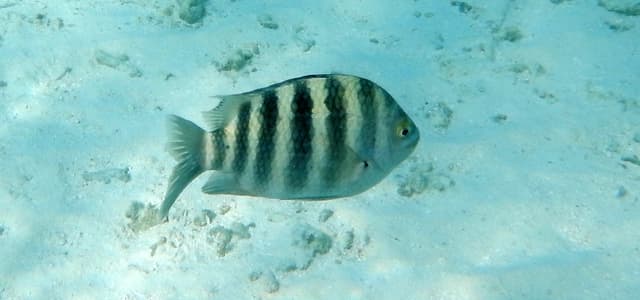
Banded Sergeant
Abudefduf septemfasciatus
11 photos
Barberi Clownfish
Amphiprion barberi
23 photos