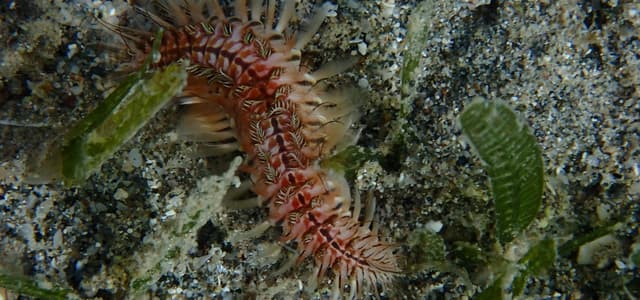
Catriona· 8 Mar 2022
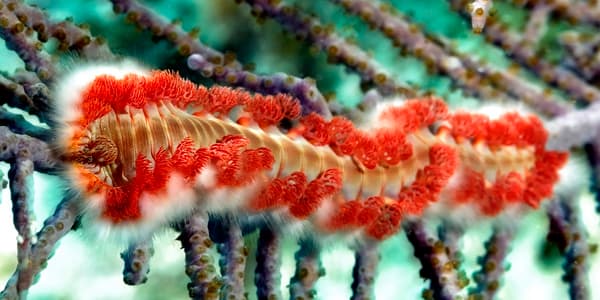
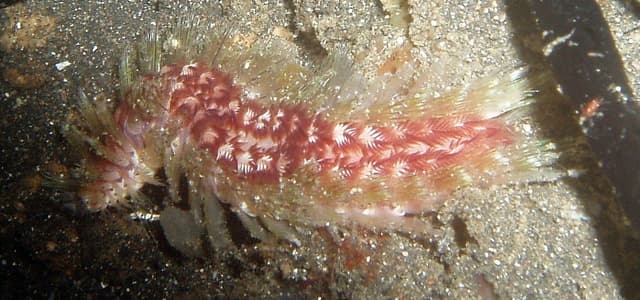
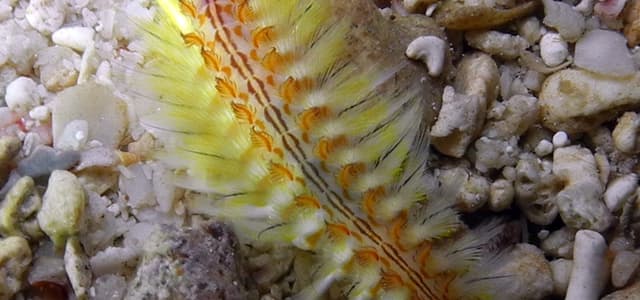
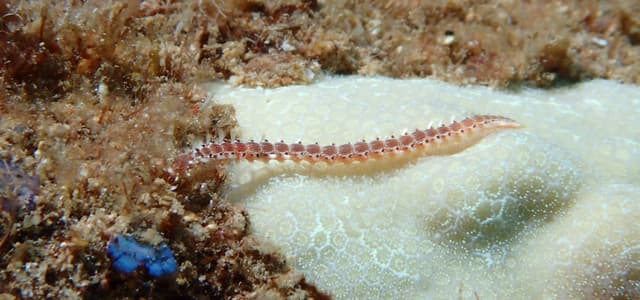
This is a Blackline Fireworm (Chloeia viridis), not Peacock Bristleworm.
Chloeia flava
Also known as: Fire Worm, Golden Bristleworm, Golden Fireworm, Peacock Fireworm, Rock Worm, Sea Caterpillar, Sea Mice, Segmented Seaworm, Segmented Worm
Found amongst rubble and sandy areas, of coral and rocky reefs.
Widespread ?Western Central Atlantic, ?Caribbean, Indo-Pacific
Segmented worms are extremely mobile, have strong jaws for hunting and feeding on their prey.
Some worms are covered in hairs for protection, scavenging on the sea floor for detritus.
Others are delicate fans, protected by their self made tubes, which they retreat back into when threatened, these are filter feeders and feed on plankton.
Found amongst rubble and sandy areas, of coral and rocky reefs.
3 comments
This is a Blackline Fireworm (Chloeia viridis), not Peacock Bristleworm.
I just found one in our tank, it was attached to some new coral we bought. There isn't much about them online that I can find through GOOGLE, where can I learn more about them? Like, will they eat our coral?
Bristle Worms (Amphinomidae)