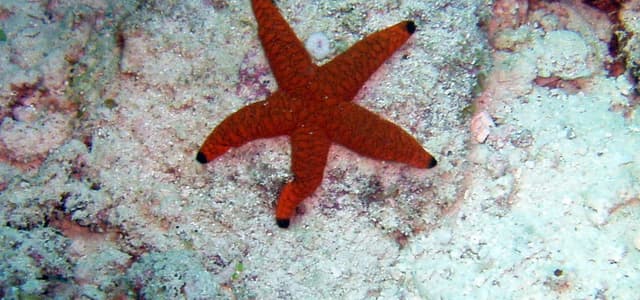
Necklace Sea Star
Fromia monilis
Also known as: Asteroids, Candy-striped Sea Star, Fromia Sea Star, Ingioiellata Star of Sea, Maldives Starfish, Marble Sea Star, Marble Starfish, Necklace Starfish, Orange Marble Sea Star, Orange Marble Starfish, Orange Sea Star, Orange Starfish, Orange Tile Starfish, Pearl Sea Star, Pearl Starfish, Peppermint Sea Star, Peppermint Starfish, Red-and-Orange Sea Star, Red-and-Orange Starfish, Red-and-White Sea Star, Red-and-White Starfish, Redmesh Sea Star, Redmesh Starfish, Red Tile Starfish, Red-tipped Sea Star, Red-tipped Starfish, Starfish, Tiled Starfish
- Asteroids
- Candy-striped Sea Star
- Fromia Sea Star
- Ingioiellata Star of Sea
- Maldives Starfish
- Marble Sea Star
- Marble Starfish
- Necklace Starfish
- Orange Marble Sea Star
- Orange Marble Starfish
- Orange Sea Star
- Orange Starfish
- Orange Tile Starfish
- Pearl Sea Star
- Pearl Starfish
- Peppermint Sea Star
- Peppermint Starfish
- Red-and-Orange Sea Star
- Red-and-Orange Starfish
- Red-and-White Sea Star
- Red-and-White Starfish
- Redmesh Sea Star
- Redmesh Starfish
- Red Tile Starfish
- Red-tipped Sea Star
- Red-tipped Starfish
- Starfish
- Tiled Starfish
Overview
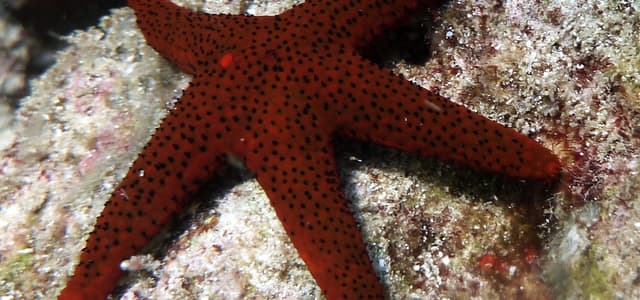
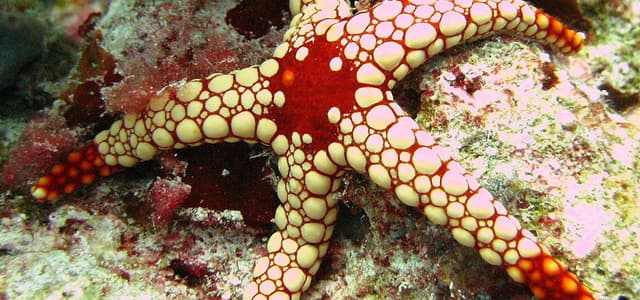
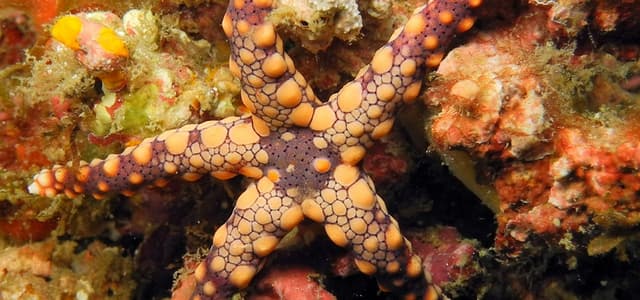
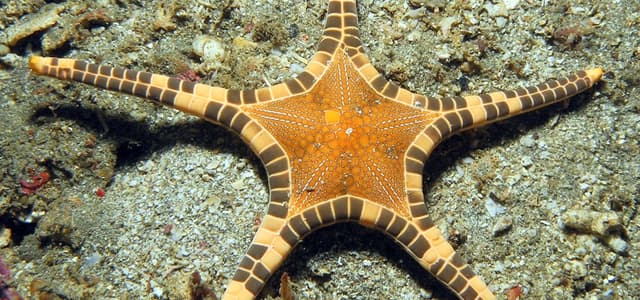
Found singly or in constellations, on rubble and sandy areas, of shallow rocky slopes and reefs. Varies in colour.
Sea Stars have remarkable regenerative powers, when attacked and damaged by predators they are able to grow new arms. They usually have five arms but have been found with 4 or 6 arms, this may be because more than one arm has been damaged at one time!
Sometimes small parasitic limpets can be found on the underside of arms which can deform the arms.
They possess a cleverly evolved arsenal of hydraulic tube feet connected to an elaborate water-vascular system that encircles the animal's mouth and extends via five radial canals down the centre of each arm.
Their mouth is underneath, but their prey is absorbed outside their mouths by forcing out their digestive organs from their stomach.
Sea Stars are carnivores and feed on almost any food including molluscs, worms, detritus and each other!
Some sea stars like the crown of thorns can be venomous.
How to identify
Habitat & where to find it
- Range · Indo-West Pacific
- Country only · 7
Found singly or in constellations, on rubble and sandy areas, of shallow rocky slopes and reefs.
Adult photos 7
Discussion
No comments yet. Seen one, or got a question about it? Start the discussion.
Deep dive
More in the family
Sea Stars (Goniasteridae)