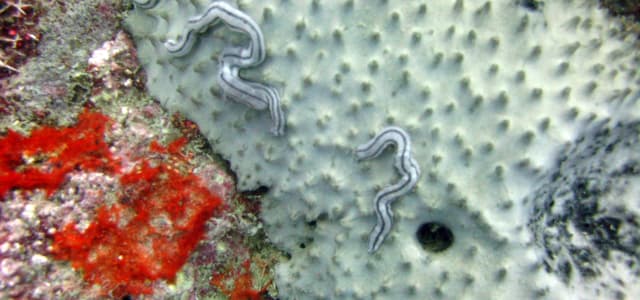
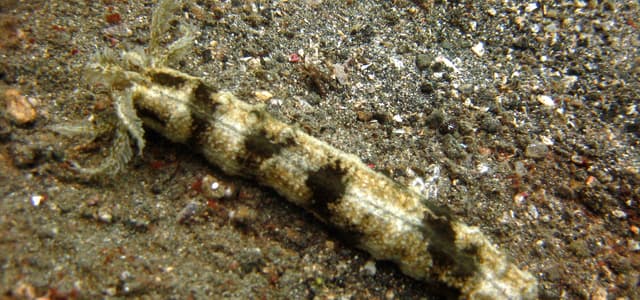
I spotted this creature, February 8, 2018, in shallow waters while snorkeling in Guam about 50 yards from the shore of the Westin Hotel located at Tumon Bay. I am 75 years old, have been snorkeling globally all my life; yet, I have never encountered the "Lion's Paw Sea Cucumber," Euapta Godeffroy.
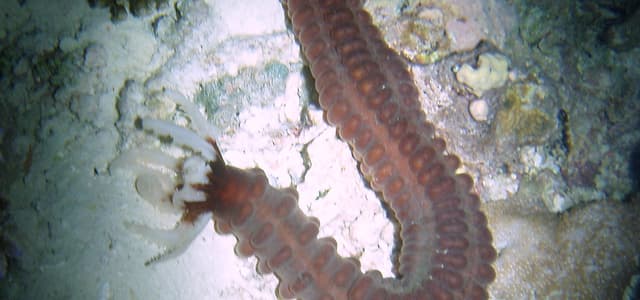
Lion's Paw Sea Cucumber
Euapta godeffroyi
Also known as: Godeffroy's Sea Cucumber, Medusa Worm, Serpentine Sea Cucumber, Sticky Snake Sea Cucumber, Synaptid Sea Cucumber, Tripang, Wormfish
- Godeffroy's Sea Cucumber
- Medusa Worm
- Serpentine Sea Cucumber
- Sticky Snake Sea Cucumber
- Synaptid Sea Cucumber
- Tripang
- Wormfish
Overview
Found singly or in pickles, during the day hiding amongst mud, rubble, and sandy areas, in the open at night foraging for food, over seagrass beds, in harbours, and lagoons.
Synaptidae are soft and worm like, often active during the day.
They have no feet and move by contraction of the body.
Some sea cucumbers crawl around on the bottom slowly filtering sand through their tentacles to gather food, while others spread their tentacles above them to capture plankton. A number of sea cucumbers feed nocturnally while others feed by day.
There are sea cucumbers that hardly move while others are more active often perching on tall sponges to feed.
Sea cucumbers often attract hitch-hikers like shrimps and crabs that crawl over their skin, also pearlfish that enter via their anus.
As a means of defence sea cucumbers can expel their intestines or respiratory organs in the form of sticky threads, but these can quickly regenerate.
Juveniles often mimic sea slugs.
Some types of sea cucumbers are edible and considered a delicacy in the Far East countries.
How to identify
Habitat & where to find it
- Range · Indo-Pacific
- Exact location · 1
- Country only · 7
Found singly or in pickles, during the day hiding amongst mud, rubble, and sandy areas, in the open at night foraging for food, over seagrass beds, in harbours, and lagoons.
Adult photos 8
Discussion 1
1 comment
- james coffin· 2 Mar 2018
Deep dive
More in the family
Apodida