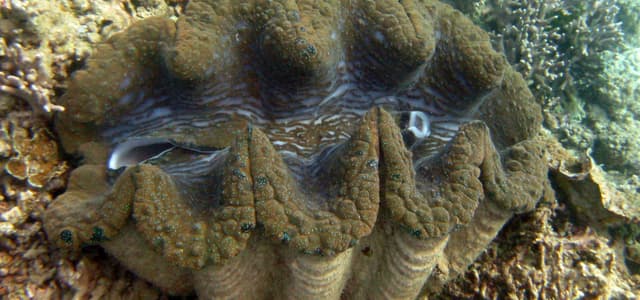
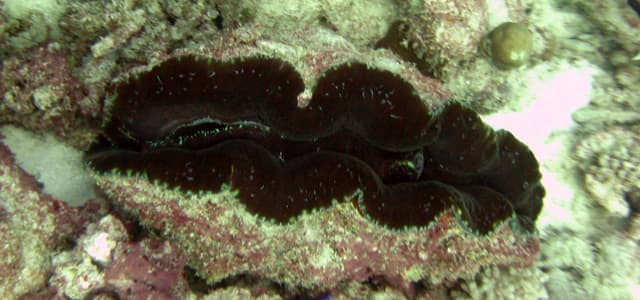
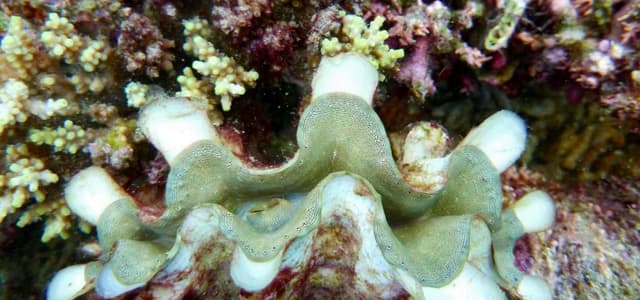
Large Giant Clam
Tridacna maxima
Also known as: Clam, Common Giant Clam, Elongate Giant Clam, Elongated Clam, Elongated Giant Clam, Giant Clam, Maxima Clam, Maxima Giant Clam, Mollusc, Rugose Clam, Small Giant Clam, Tridacna Clam, Tridacna Giant Clam
- Clam
- Common Giant Clam
- Elongate Giant Clam
- Elongated Clam
- Elongated Giant Clam
- Giant Clam
- Maxima Clam
- Maxima Giant Clam
- Mollusc
- Rugose Clam
- Small Giant Clam
- Tridacna Clam
- Tridacna Giant Clam
Overview
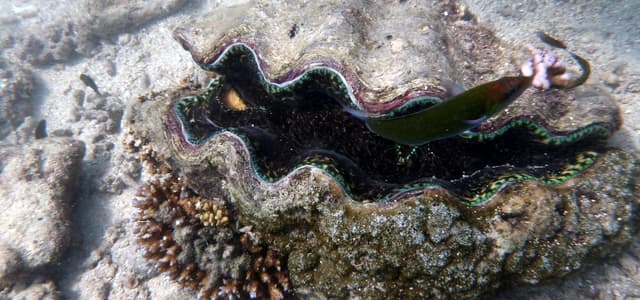
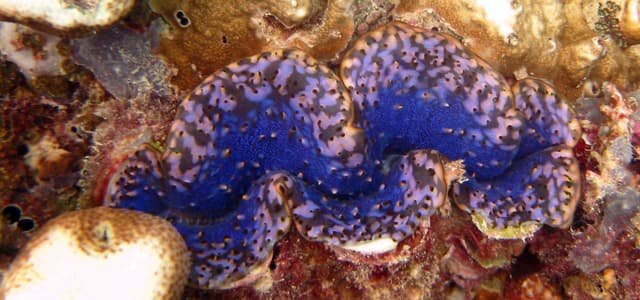
Found between coral heads and depressions in rocks, over coral and rocky reefs. Varies in colour.
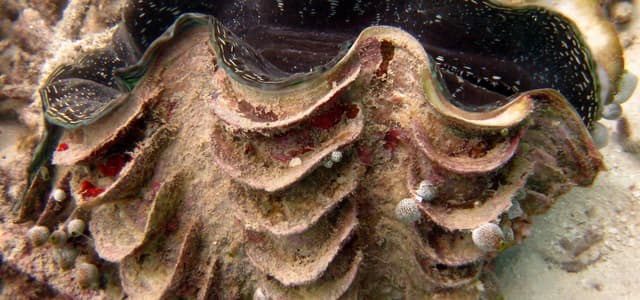
Most Bivalves are permanently anchored in fissures or depressions in the rock surface of the reef, some may become covered in algae and other marine life.
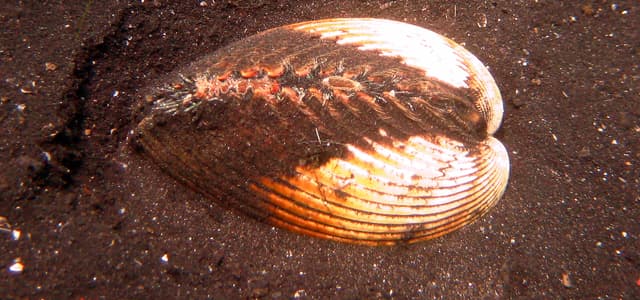
Other Bivalves swim free, either by a well developed foot or propelled along by a jet of water from their mantle cavity.
How to identify
Habitat & where to find it
- Range · Indo-Pacific
- Exact location · 16
- Country only · 44
Found between coral heads and depressions in rocks, over coral and rocky reefs.
Adult photos 60
Discussion
No comments yet. Seen one, or got a question about it? Start the discussion.
Deep dive
More in the family
Bivalves (Cardiidae)