Bony fish
Japanese Seahorse
Hippocampus mohnikei
Also known as: Lemur-tail Seahorse
ALSO KNOWN AS
- Lemur-tail Seahorse
VUVulnerableIUCN Red List, 2017
01
Overview
Found singly or in pairs anchored with their tails over muddy bottoms, in seagrass beds of estuaries and coral reefs, also sometimes off-shore attached to drifting seaweed rafts.
They feed on zooplankton which they suck whole into their mouths.
Pipefishes and Seahorses are unique in that the male gives birth! The female deposits their eggs after fertilisation into the males pouch to incubate the eggs for one month before giving birth.
They attach to anything they can get their tail around, even each other usually close to the bottom to blend in with their surroundings.
Seahorses are a threatened species because it is sought after for Chinese medicine.
02
How to identify
03
Habitat & where to find it
- Range · Western Pacific
- Country only · 1
LIVES IN
Found singly or in pairs anchored with their tails over muddy bottoms, in seagrass beds of estuaries and coral reefs, also sometimes off-shore attached to drifting seaweed rafts.
RANGE
04
Adult photos 1
05
Discussion 1
1 comment

ALL STAGES
FOR THE MARINE-BIOLOGY CURIOUS
Deep dive
06
More in the family
Pipefishes-Seahorses (Syngnathidae)
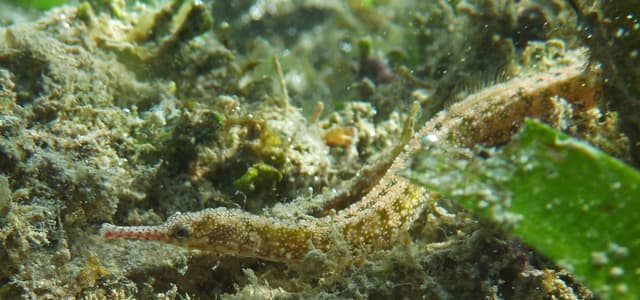
Alligator Pipefish
Syngnathoides biaculeatus
1 photo
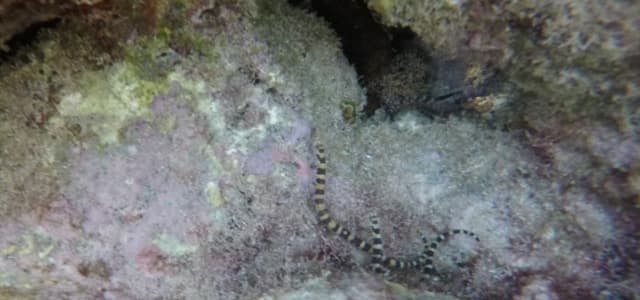
Banded Pipefish
Micrognathus crinitus
4 photos
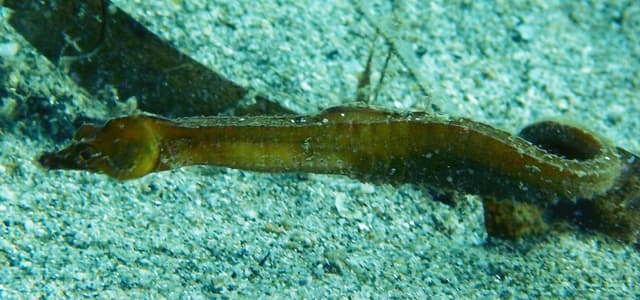
Bastard Seahorse
Acentronura gracilissima
1 photo
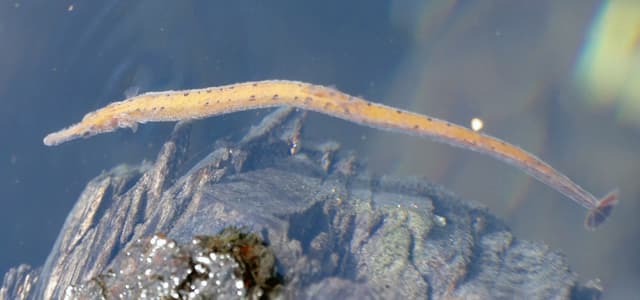
Belly-barred Pipefish
Hippichthys spicifer
1 photo
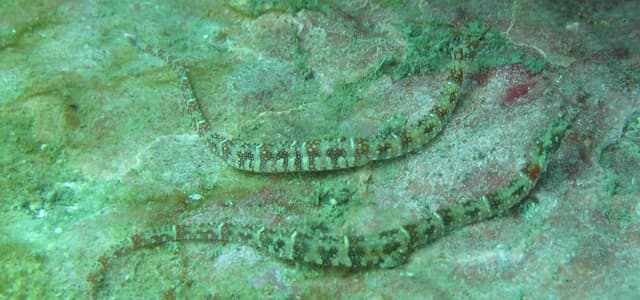
Benedetto's Pipefish
Corythoichthys benedetto
1 photo
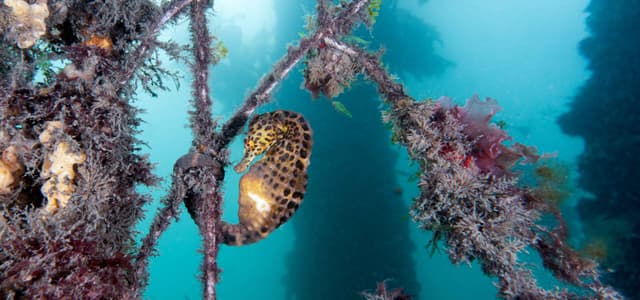
Bigbelly Seahorse
Hippocampus abdominalis
3 photos
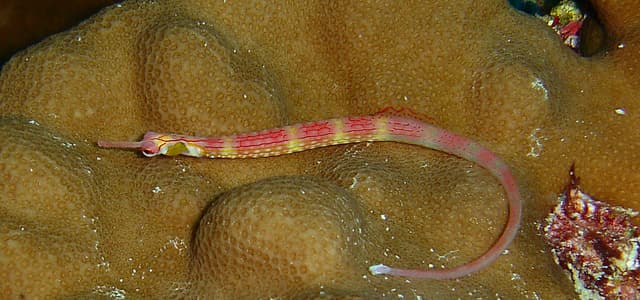
Black-breasted Pipefish
Corythoichthys nigripectus
1 photo
Bluestripe Pipefish
Doryrhamphus excisus
1 photo
Brown-banded Pipefish
Corythoichthys amplexus
1 photo
Denise's Pygmy Seahorse
Hippocampus denise
1 photo
Double-ended Pipefish
Trachyrhamphus bicoarctatus
7 photos
Dusky Pipefish
Syngnathus floridae
1 photo