Eight-lined Wrasse
Pseudocheilinus octotaenia
Also known as: Eightline Wrasse, Eightstripe Wrasse, Eight-striped Wrasse, Flasher Wrasse, Small-mouthed Wrasse
- Eightline Wrasse
- Eightstripe Wrasse
- Eight-striped Wrasse
- Flasher Wrasse
- Small-mouthed Wrasse
Overview
Found singly in caves and crevices, over live corals and rubble, of seaward reefs, rich with invertebrate growth.
Most reef fish seen by divers during the day, are grazers, they cruise around, just above the surface of the coral, or snoop into crevices, foraging for food.
Wrasses have small protruding teeth, which they use to graze the bottom, taking in a variety of algae, crustaceans, such as crabs, eggs, shrimps, snails and worms. Any hard coats or thick shells, are then ground down by their pharyngeal jaws, and the delicacies inside digested.
From juvenile to adult, wrasses dramatically alter their colour and body shapes.
Wrasses are always on the go during the day, but are the first to go to bed and the last to rise.
Small wrasses dive below the sand to sleep, and larger wrasses wedge themselves in crevices.
How to identify
Tap any trait to see other fish that share it.
Habitat & where to find it
- Range · Indo-Pacific
- Country only · 2
Found singly in caves and crevices, over live corals and rubble, of seaward reefs, rich with invertebrate growth.
Adult photos 2
Discussion
No comments yet. Seen one, or got a question about it? Start the discussion.
Deep dive
More in the family
Wrasses (Labridae)
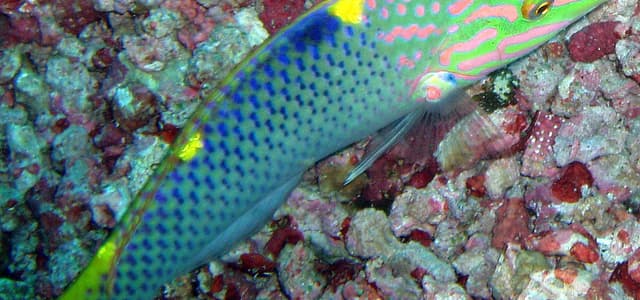
Checkerboard Wrasse
Halichoeres hortulanus
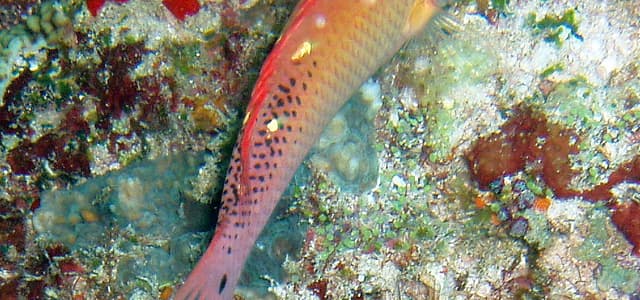
Diana's Hogfish
Bodianus diana
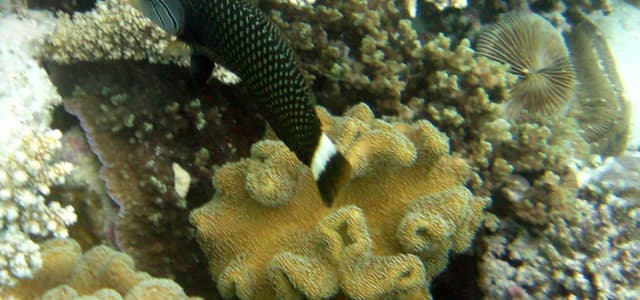
Rockmover Wrasse
Novaculichthys taeniourus
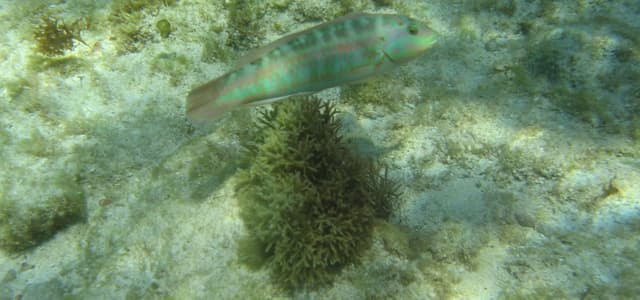
Slippery Dick
Halichoeres bivittatus
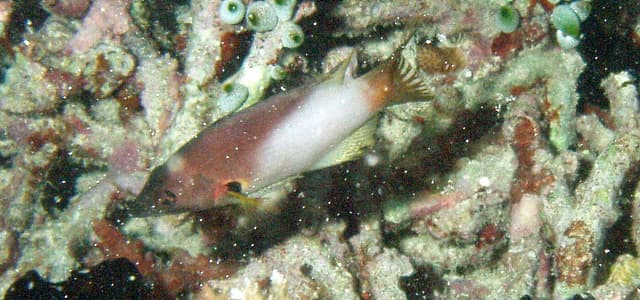
Axilspot Hogfish
Bodianus axillaris
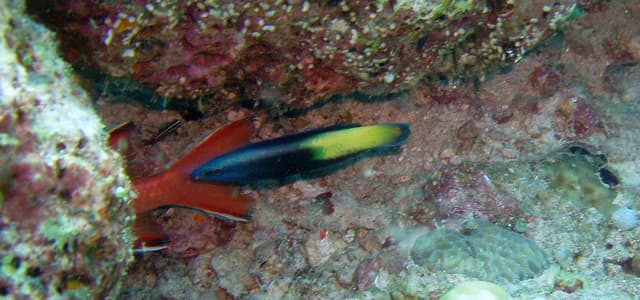
Bicolor Cleaner Wrasse
Labroides bicolor
Black Wrasse
Macropharyngodon negrosensis
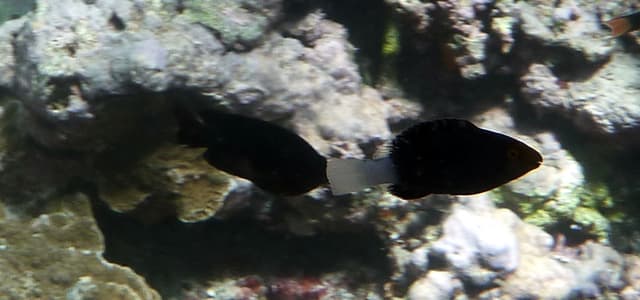
Cheek-lined Wrasse
Oxycheilinus digramma
Knife Razorfish
Cymolutes praetextatus
Peacock Wrasse
Iniistius pavo
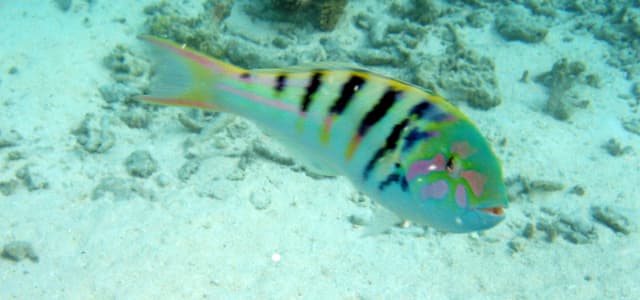
Sixbar Wrasse
Thalassoma hardwicke
Twotone Wrasse
Halichoeres prosopeion