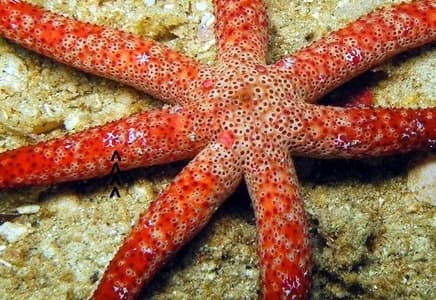
Crawling Comb Jelly
Benthoplana meteoris
Also known as: Benthic Comb Jelly, Benthic Ctenophore, Creeping Ctenophore, Coeloplana meteoris
- Benthic Comb Jelly
- Benthic Ctenophore
- Creeping Ctenophore
- Coeloplana meteoris
Overview
Found over mud and sand bottoms, or near the surface drifting in the sea, and washed up on beaches.
The Comb Jelly is a hermaphrodite, found, in almost every ocean of the world. Their body is made up of "comb rows" eight rows of ciliary (hair) plates, used for propulsion, these generate the beautiful rainbow colours!
Despite its delicate and perhaps innocent appearance, the sea gooseberry is a voracious predator. Two retractable tentacles, sometimes reaching a length of 20 times the body diameter, are used to catch any prey that floats by! Unlike a jellyfish, comb jellies have no poison to paralyze their prey.
They in turn, are preyed on by crustaceans.
How to identify
Tap any trait to see other fish that share it.
Habitat & where to find it
- Range · Indo-Pacific
- Country only · 3
Found over mud and sand bottoms, or near the surface drifting in the sea, and washed up on beaches.
Adult photos 3
Discussion
No comments yet. Seen one, or got a question about it? Start the discussion.
Deep dive
More in the family
Platyctenida