Bob Shreve· 15 Sept 2009
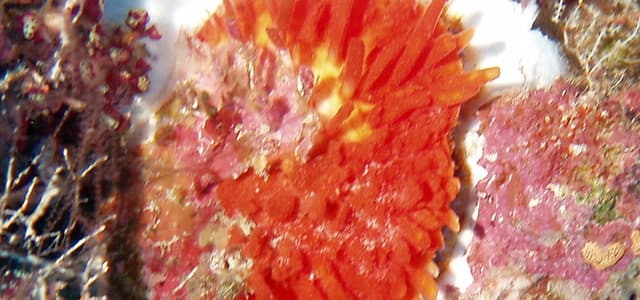
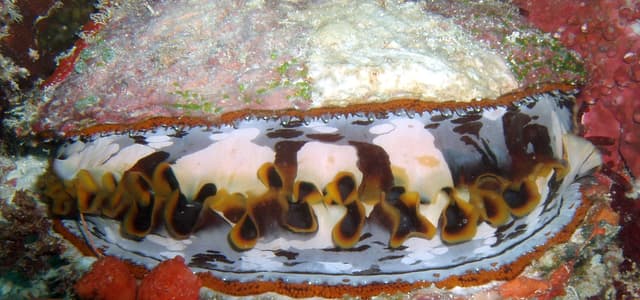
I regularly see an animal that looks just like this in Anilao in the Philippines. In the book "Diver's Guide to Reef Life" it is identified as a Coral Clam. So it is also found in the Philippines.
Pedum spondyloideum
Also known as: Bioeroding Scallop, Boring Bivalve, Boring Pectinid Bivalve, Coral Clam, Coral-boring Scallop, Iridescent Clam, Iridescent Scallop, Mollusc, Pectinid Bivalve, Pectinid Scallop, Pedini, Scallop
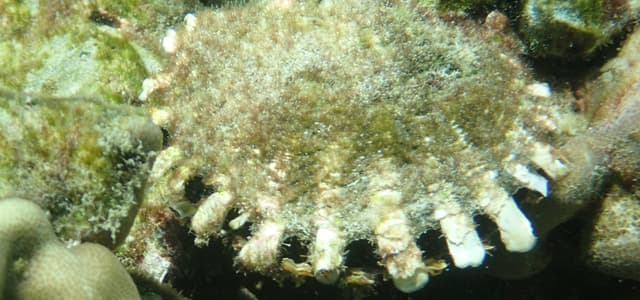
These fragile shells with their brightly coloured mantle and minute eyes along the margin, are found buried deep into coral recesses, for protection against predators, over lagoon reefs.
Most Bivalves are permanently anchored in fissures or depressions in the rock surface of the reef, some may become covered in algae and other marine life.
Other Bivalves swim free, either by a well developed foot or propelled along by a jet of water from their mantle cavity.
1 comment
I regularly see an animal that looks just like this in Anilao in the Philippines. In the book "Diver's Guide to Reef Life" it is identified as a Coral Clam. So it is also found in the Philippines.
Pectinida