Common Stingray
Dasyatis pastinaca
Also known as: Blue Stingray, Blue-spot Stingray, Blue-spotted Stingray, Golden Stingray, Pastinaca Ray, Bluespot Stingray
- Blue Stingray
- Blue-spot Stingray
- Blue-spotted Stingray
- Golden Stingray
- Pastinaca Ray
- Bluespot Stingray
Overview
Found singly, often resting on mud and sandy bottoms, of shallow bays, estuaries, and coastal lagoons.
Widespread Northeastern Atlantic, Mediterranean
Rays are bottom feeders, they settle themselves down over their prey, trapping them against the substrate with their disc, then flexing their disc flaps and manoeuvring the victims into their mouths.
Most rays live in the sea, but some can be found in estuaries, often hard to see as they can be buried in the sand, occasionally they can be seen leaping out of the water.
As a form of defence rays have electric organs while others have venomous spines.
Usually rays will swim out of harms way if approached, however they can give a nasty sting which could prove fatal.
Never swim over the top of large rays, they think you are a predator and are likely to whip their tails in defense! (as happened to Steve Irwin)
How to identify
- Pattern
- blue spots
- Behaviour
- bottom dwellingsolitary
Tap any trait to see other fish that share it.
Habitat & where to find it
- Range · Northeast Atlantic, Mediterranean
- Exact location · 1
- Country only · 1
Found singly, often resting on mud and sandy bottoms, of shallow bays, estuaries, and coastal lagoons.
Adult photos 2
Discussion
No comments yet. Seen one, or got a question about it? Start the discussion.
Deep dive
More in the family
Stingrays (Dasyatidae)
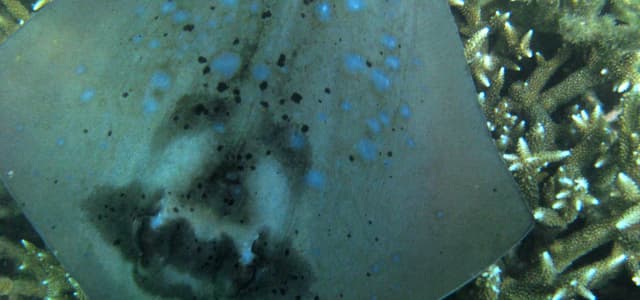
Australian Blue-spotted Maskray
Neotrygon australiae
28 photos
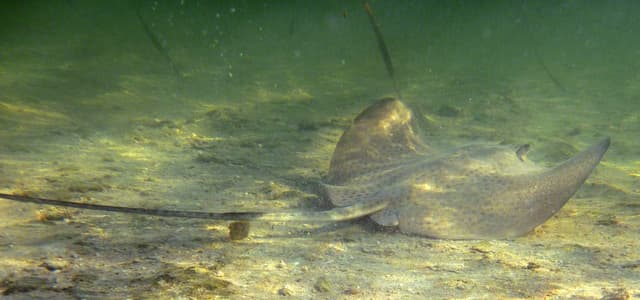
Black-spotted Whipray
Maculabatis toshi
1 photo
Blue-spotted Stingray
Neotrygon kuhlii
0 photos
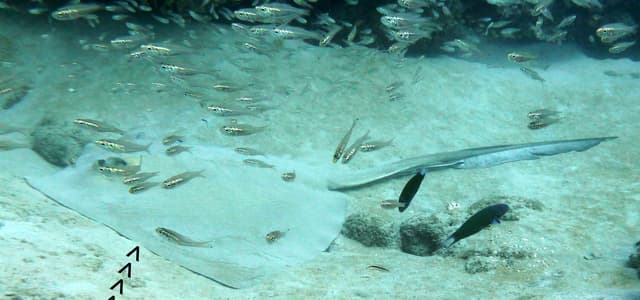
Cowtail Stingray
Pastinachus sephen
7 photos
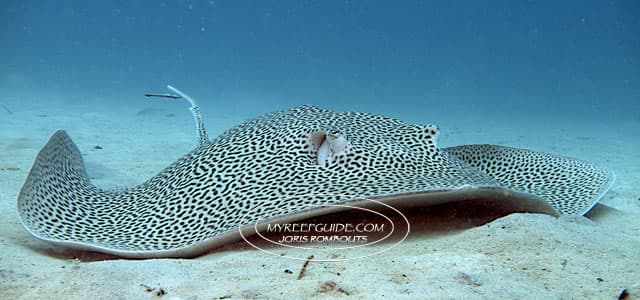
Honeycomb Stingray
Himantura uarnak
8 photos
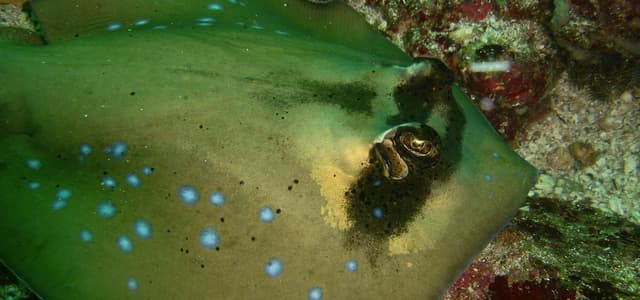
Indian Ocean Blue-spotted Maskray
Neotrygon caeruleopunctata
2 photos
Mangrove Whipray
Urogymnus granulatus
11 photos
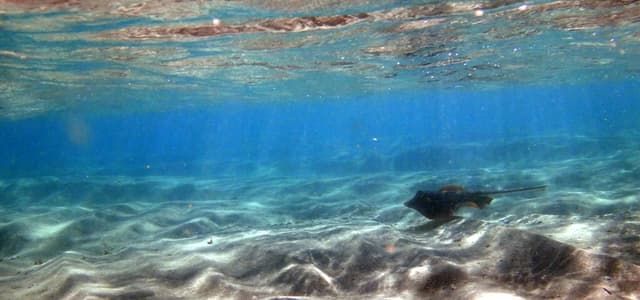
Ningaloo Maskray
Neotrygon ningalooensis
1 photo
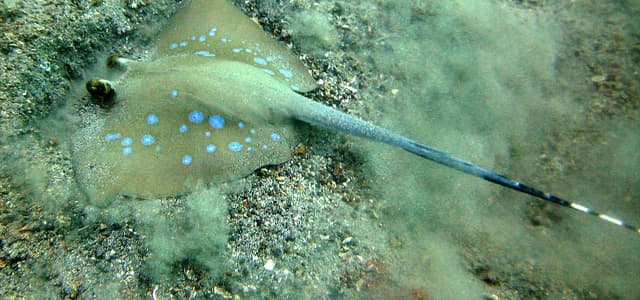
Oriental Blue-spotted Maskray
Neotrygon orientalis
13 photos
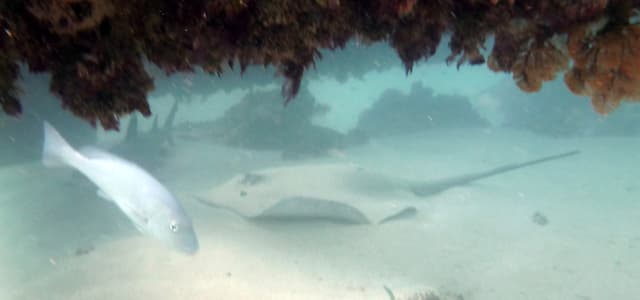
Pink Whipray
Pateobatis fai
3 photos
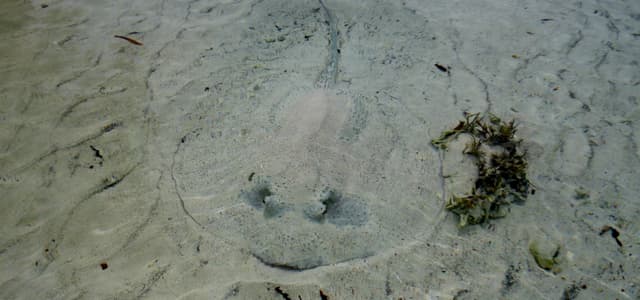
Porcupine Whipray
Urogymnus asperrimus
1 photo
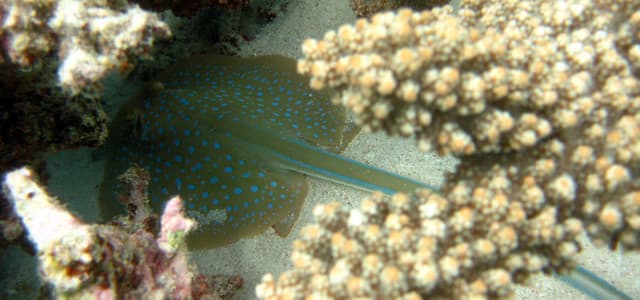
Ribbontail Stingray
Taeniura lymma
20 photos