Common Searobin
Prionotus ruscarius
Also known as: Flying Gurnard, Gruntfish, Gurnard, Mother-in-Law Fish, Rough Searobin
- Flying Gurnard
- Gruntfish
- Gurnard
- Mother-in-Law Fish
- Rough Searobin
Overview
Found singly, on shallow sandy bottoms, sometimes buried in the sand, over bays, estuaries and lagoons. More active at night hunting for food, by using their lower spines of pectoral fin like feet too feel for their prey.
Juveniles found in estuaries.
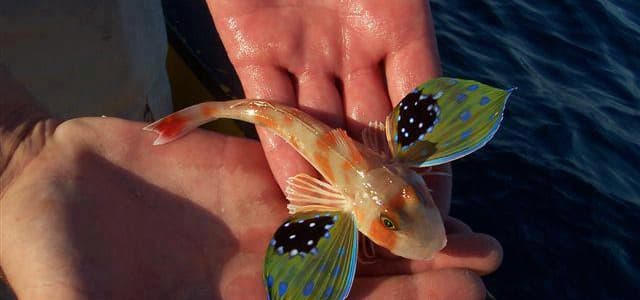
Sea robins have heavily armoured, spiny heads. They have separate rays (like soft spines) on their bellies, near the Pectoral fins these spines act like legs, as the fish walks along the bottom of the ocean they use these spines to find crustaceans in the sand.
They also grunt. French term for the word Gurnard means to grunt.
They have poisonous spines on their backs.
How to identify
Habitat & where to find it
- Range · Eastern Pacific
- Country only · 2
Found singly, on shallow sandy bottoms, sometimes buried in the sand, over bays, estuaries and lagoons.
Adult photos 2
Discussion
No comments yet. Seen one, or got a question about it? Start the discussion.
Deep dive
More in the family
Searobins (Triglidae)
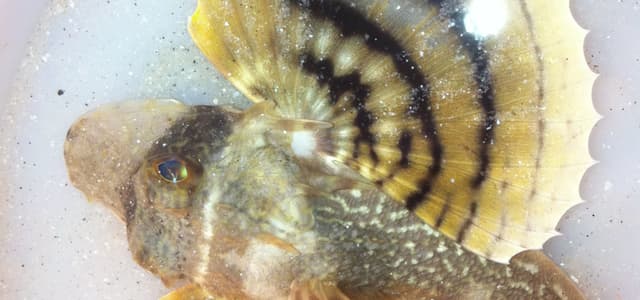
Bighead Searobin
Prionotus tribulus
12 photos
Horned Searobin
Bellator militaris
0 photos
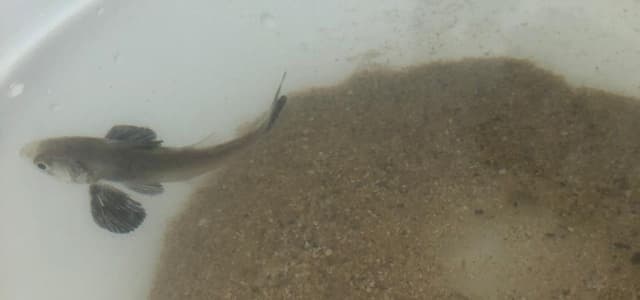
Island Gurnard
Pterygotrigla guezei
1 photo
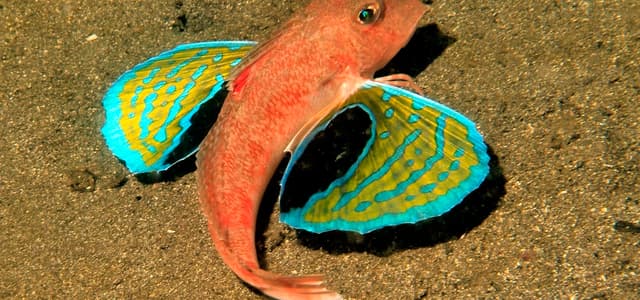
Longfin Sea Robin
Lepidotrigla japonica
1 photo
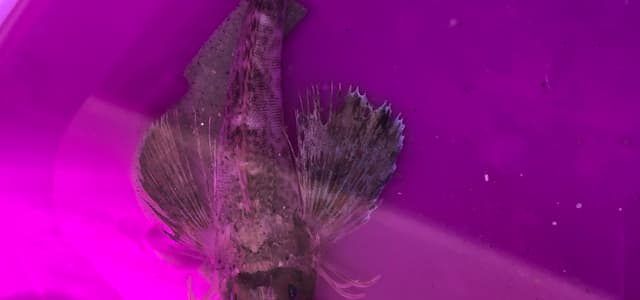
Northern Searobin
Prionotus carolinus
3 photos
Red Gurnard
Chelidonichthys kumu
4 photos
Spiny Searobin
Prionotus alatus
1 photo
Streaked Gurnard
Chelidonichthys lastoviza
1 photo
Tub Gurnard
Chelidonichthys lucerna
1 photo