


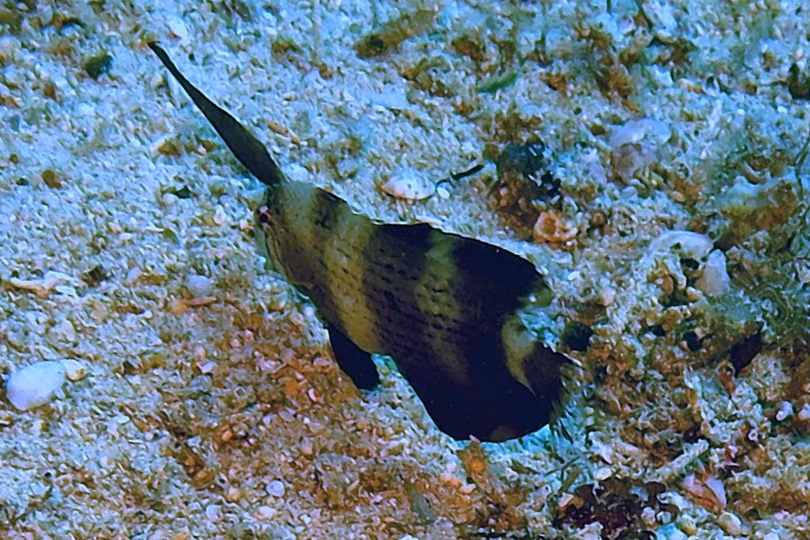

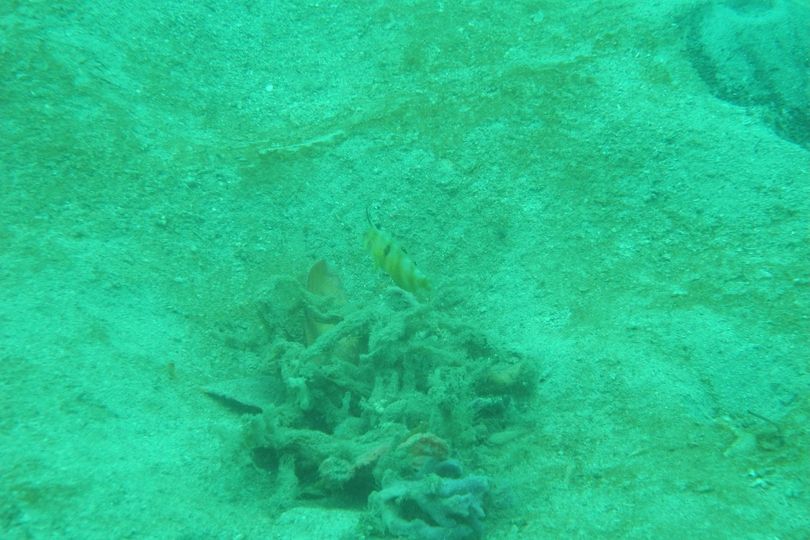

Description
Also known as Black Razorfish, Black-barred Razorfish, Blue Razorfish, Indian Blue Razorfish, Indianfish, Leaf Wrasse, Pavo Razorfish, Peacock Leaf Fish, Peacock Razorfish, Razor Wrasse, Redbelly Razor Wrasse, Sand Wrasse.
Found singly or in loose schools, over coarse sandy bottoms, of lagoons and seaward reefs, diving into the sand where they can "swim" for long distances through the sand to deter predators. Adults eventually turn grey/blue.
They feed on hard shell invertebrates.
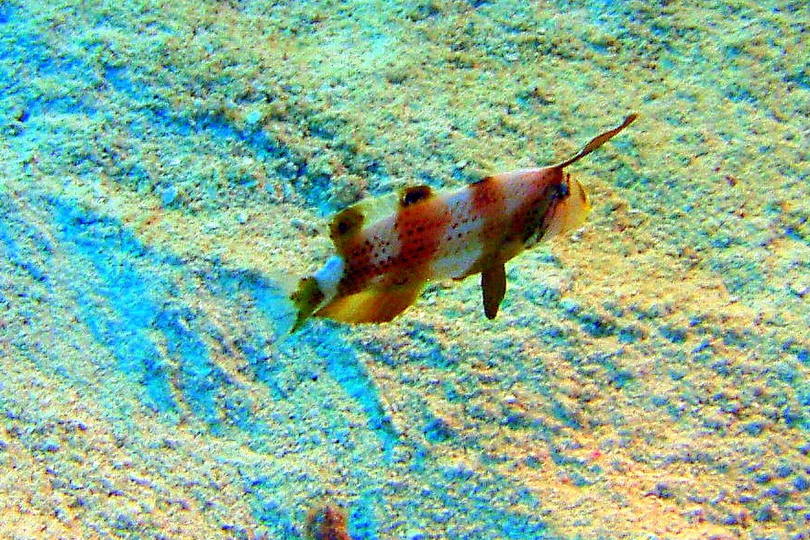
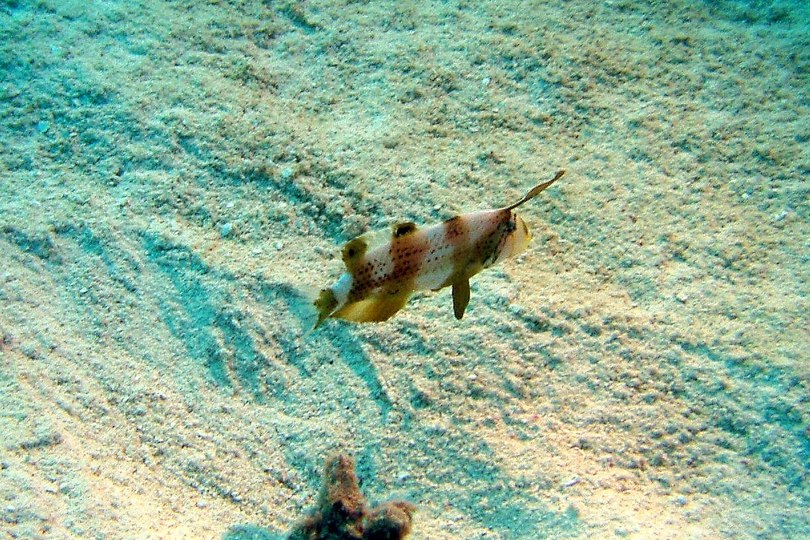
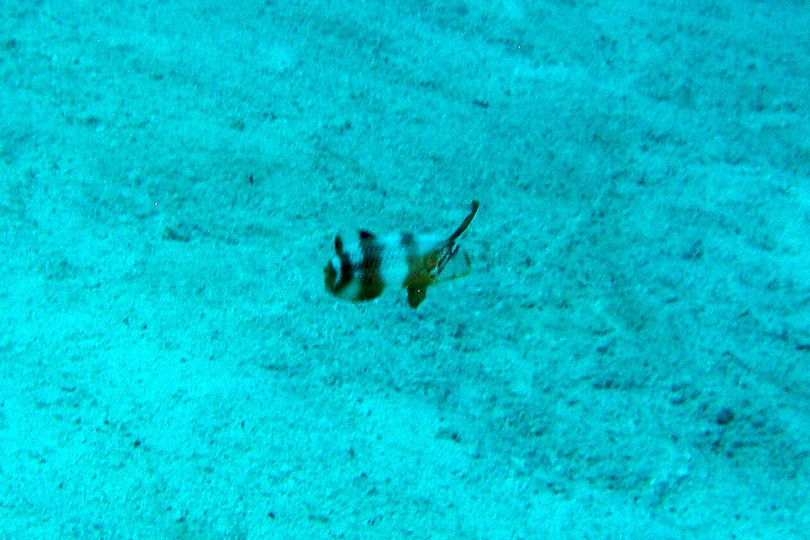
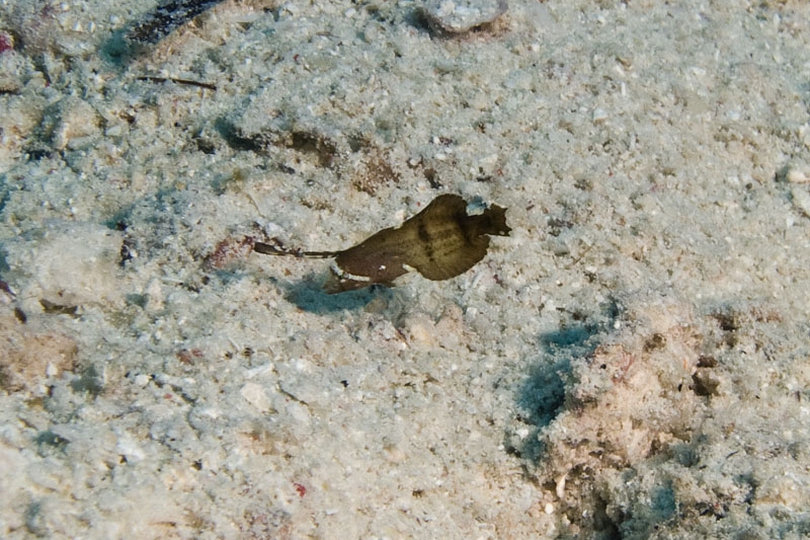
Juveniles brightly coloured and can look like dead leaves.
Length - 40cm
Depth - 1-100m
Widespread Eastern Pacific, Indo-Pacific
Most reef fish seen by divers during the day, are grazers, they cruise around, just above the surface of the coral, or snoop into crevices, foraging for food.
Wrasses have small protruding teeth, which they use to graze the bottom, taking in a variety of algae, crustaceans, such as crabs, eggs, shrimps, snails and worms. Any hard coats or thick shells, are then ground down by their pharyngeal jaws, and the delicacies inside digested.
From juvenile to adult, wrasses dramatically alter their colour and body shapes.
Wrasses are always on the go during the day, but are the first to go to bed and the last to rise.
Small wrasses dive below the sand to sleep, and larger wrasses wedge themselves in crevices. Ref: https://www.fishbase.se/summary/5613


1 comment
Posted by Annesaw one today - not sure what it was....El Quisir..... Abu Sauatir. Red Sea