
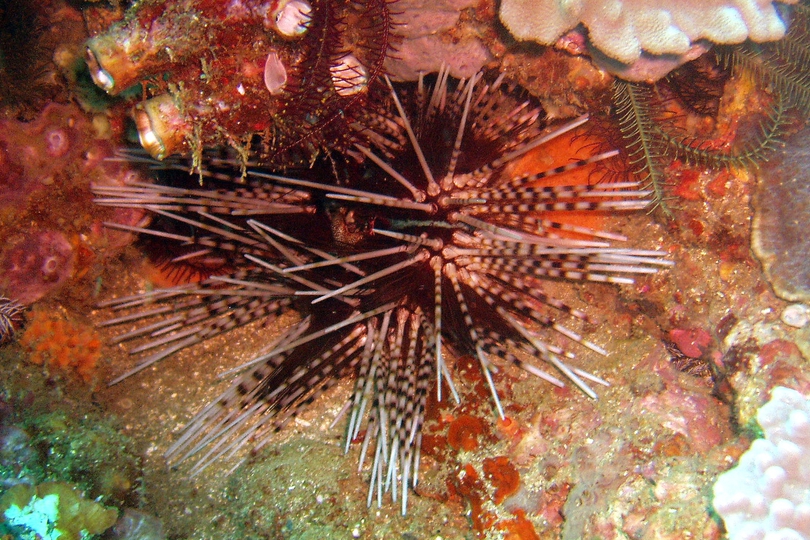

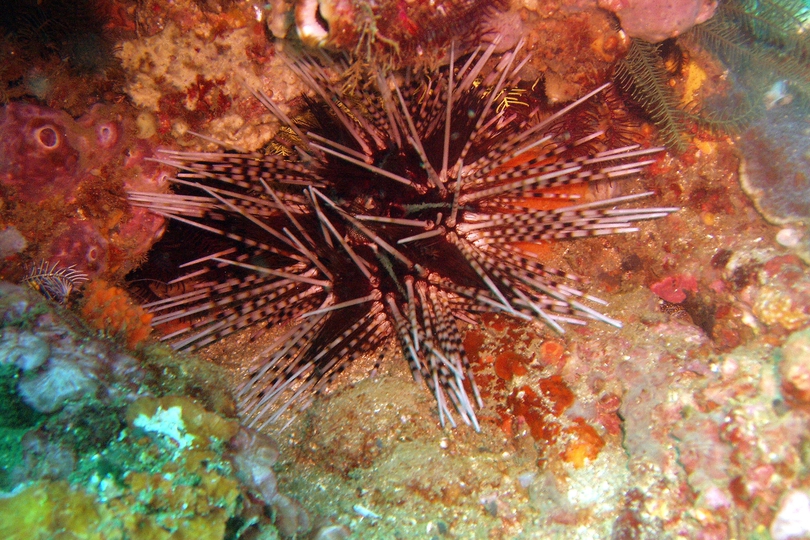
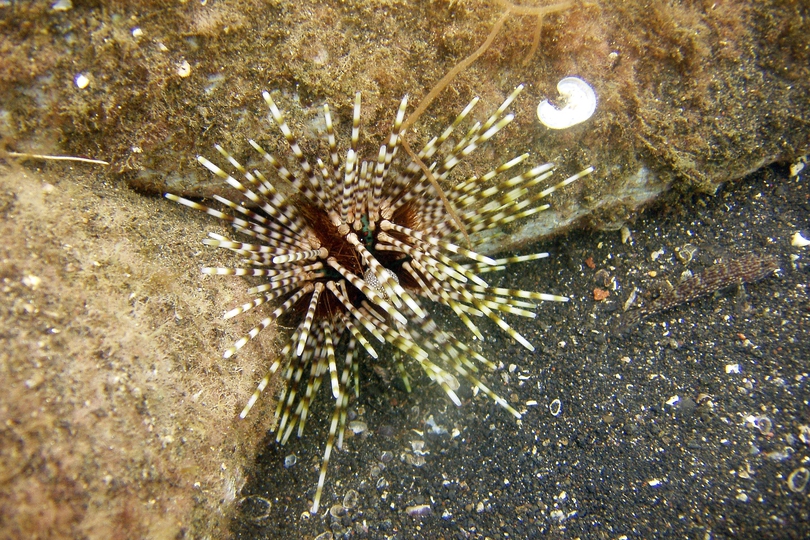
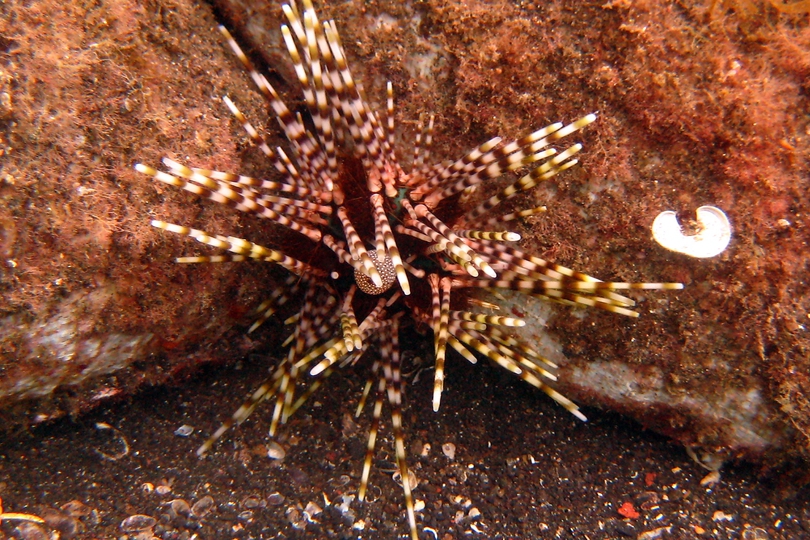

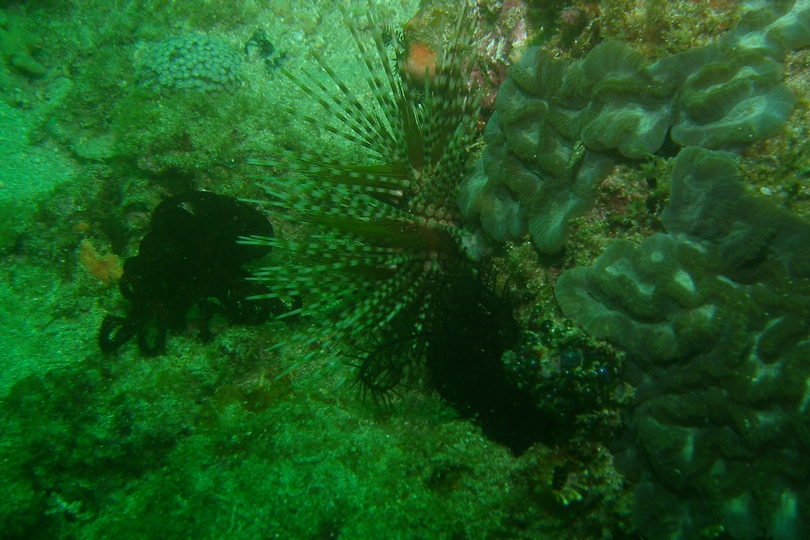
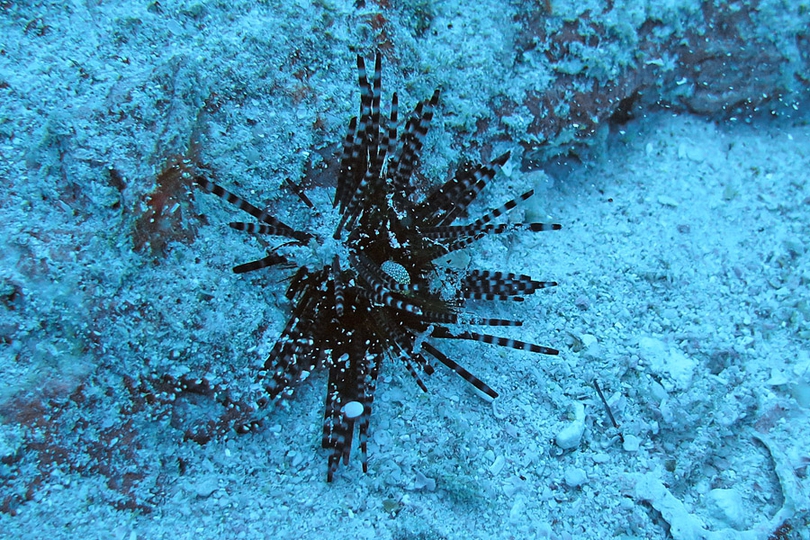

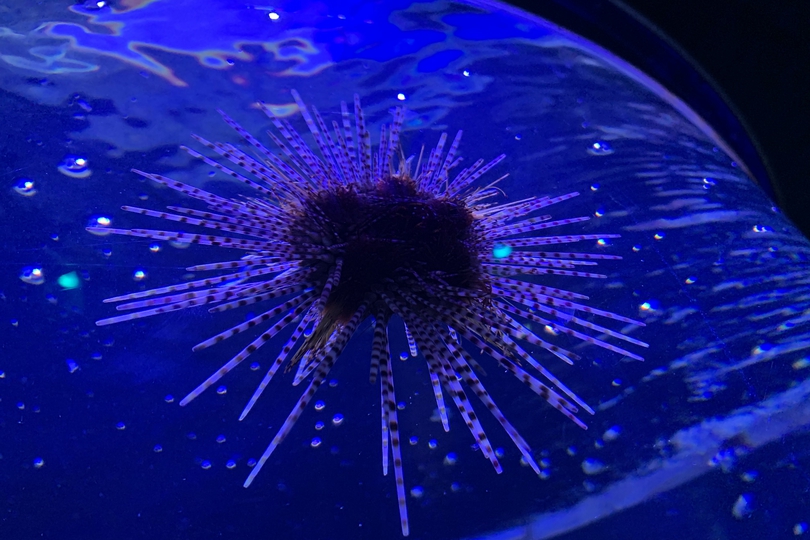


Description
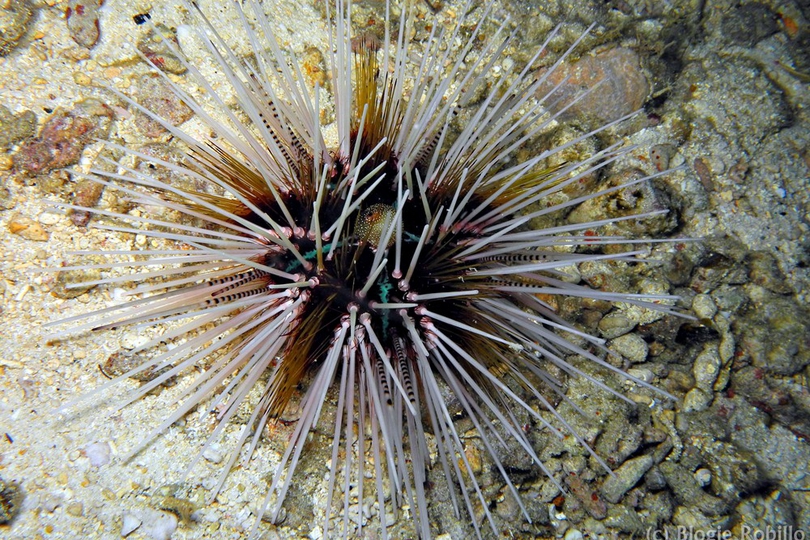
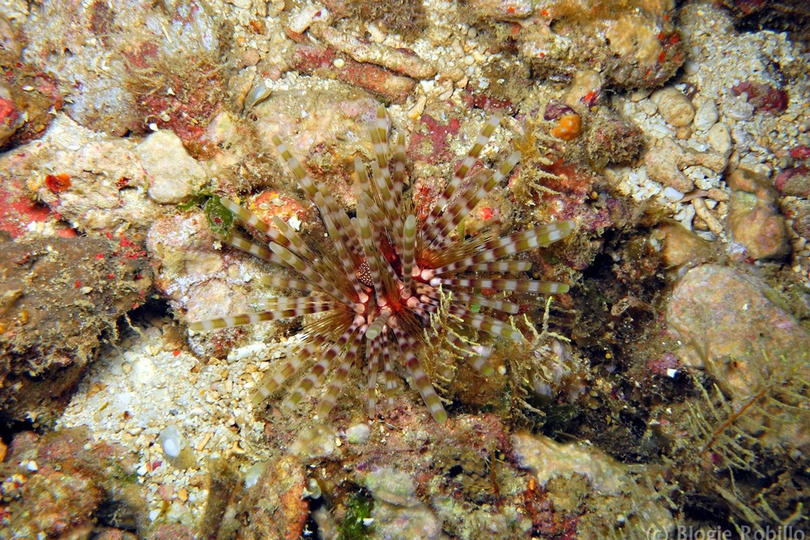
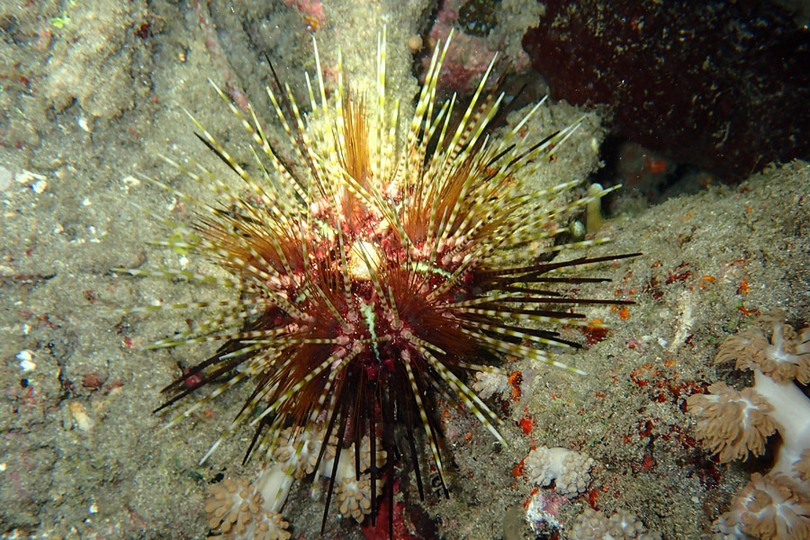
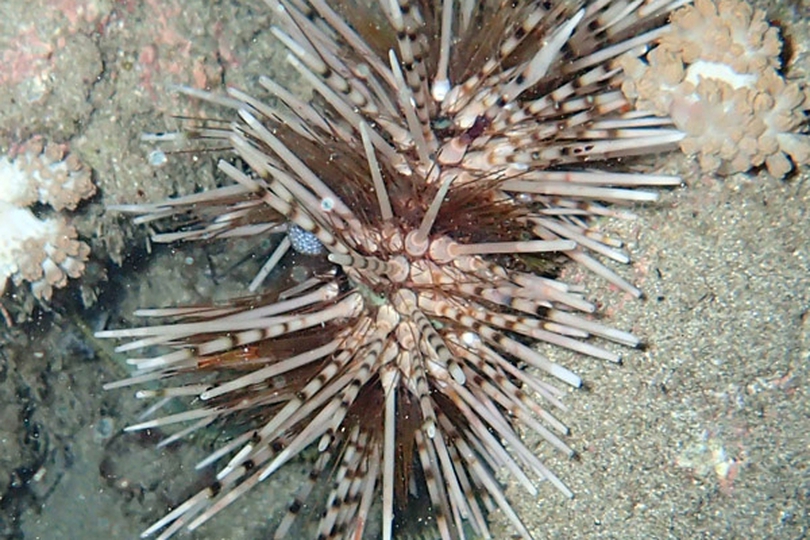
Also known as Banded Sea Urchin, Banded Urchin, Black-banded Sea Urchin, Double-spined Sea Urchin, False Fire Urchin, Fire Urchin, Hatpin Urchin, Longspine Banded Sea Urchin, Long-spined Sea Urchin, Sea Hedgehog, Star Urchin, Stripe-spined Urchin, Variable Sea Urchin, White-spined Needle Urchin.
Found during the day hiding in crevices and under rocks, in the evening found roaming in large groups, across rubble and sandy areas, of shallow, coral and rocky bays and lagoons, rich in algae growth.
They feed nocturnally on algae, detritus, and invertebrates.
Length - 15cm
Depth - 0-70m
Widespread Indo-Pacific
These large sea urchin with long and mobile spines can often be found with fish and shrimps swimming in between their spines for protection.
Sea Urchins use tubed feet to get around, often in large impenetrable masses for protection.
Sometimes they hitch a lift on the back of crabs.
They have well developed jaws for grinding their prey.
Their anus is on top in most sea urchins, except the heart urchins where it is at the rear.
Predators of sea urchins are triggerfish and large wrasses, who nibble away at their spines before turning them over to eat the fleshy undersides.
Sea Urchins are highly venomous and can pierce through a wet-suit.
Some are sensitive to light and have the ability to shoot venom loaded spines at a short distance.
They are to be avoided!! (edit)
Ref: https://en.wikipedia.org/wiki/Echinothrix_calamaris


0 comments