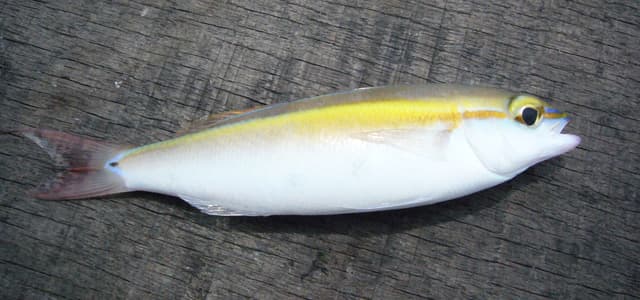
Blue Blanquillo
Malacanthus latovittatus
Also known as: Banded Blanquillo, Blue Latovittatus, Blue Tilefish, Eye-of-the-Sea, False Whiting, Sand Tilefish, Striped Blanquillo
- Banded Blanquillo
- Blue Latovittatus
- Blue Tilefish
- Eye-of-the-Sea
- False Whiting
- Sand Tilefish
- Striped Blanquillo
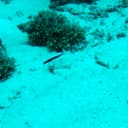
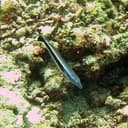
Showing details for the adult stage. Switch stages to see how it differs.
Overview
Found singly or in pairs, in self-made burrows and caves at the base of reefs, or piles of rock over outer reef slopes, often hovering above the bottom picking out their prey.
Tilefish form undersea Pueblo villages made from gravel or sand substrate these self-made burrows and caves are at the base of reefs or piles of rock, often in canyons or at the edge of steep slopes.
If disturbed they quickly dive head-first into their constructed retreats.
How to identify
Habitat & where to find it
Where the adult stage lives, and where its photos were taken.
- Range · Indo-Pacific
- Country only · 8
Found singly or in pairs, in self-made burrows and caves at the base of reefs, or piles of rock over outer reef slopes, often hovering above the bottom picking out their prey.
Adult photos 8
Discussion
No comments yet. Seen one, or got a question about it? Start the discussion.
Deep dive
More in the family
Eupercaria incertae sedis
Indian Ocean Oriental Sweetlips
Plectorhinchus vittatus
Axilspot Hogfish
Bodianus axillaris
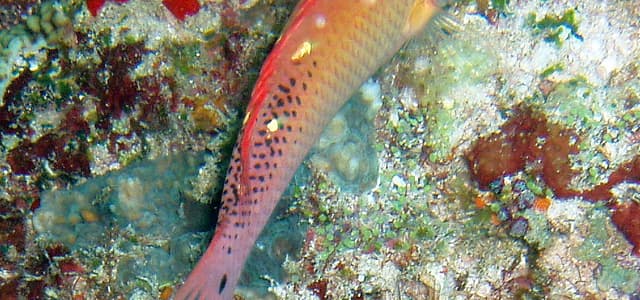
Diana's Hogfish
Bodianus diana
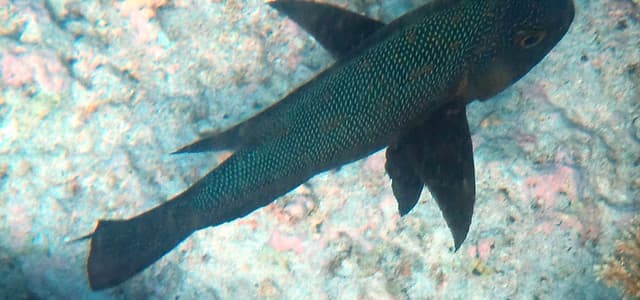
Midnight Snapper
Macolor macularis
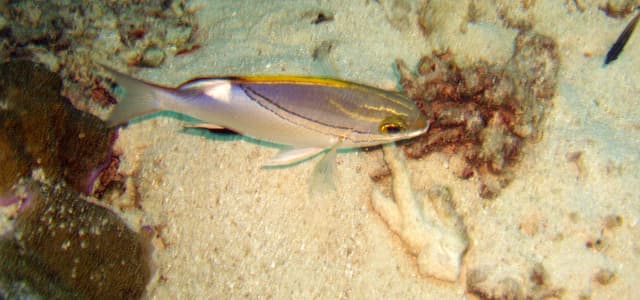
Two-lined Monocle Bream
Scolopsis bilineata
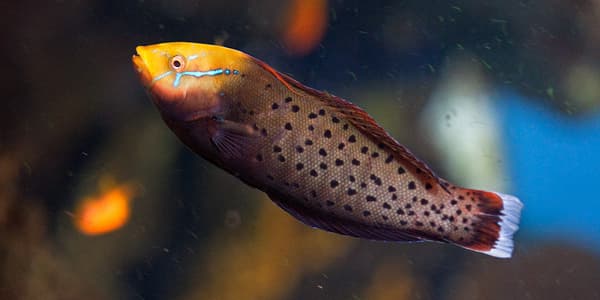
African Clown Coris
Allocoris cuvieri
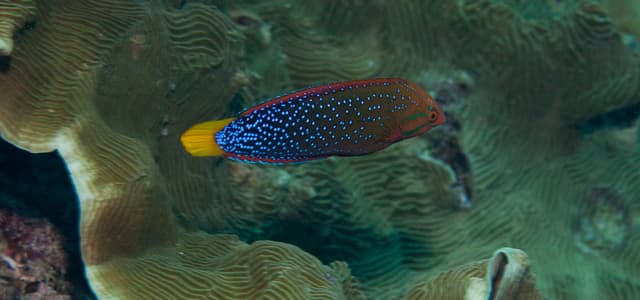
African Coris
Coris gaimard
Black Wrasse
Macropharyngodon negrosensis
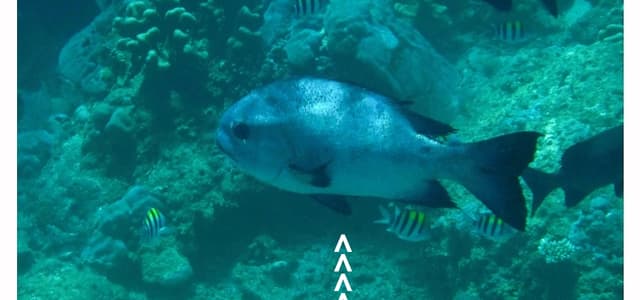
Black-and-White Snapper
Macolor niger
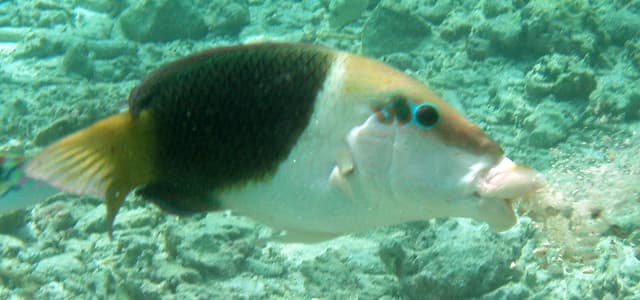
Blackeye Thicklip
Hemigymnus melapterus
Butterfly Whiptail
Pentapodus setosus
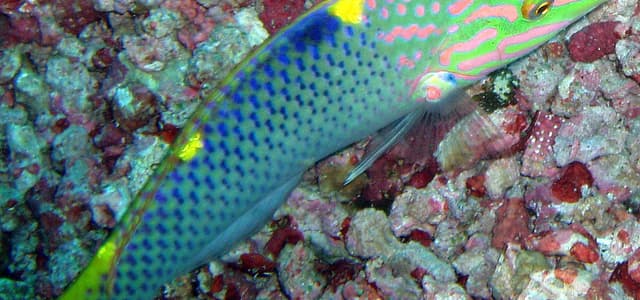
Checkerboard Wrasse
Halichoeres hortulanus