David Maundrill· 29 Nov 2011
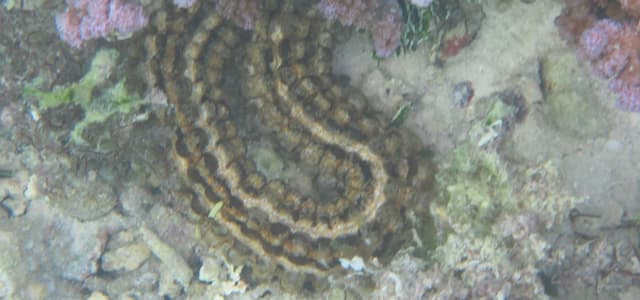
I saw a gut like sea cucumber about 10 m from shore and 2m down on Long Beach Mauritius. However, this one was about 1.5 metres long, not 15cm! About 4 or 5cm diameter.
Synaptula recta
Also known as: Medusa Worm Sea Cucumber, Pickles, Synaptid Sea Cucumber, Tripang, Wormfish
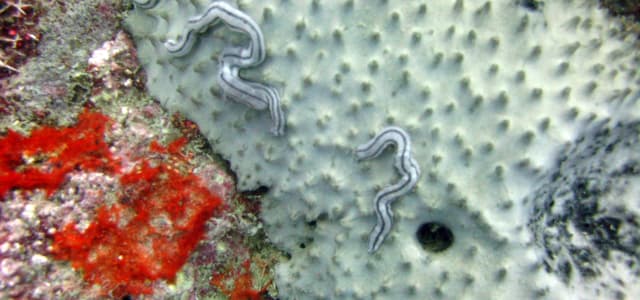
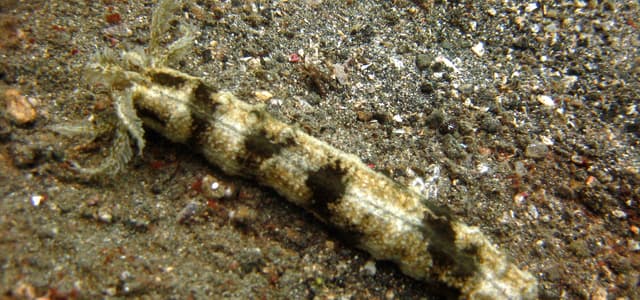
Found singly, sometimes on the surface of sponges, over sand flats and in seagrass beds, in shallow waters, of coastal reefs.
Synaptidae are soft and worm like, often active during the day.
Some sea cucumbers crawl around on the bottom slowly filtering sand through their tentacles to gather food, while others spread their tentacles above them to capture plankton. A number of sea cucumbers feed nocturnally while others feed by day.
There are sea cucumbers that hardly move while others are more active often perching on tall sponges to feed.
Sea cucumbers often attract hitch-hikers like shrimps and crabs that crawl over their skin, also pearlfish that enter via their anus.
As a means of defence sea cucumbers can expel their intestines or respiratory organs in the form of sticky threads, but these can quickly regenerate.
Juveniles often mimic sea slugs.
Some types of sea cucumbers are edible and considered a delicacy in the Far East countries.
Found singly, sometimes on the surface of sponges, over sand flats and in seagrass beds, in shallow waters, of coastal reefs.
1 comment
I saw a gut like sea cucumber about 10 m from shore and 2m down on Long Beach Mauritius. However, this one was about 1.5 metres long, not 15cm! About 4 or 5cm diameter.
Apodida