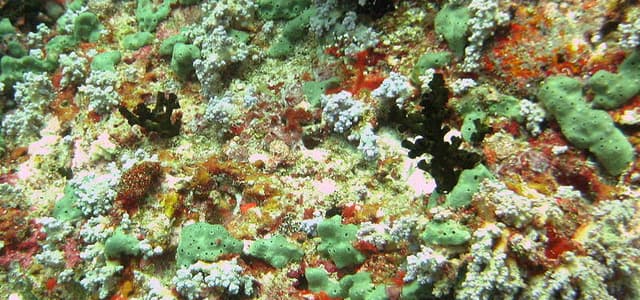
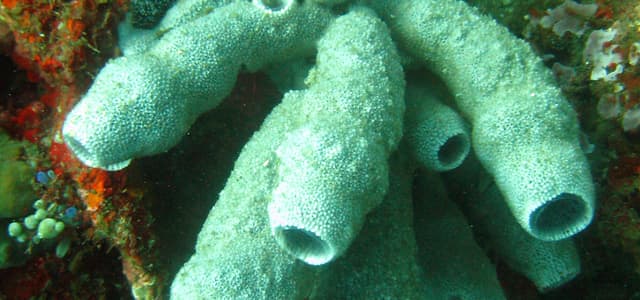
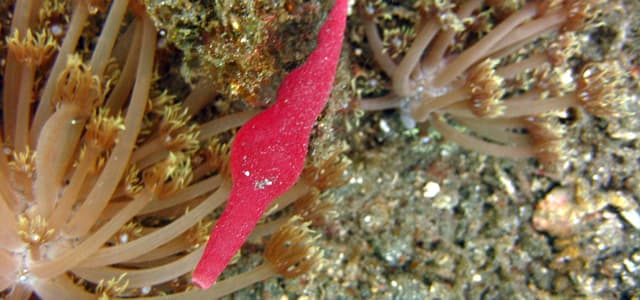
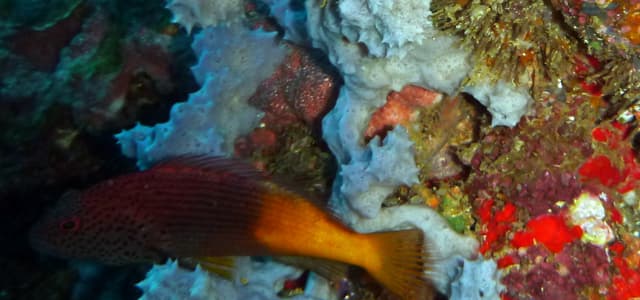
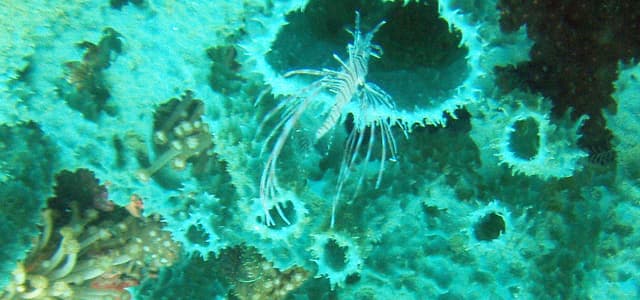
I can vouch for the toxicity of Amphimedon. We collected a small piece from a colleague's pearl farm yesterday. Killed everything in the collection bucket with it in less than 1 hr. Specimen was only about 10 cm long. Do not collect except by itself and never get the bright idea of putting it into a marine aquarium. Do not risk handling it without surgical gloves. I thought didenmids were bad!
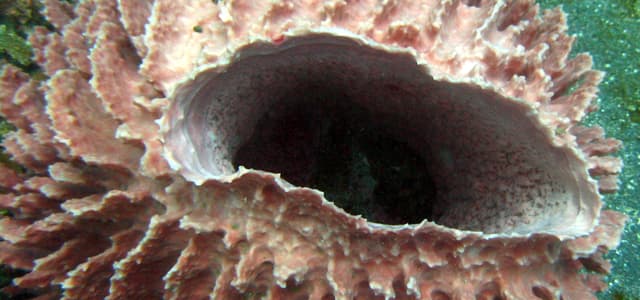
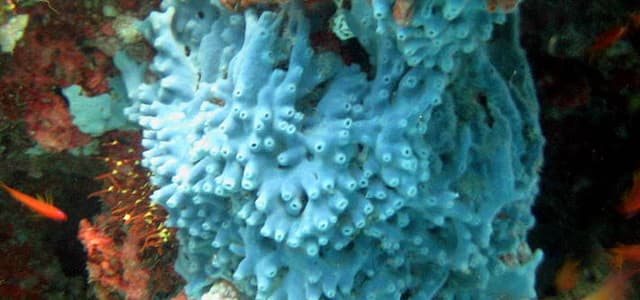
Blue-finger Sponge
Amphimedon
Also known as: Marine Sponge, Pacific Sponge, Siliceous Sponge, Tropical Marine Sponge, Vase Sponge
- Marine Sponge
- Pacific Sponge
- Siliceous Sponge
- Tropical Marine Sponge
- Vase Sponge
Overview
Found in deep water gullies on slopes and terraces of coral and rocky reef.
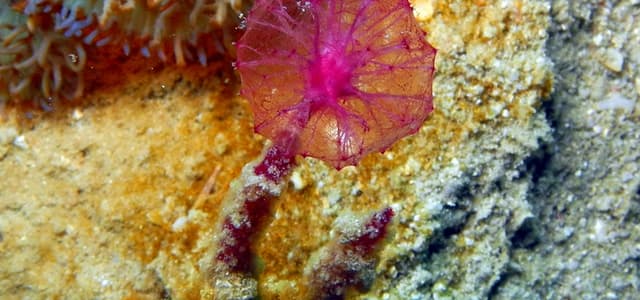
Sponges come in a range of sizes from minuscule encrusting species under rocks to massive sponges which can be up to one and half metres high.
They are able to filter many litres of sea water every few seconds.
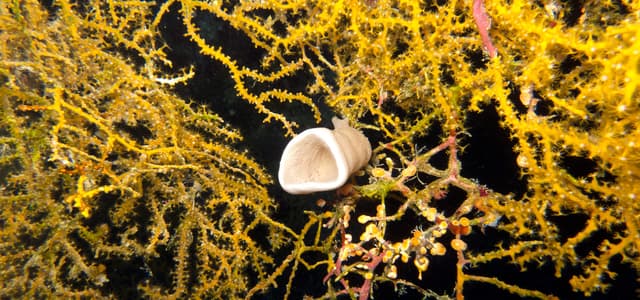
Sponges can exude highly toxic chemicals and so have very few predators apart from nudibranchs, sea stars, sea urchins and umbrella shell.
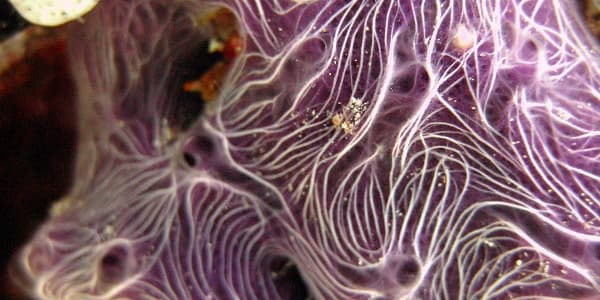
Their colour can vary if growing in the light or when growing in the shade.
How to identify
Habitat & where to find it
- Range · Indo-Pacific
- Country only · 3
Found in deep water gullies on slopes and terraces of coral and rocky reef.
Adult photos 3
Discussion 1
1 comment
- Dr Raymond J RITCHIE· 23 Jul 2021
Deep dive
Taxonomy
- kingdomAnimalia
- phylumPorifera
- classDemospongiae
- orderHaplosclerida
- familyNiphatidae
- genusAmphimedon Duchassaing & Michelotti, 1864
SourcesWoRMS
More in the family
Haplosclerida

Barrel Sponge
Petrosiidae
9 photos

Blue Volcano Sponge
Haliclona
2 photos

Coral-eating Sponge
Haliclona (Chalinula) nematifera
5 photos

Marine Tube Sponge
Haliclona fascigera
1 photo

Puffball Sponge
Oceanapia sagittaria
2 photos

Sieve Sponge
Cribrochalina cribricutis
2 photos

Stout Tube Sponge
Cribrochalina
3 photos

Swollen Finger Sponge
Petrosia (Strongylophora)
4 photos

Thorny stem sponge
Gelliodes fibulata
1 photo

Tube Sponge
Callyspongia
14 photos